

Japanese courtyard garden for a famous Michelin restaurant
In 2021, Yokoso Japanese Gardens had the special honor of creating an authentic Japanese indoor garden for the Michelin-starred restaurant Japanese Cuisine Yama in Rotterdam. This renowned restaurant is known for its refined Japanese cuisine, exceptional attention to detail, and exclusive culinary experience. It was therefore essential that the outdoor space also radiate the same high standard of quality and sense of aesthetics. The challenge was to create a harmonious garden design within the limited space of a private courtyard that enhances the restaurant’s Japanese identity and offers guests a moment of tranquility and contemplation.
As a source of inspiration, we chose the traditional Tsuboniwa, a compact Japanese courtyard garden that has traditionally been found in the characteristic Kyo-Machiya, the historic town houses of Kyoto. These often narrow, deep homes from the Edo and Meiji periods often feature small courtyards that provide natural light, ventilation, and a connection with nature. Despite their modest size, these gardens represent an important principle within Japanese architecture: creating a tranquil, natural environment amidst the bustling urban life.
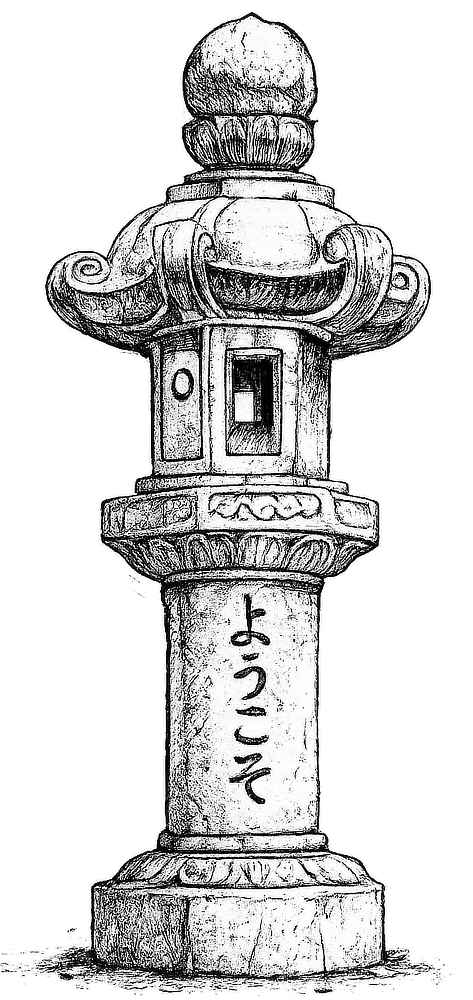
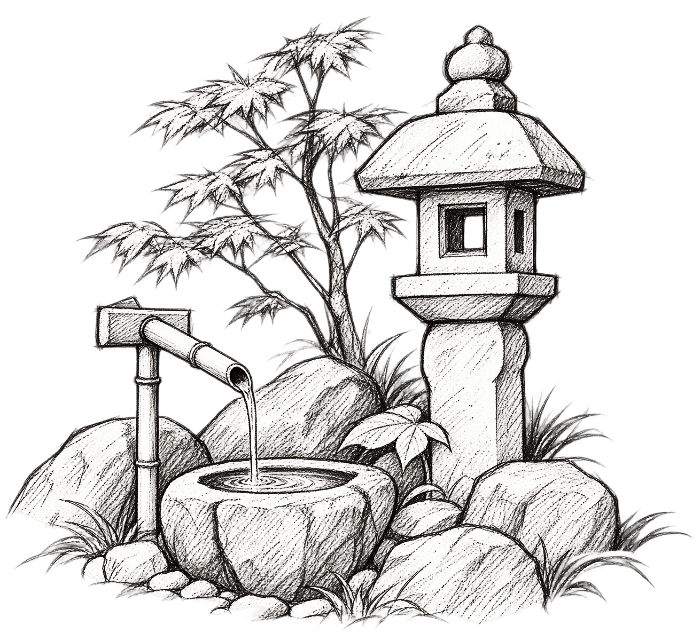
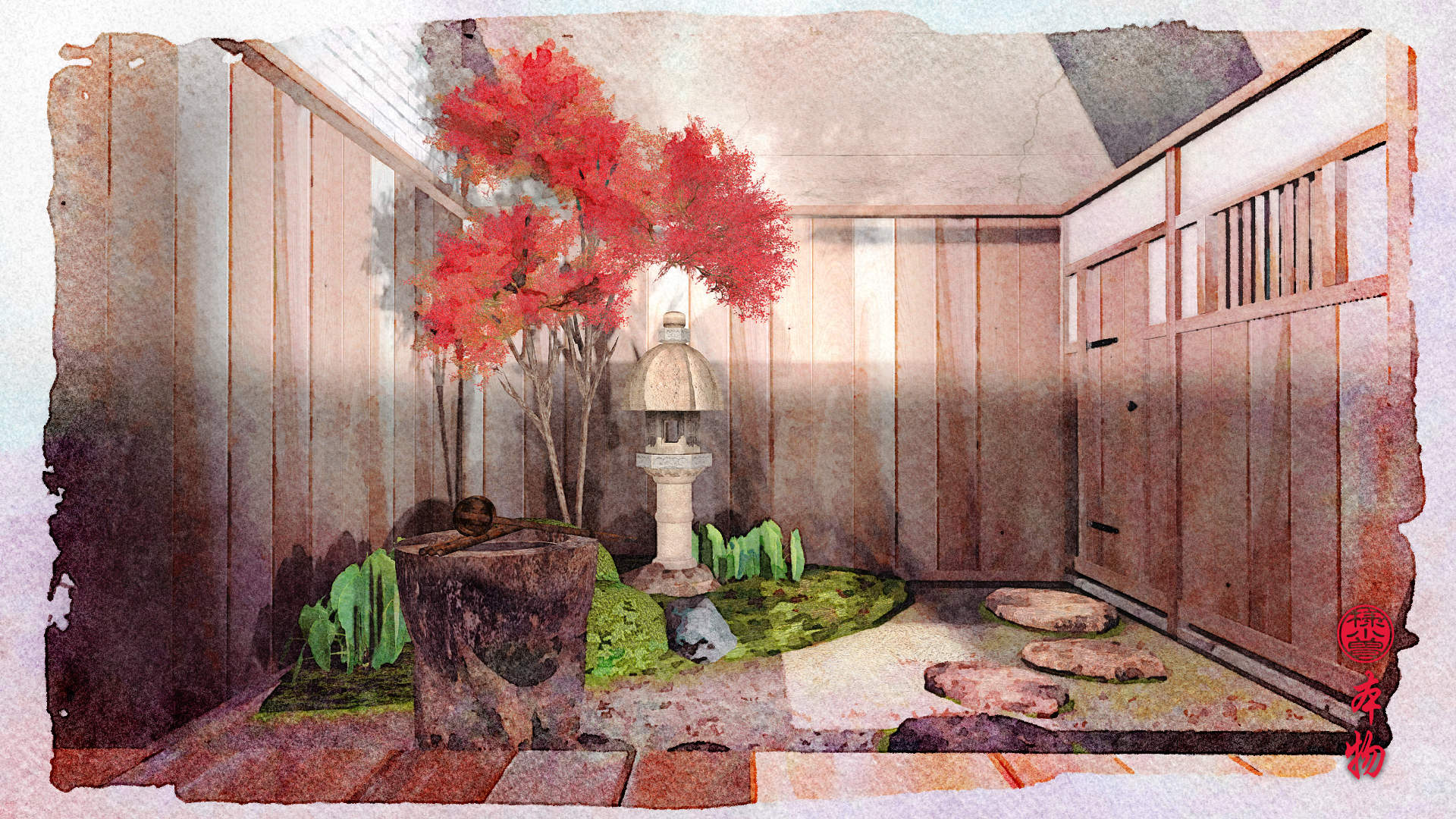
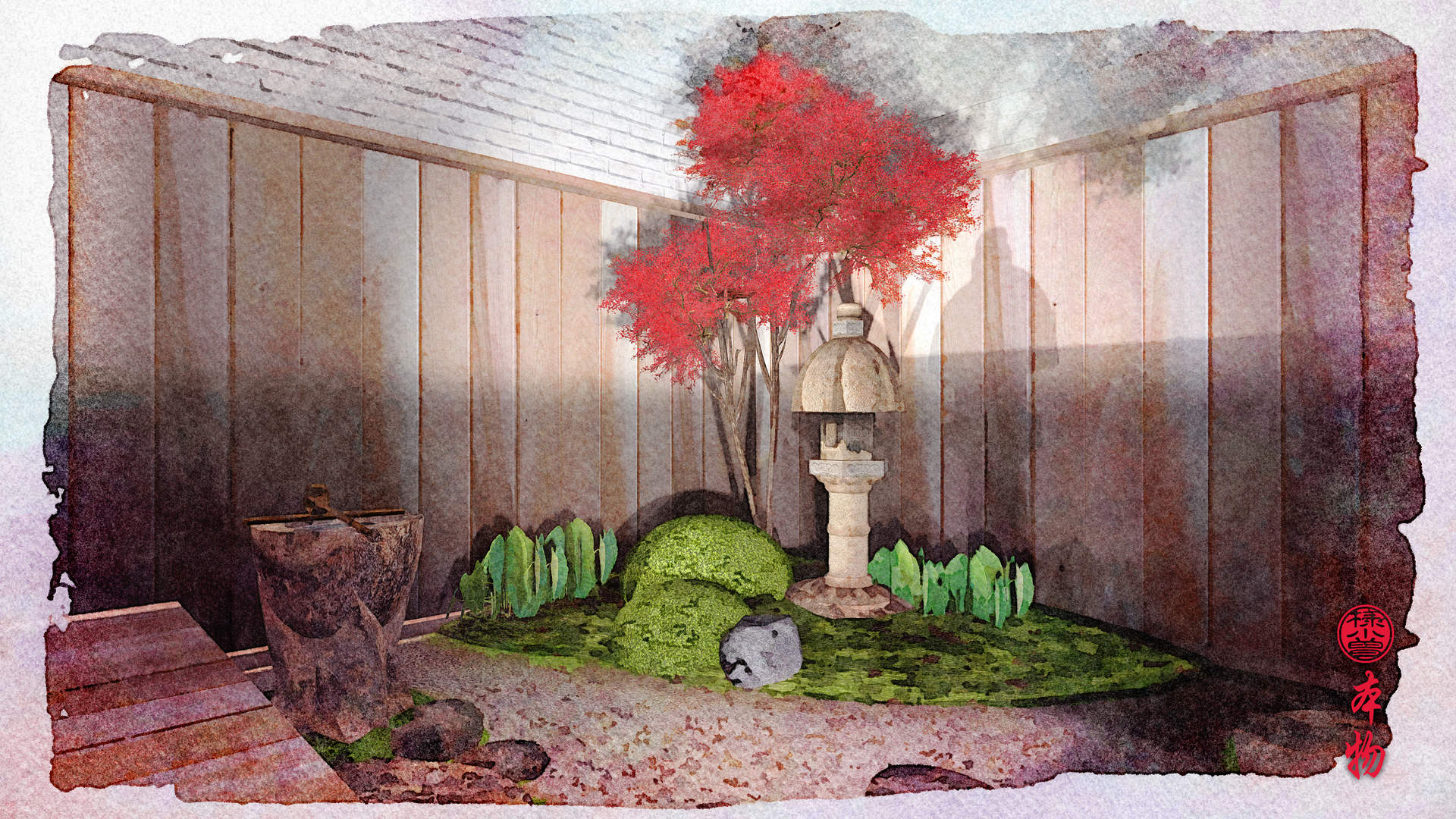
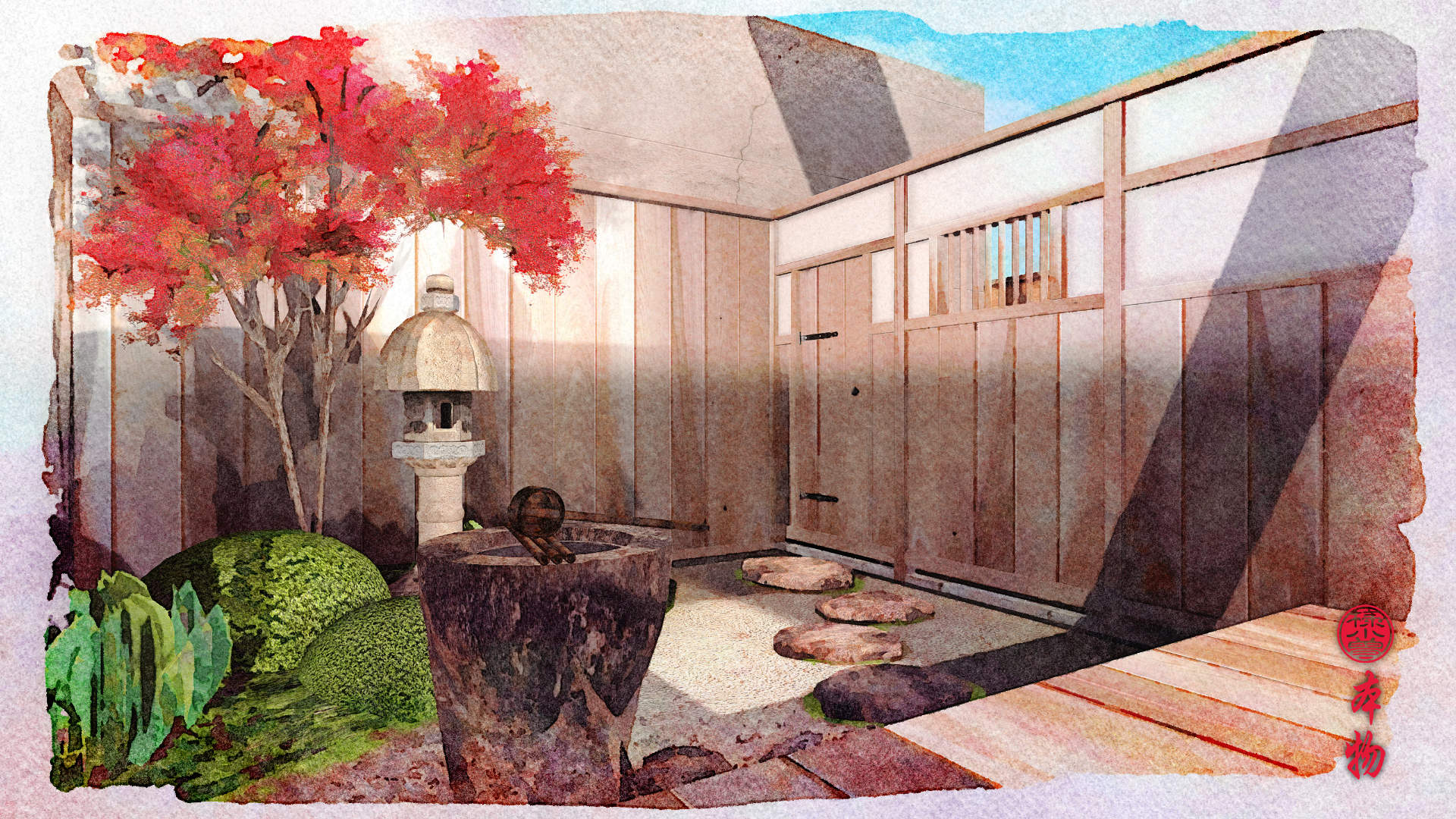
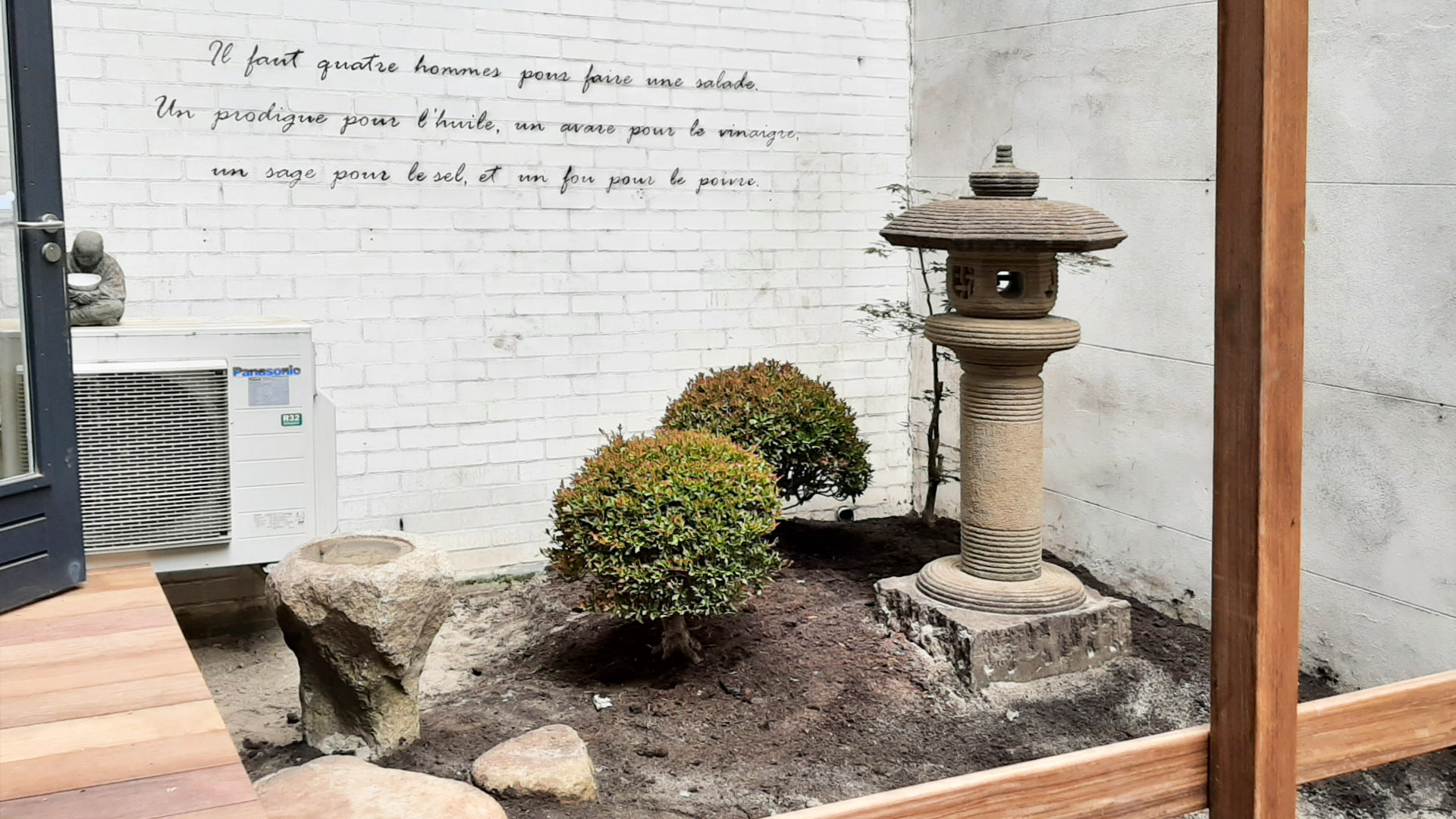
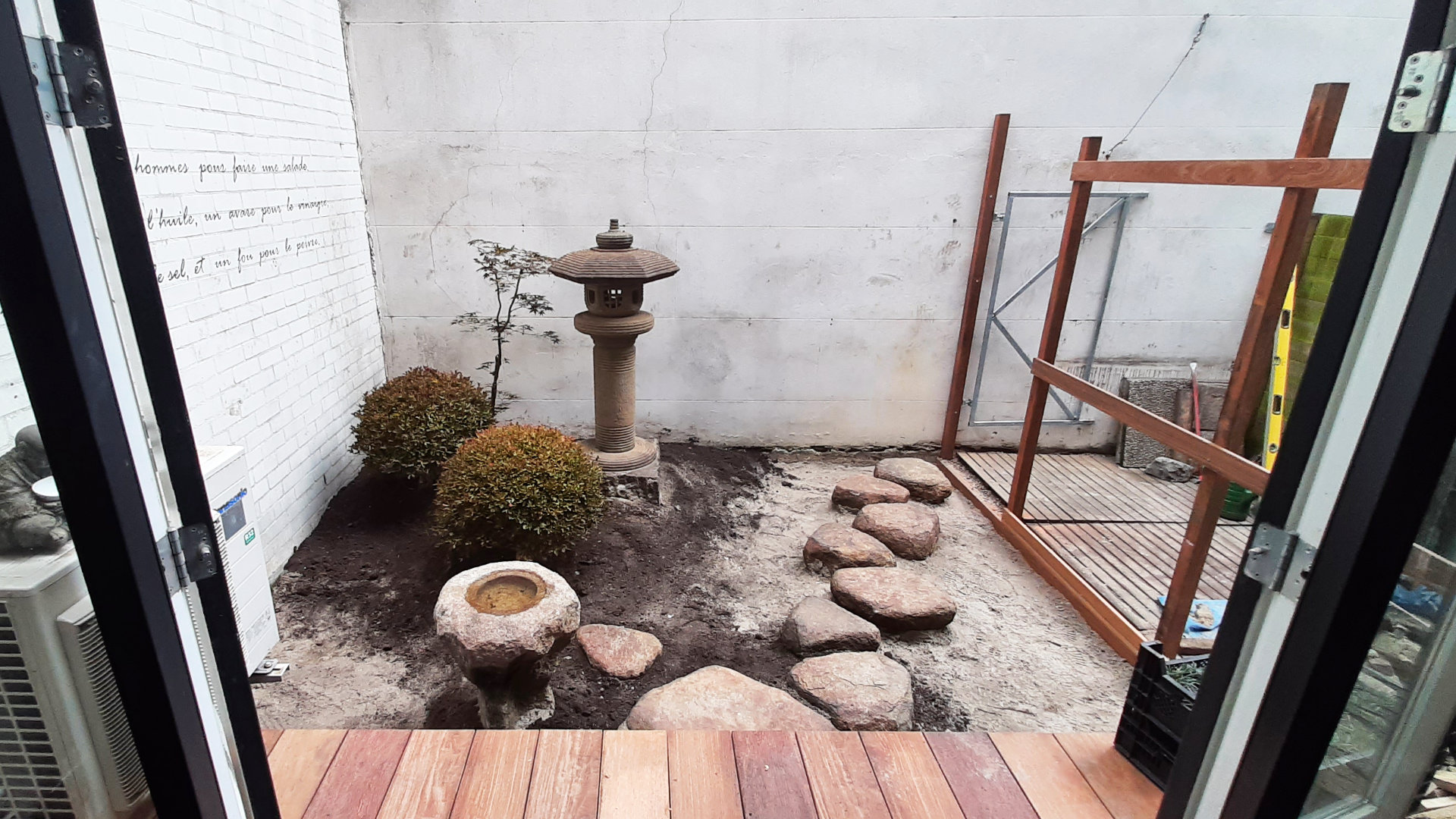
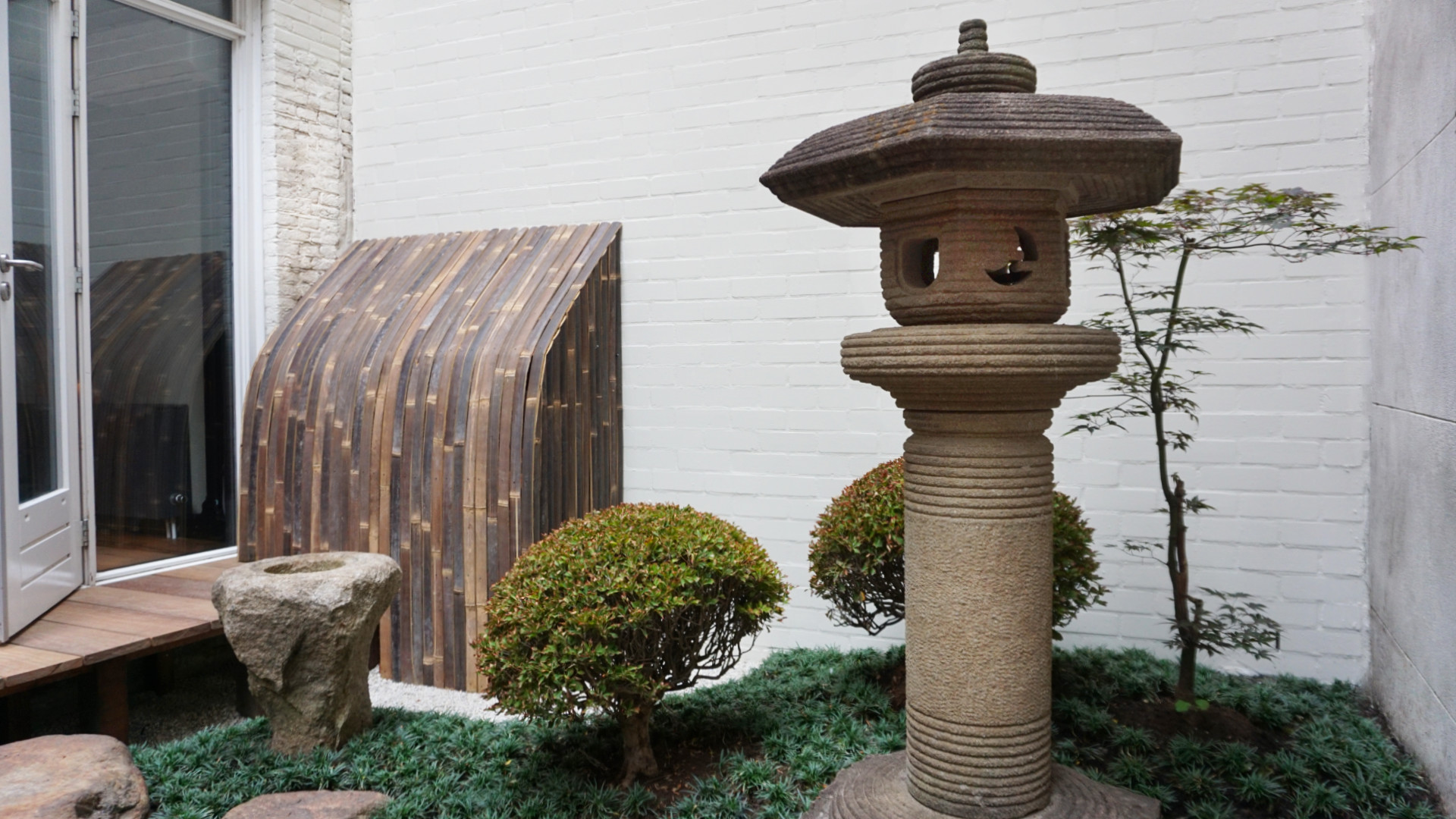
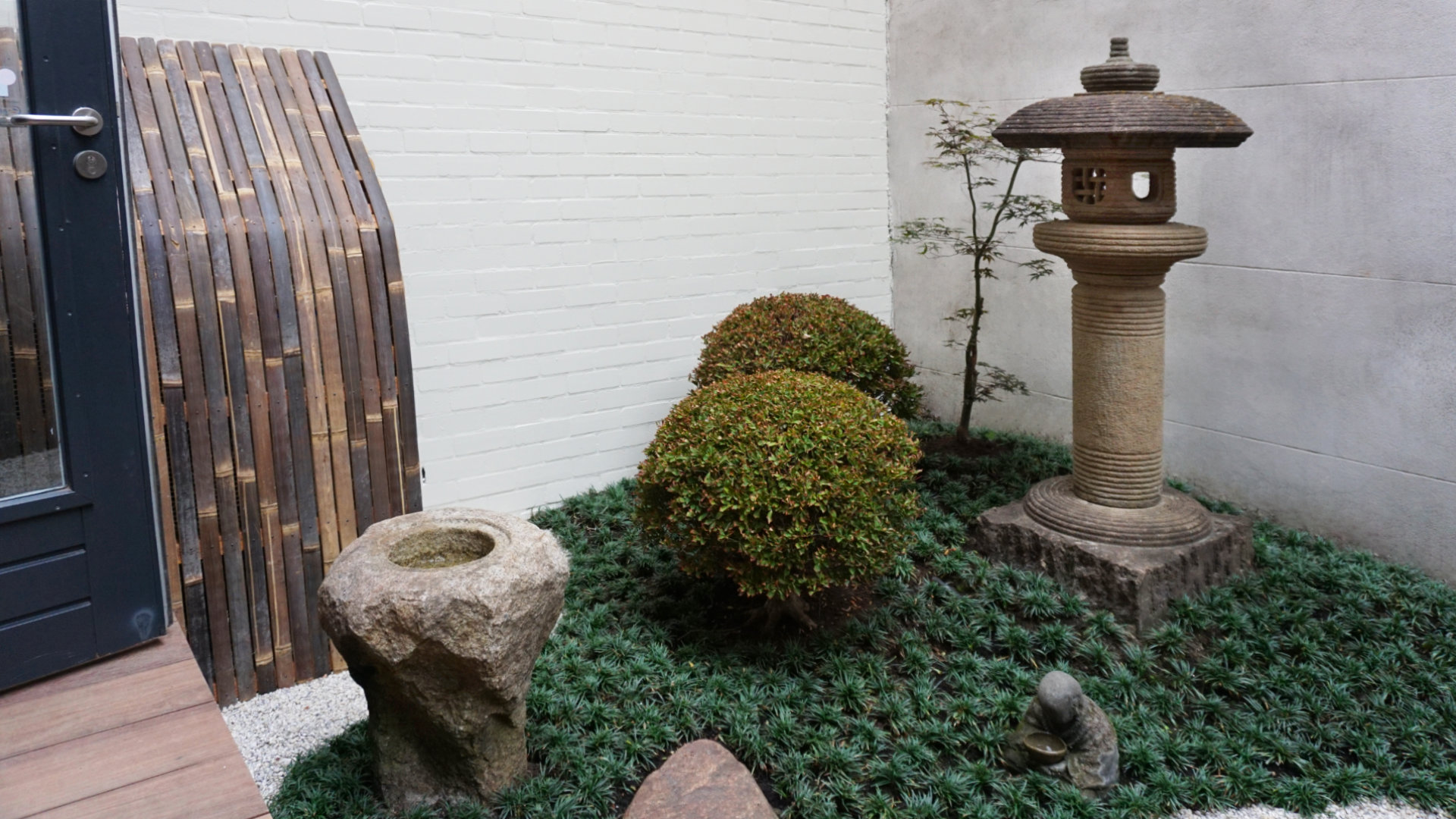
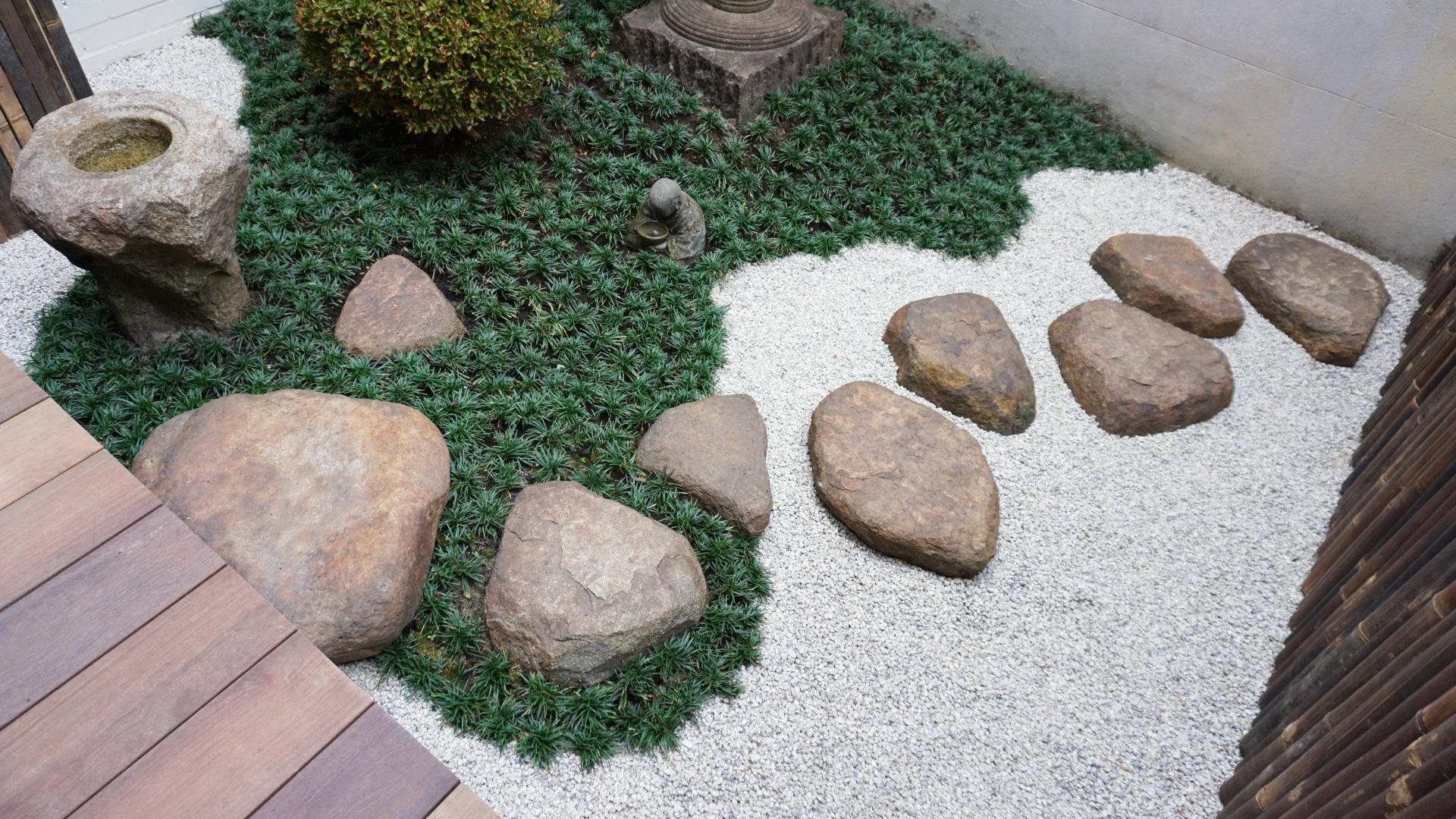
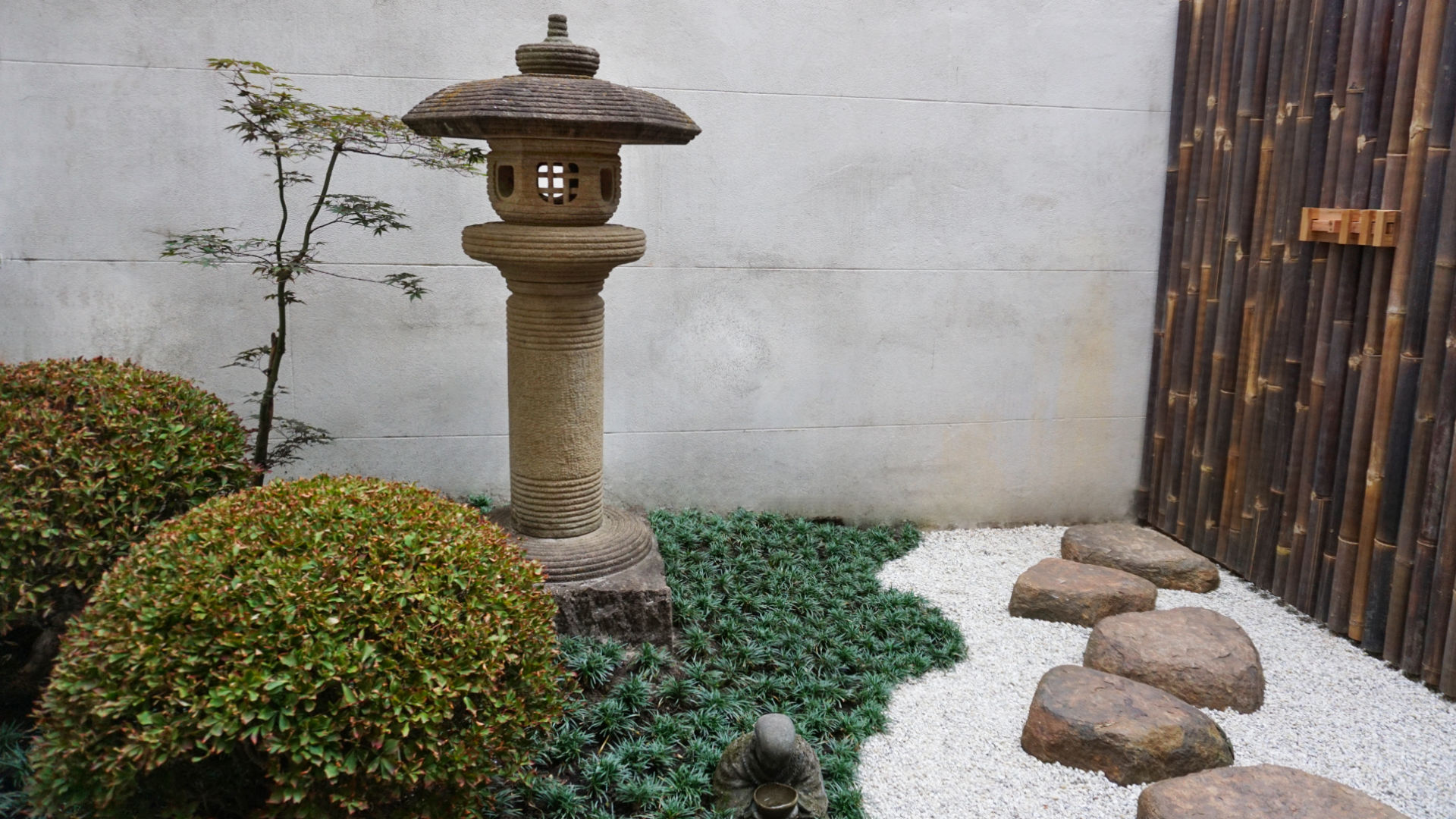
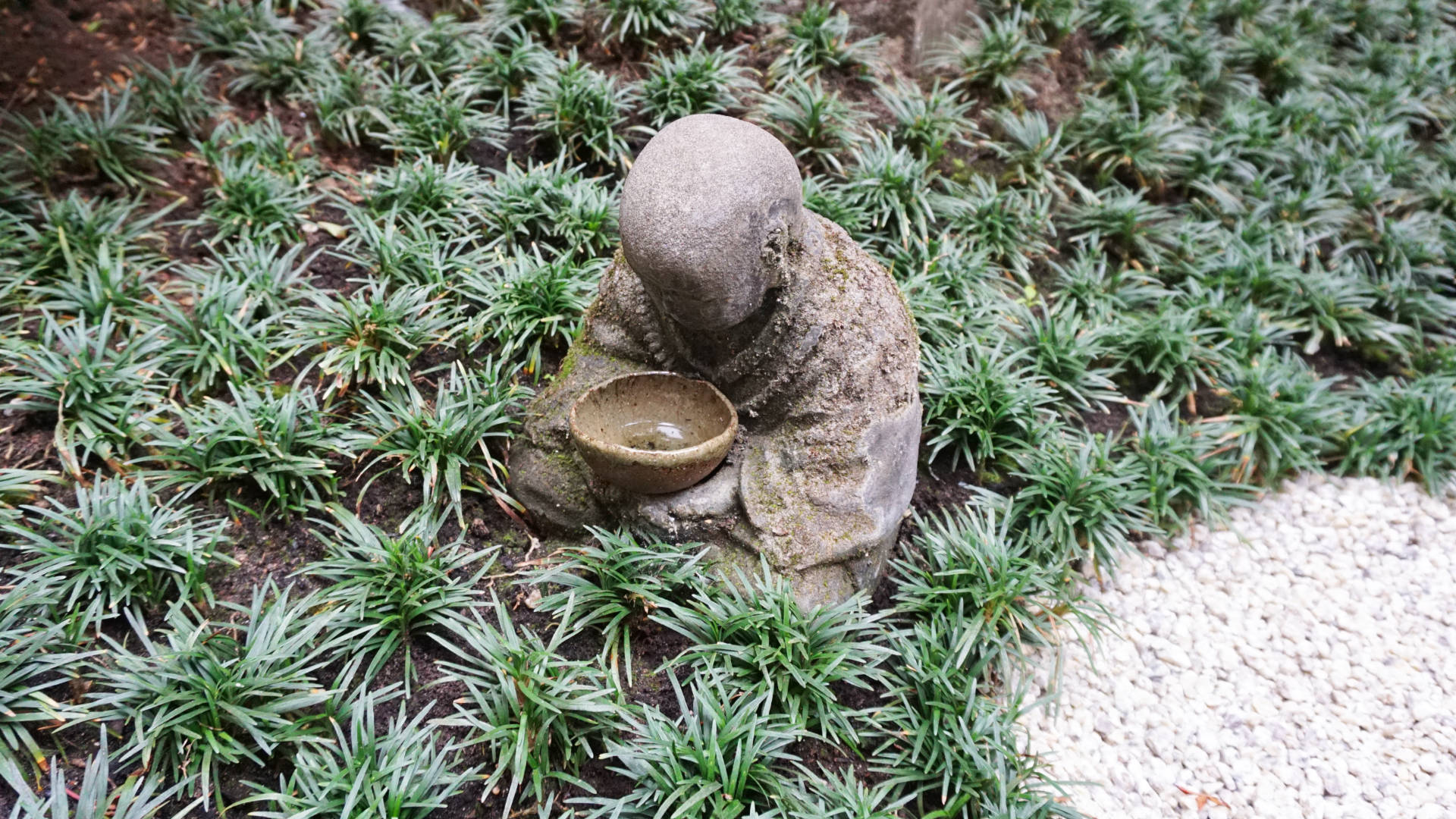
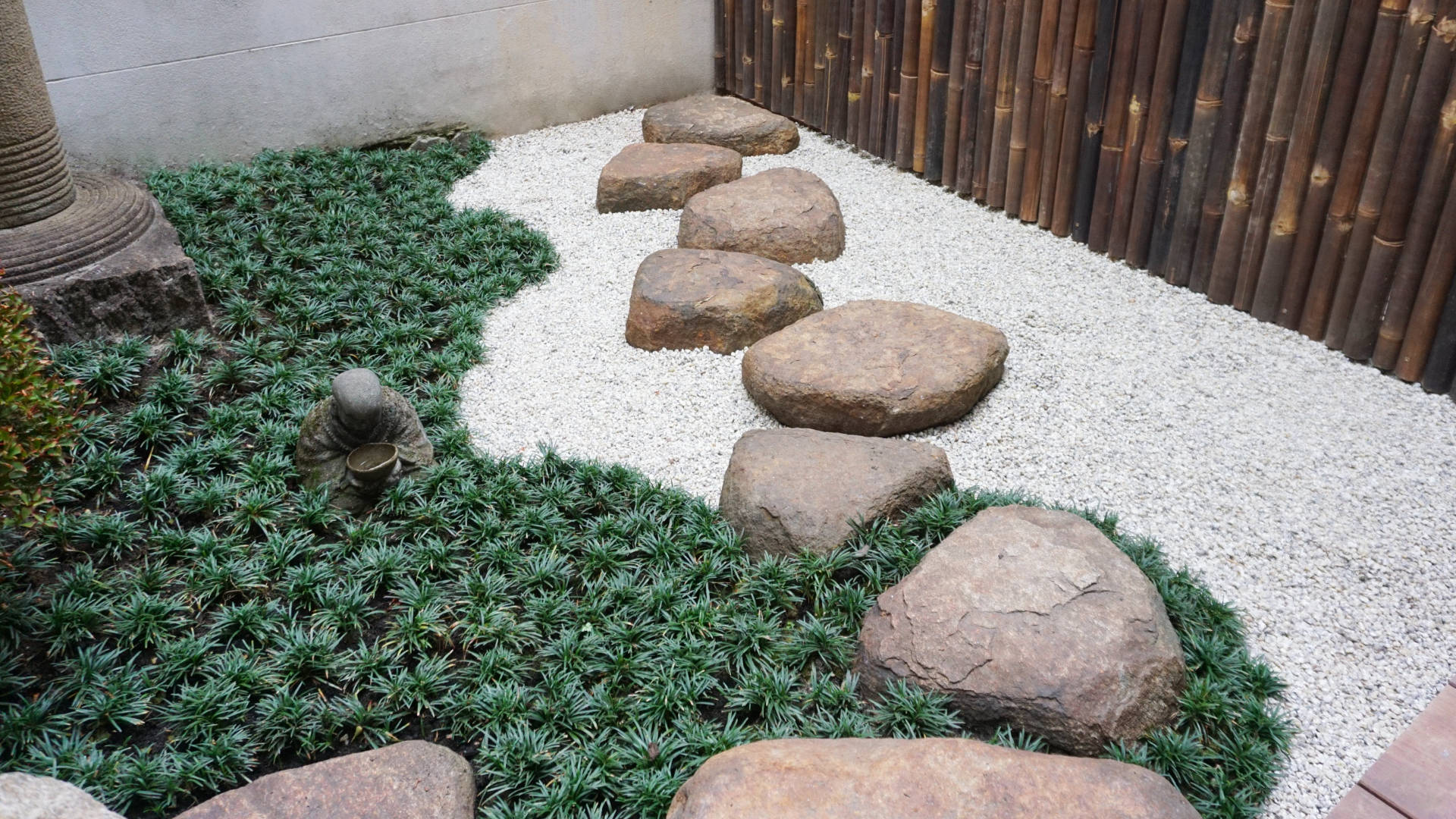
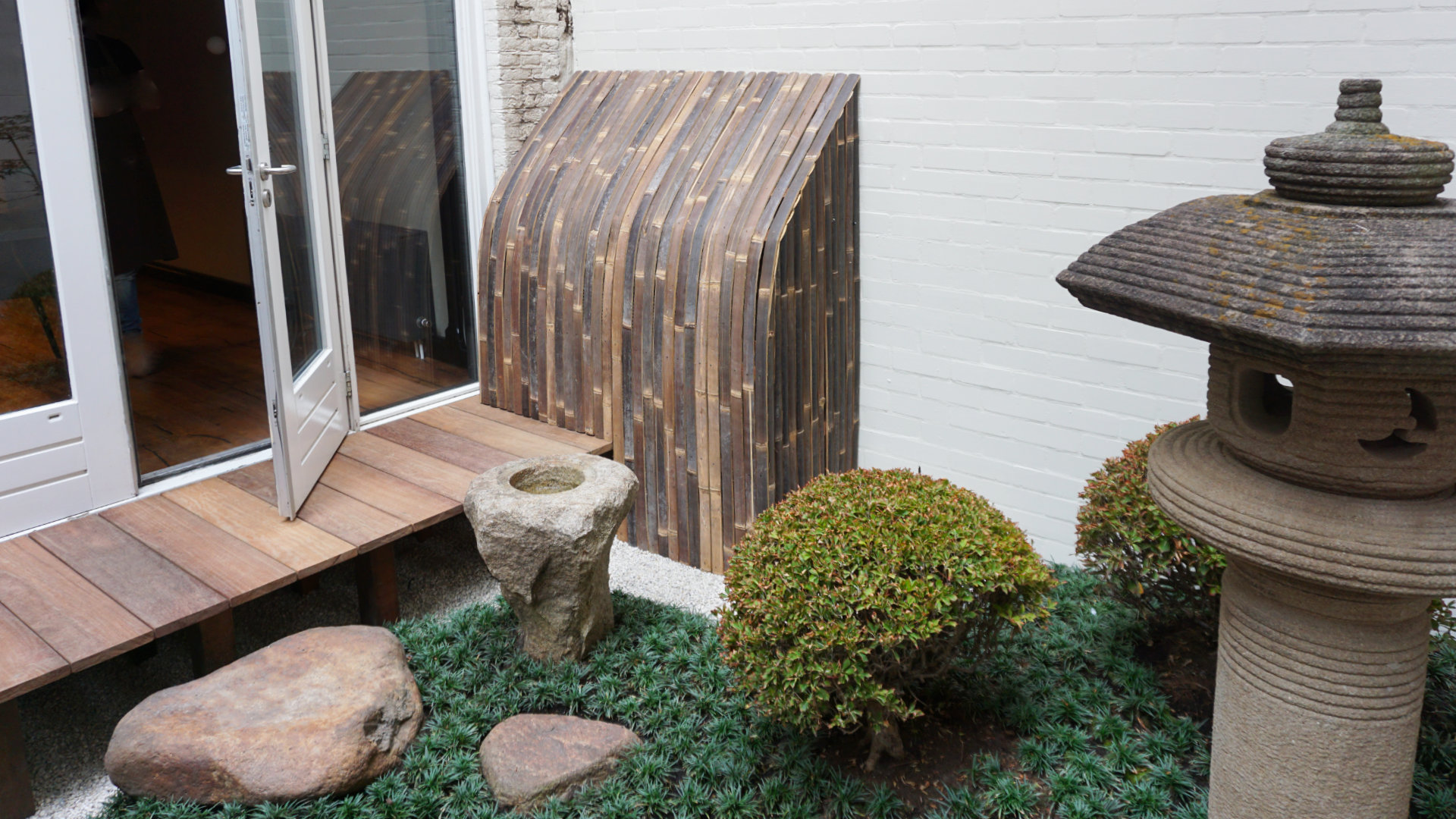
From this philosophy, we designed a subdued composition that combines natural materials, subtle height differences, and carefully chosen Japanese garden elements. In a corner of the courtyard, a green island with a Japanese maple, shaped-pruned shrubs, and low-growing ground cover forms the natural centerpiece of the garden. A traditional stone lantern gives the composition a vertical accent, while a sea of light gravel symbolically connects the open space with water. A path of authentic Kurama stone steps from Kyoto and a characterful stone water ornament complete the design.
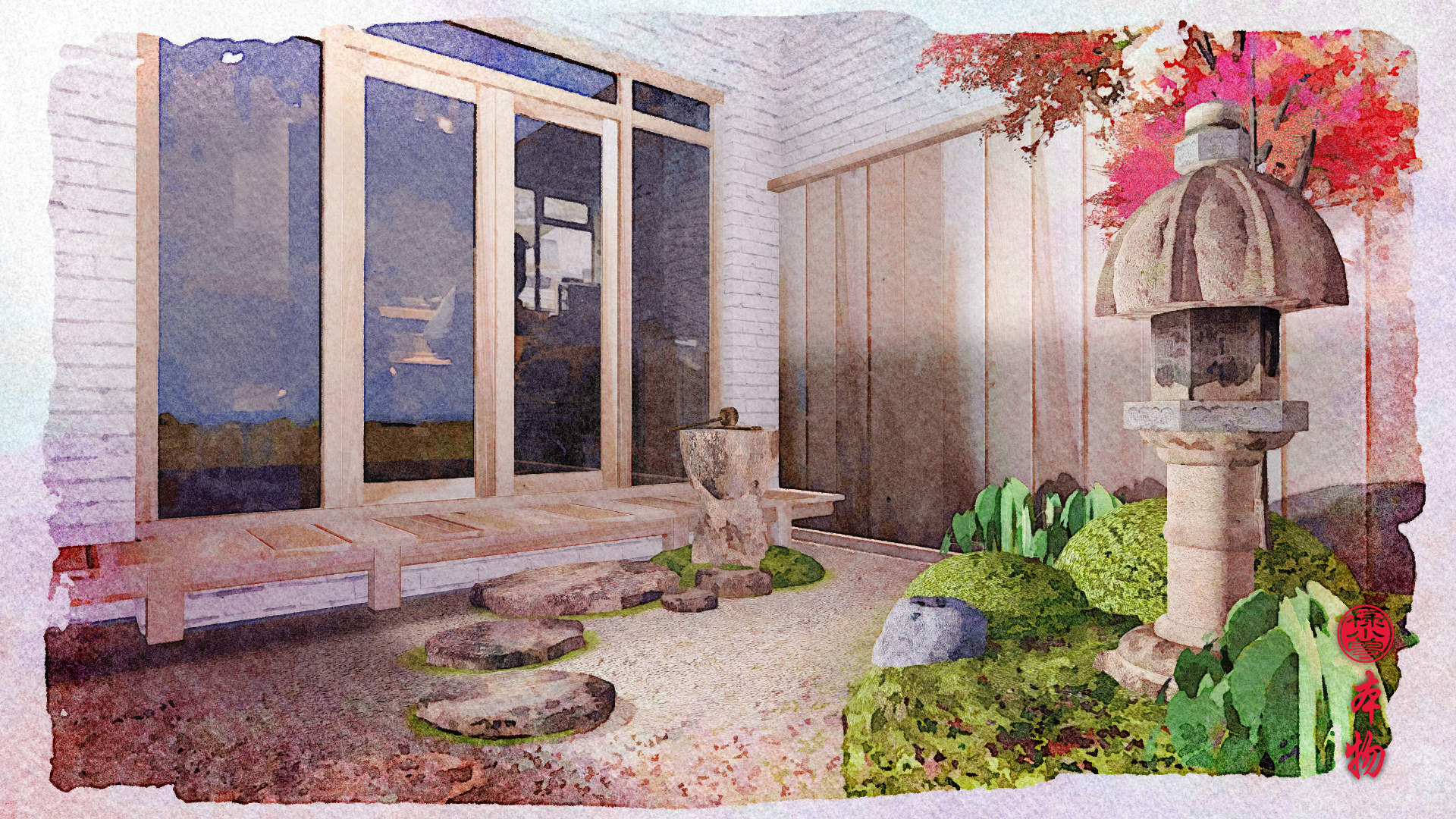
Special attention was paid to the relationship between the garden and the existing architecture. By carefully positioning the various elements, a balanced composition was created that can be experienced from multiple perspectives. The design thus not only forms an aesthetic complement to the restaurant, but also a natural continuation of the refined Japanese hospitality and traditions that characterize Cuisine Yama.
Details
- Year 2021
- Location Rotterdam, Netherlands
- Project duration 15 days
Japanese courtyard garden for a famous Michelin restaurant
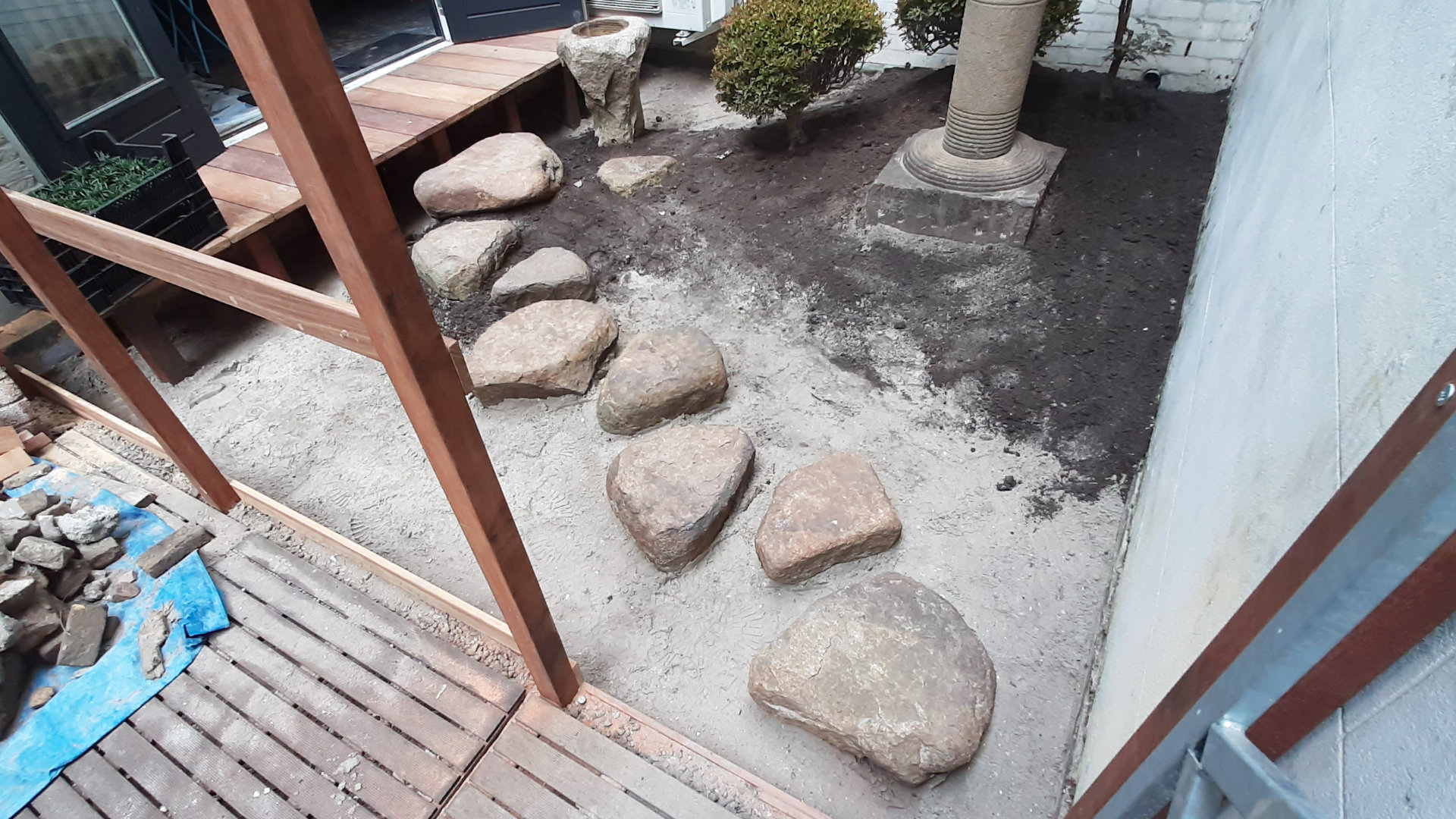
After approval of the garden design, we began the preparations for the construction of this special Japanese courtyard. In close consultation with the client, it was decided to preserve the original walls of the courtyard. This kept the existing architectural character intact and created an interesting interplay between the traditional Japanese garden elements and the urban environment of Rotterdam. In addition, a relatively young Japanese maple was deliberately chosen so that it can continue to develop over the years and grow together with the garden.
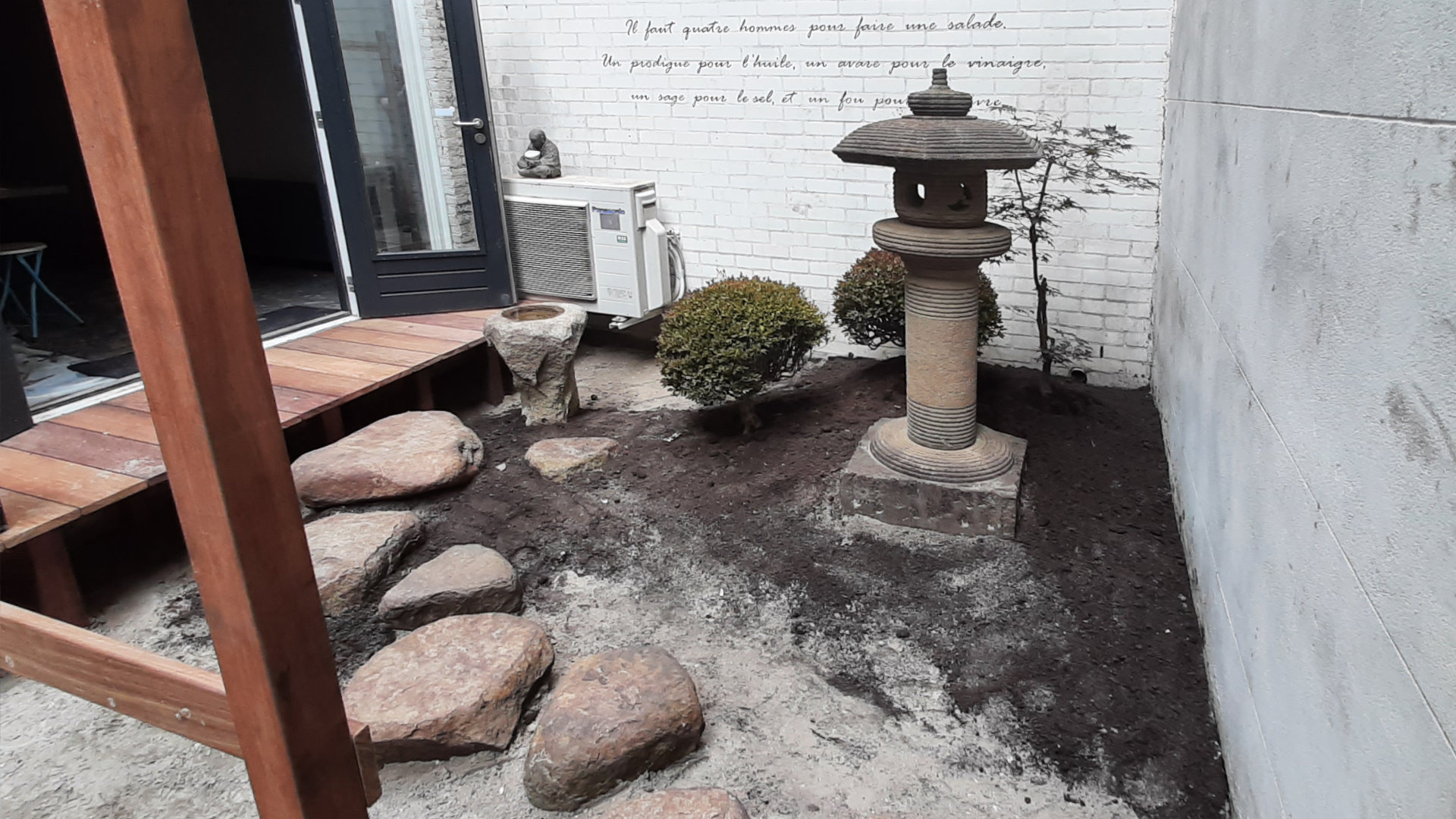
The base of the installation was formed by an organically shaped plant island, in which carefully selected shrubs, evergreen groundcover plants and the Japanese maple form a natural composition. The different plant species were positioned in such a way that their shapes, colors and growth patterns complement each other. A traditional Japanese stone lantern was added to the island as the main vertical element. The combination of stone, greenery and the refined branching of the maple brings a sense of tranquility and maturity to the compact outdoor space.
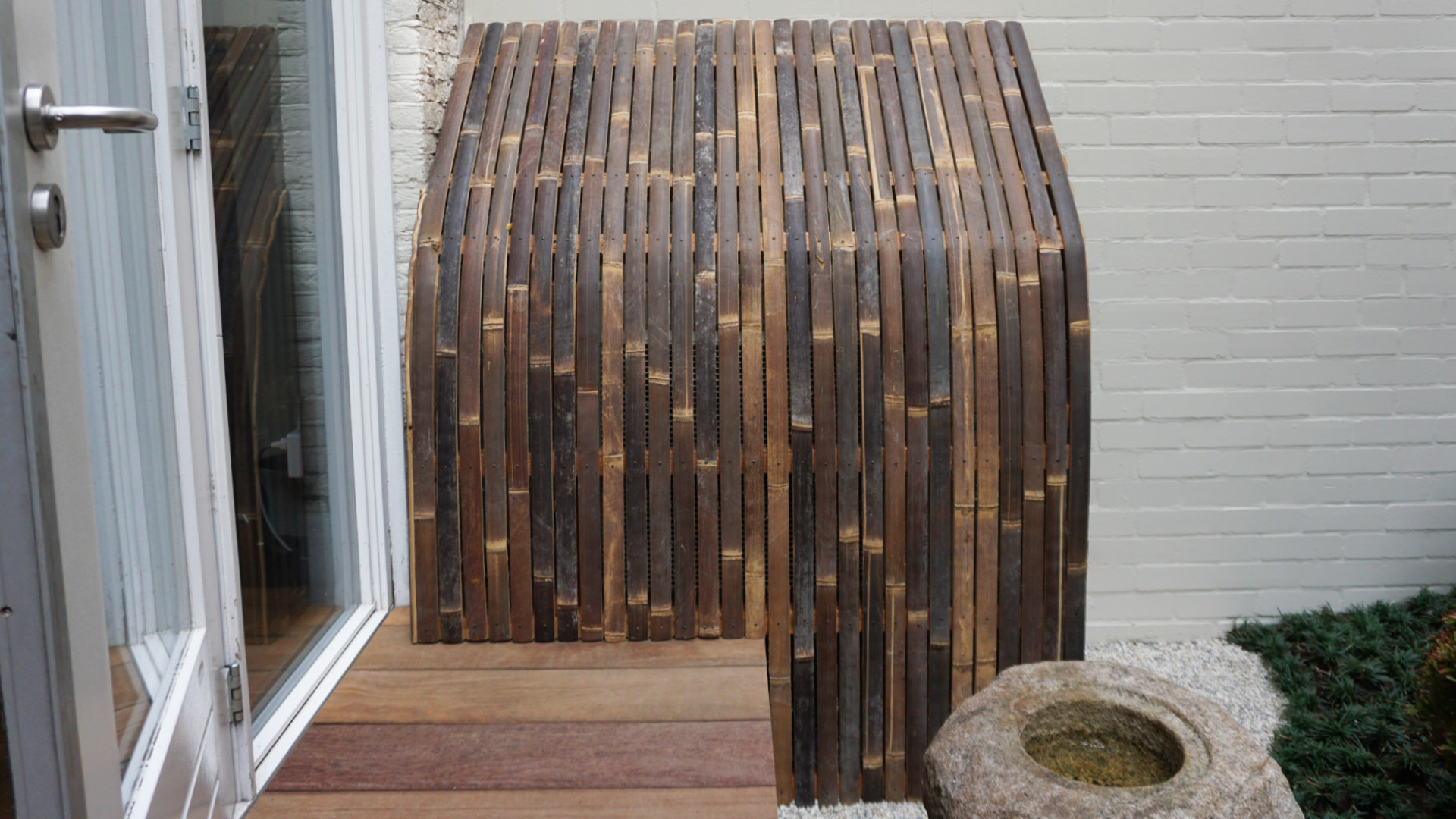
An open gravel area was created around the plant island, providing a sense of air and space. Authentic Kurama stone steps from the Kyoto area were incorporated into this composition. These natural stones are valued for their warm earth tones, irregular shapes, and characteristic texture. The carefully laid path leads the eye through the garden and provides a natural transition between the various elements. A robust stone water feature was placed at the front, inspired by the traditional Japanese Tsukubai, a water arrangement traditionally associated with ritual cleansing and the Japanese tea ceremony.
The execution emphasized the same precision that characterizes Japanese cuisine. The proportions of the stones, the positioning of the lanterns, and the refined transition between the gravel and the vegetation were carefully coordinated. By combining authentic Japanese materials with traditional craftsmanship, a subdued garden landscape was created in which each individual element serves a distinct function within the larger whole.
Details
- Year 2021
- Location Rotterdam, Netherlands
- Project duration 15 days
Japanese courtyard garden for a famous Michelin restaurant
The end result is a refined Japanese interior garden that naturally reflects the distinctive identity of Michelin restaurant Cuisine Yama. Within the enclosed walls of the Rotterdam courtyard, a small world has emerged where tranquility, simplicity, and attention to detail are key elements. The garden forms a harmonious extension of the gastronomic experience and demonstrates how traditional Japanese garden architecture can also thrive in a compact, urban setting.
The characterful stone lantern forms a striking focal point in the composition, surrounded by carefully trimmed shrubs and a carpet of deep-green groundcover. The Japanese maple brings a subtle sense of movement and seasonal interest to the garden. In spring, the fresh young foliage appears, during the summer the foliage provides a refined green accent, and in autumn the maple with its warm red hues forms a spectacular centerpiece. By deliberately planting a smaller tree, the garden also has the opportunity to develop naturally.
The stone water feature and the authentic Kurama stone steps add an extra historical and cultural dimension to the garden. The raw, natural textures of the stones contrast with the soft forms of the plantings, while the open gravel surfaces create a sense of space and lightness. This carefully balanced interplay between openness and enclosure reflects the Japanese aesthetic principle of Ma: the meaningful space between elements. It is precisely the emptiness that gives the individual elements their strength and creates a serene, balanced overall experience.
With this extraordinary realization, Yokoso Japanese Gardens has created an authentic Tsuboniwa where the centuries-old Japanese garden art and the refined culinary world of Cuisine Yama come together. The project illustrates how a relatively small outdoor space can evolve into a valuable architectural addition, where natural beauty and cultural traditions come together in subtle ways. An exclusive Japanese interior garden that not only enriches the surroundings but also invites to tranquility, contemplation, and the appreciation of the beauty of simplicity.
Details
- Year 2021
- Location Rotterdam, Netherlands
- Project duration 15 days
 Nederlands
 English
 Deutsch (Sie)
 Français
 Español
 Polski
 Čeština
 Italiano