

Authentic Japanese Roji tea garden with high-quality architecture
For a special garden project in a quiet residential area in South Holland, Yokoso Japanese Gardens the task of transforming an existing garden into a high-quality, authentic Japanese garden Roji Tea Garden. The Roji, literally translated as the ‘mossy path’, originates from Japanese tea culture and traditionally serves as the transition from the bustling outside world to the serene environment of the tea ceremony. The garden already featured some Japanese influences and a promising foundation, but offered plenty of opportunities to further deepen and refine the original atmosphere.
When designing, strengthening natural harmony was central. The existing dry river formed an important starting point and gained a more prominent role within the garden landscape. In addition, several new trees and shrubs were selected, while existing trees were given a carefully chosen new position. This created a balanced composition of greenery, natural stone, and open spaces, where each visual line contributes to the experience of the garden.
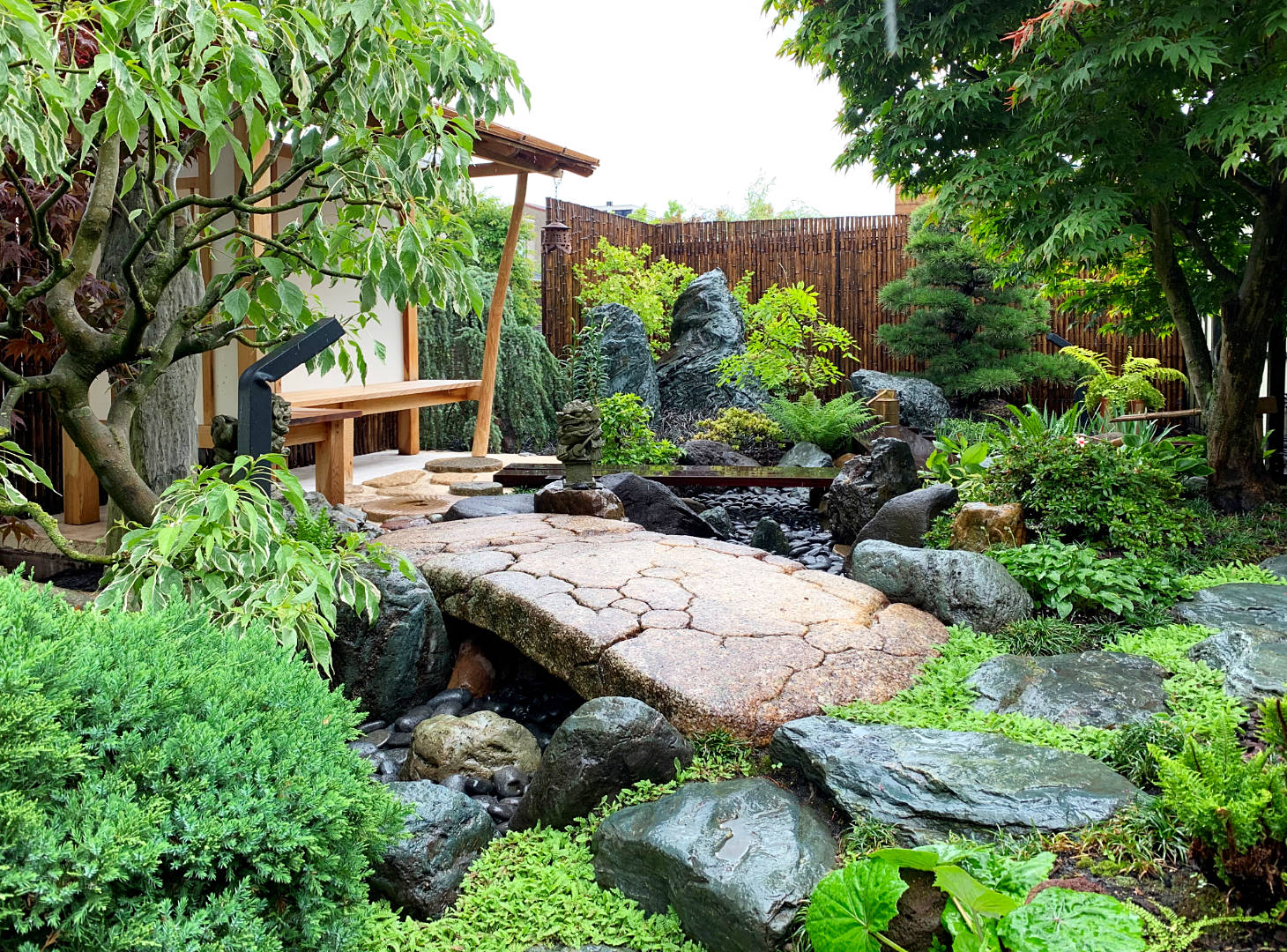
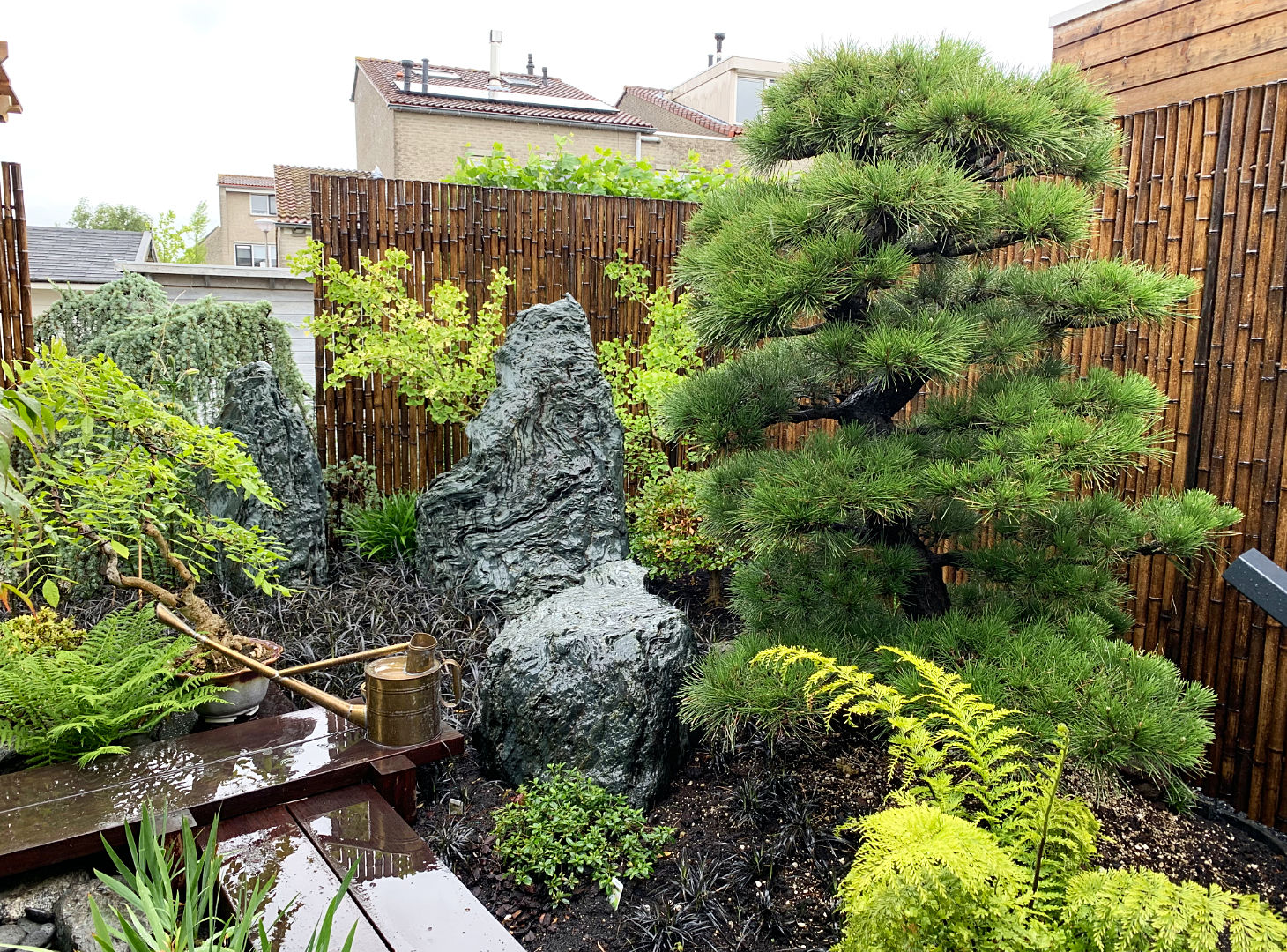
A particularly philosophical element in the design is the San-zon-seki, a traditional Japanese stone composition consisting of three characteristic Shikoku stones. The large central stone symbolizes Buddha, while the two smaller stones on either side are accompanied by supporting monks. Also a beautiful antique bridge of Kikko-seki natural stone It took a prominent place above the dry riverbed. Within the symbolism of the Japanese garden, crossing a bridge represents the transition to a peaceful, tranquil world.
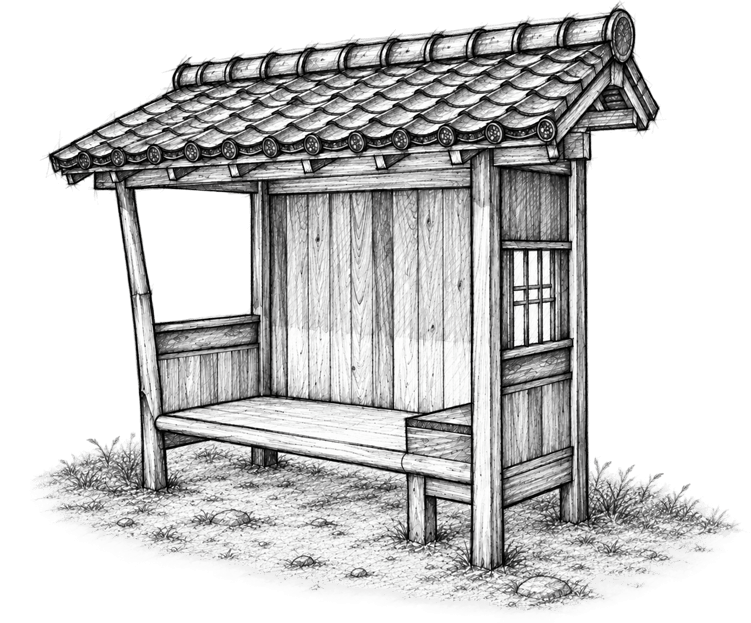
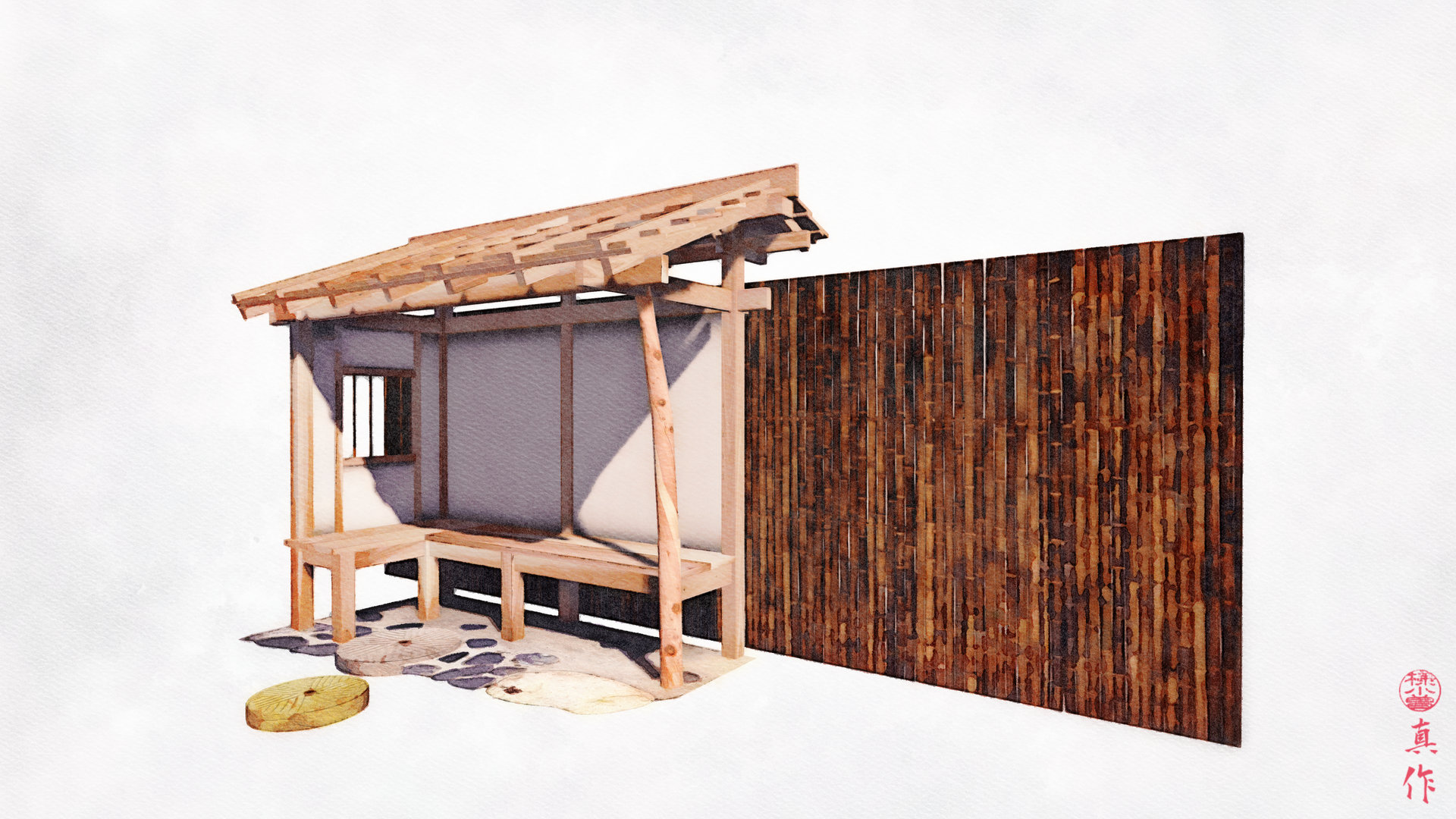
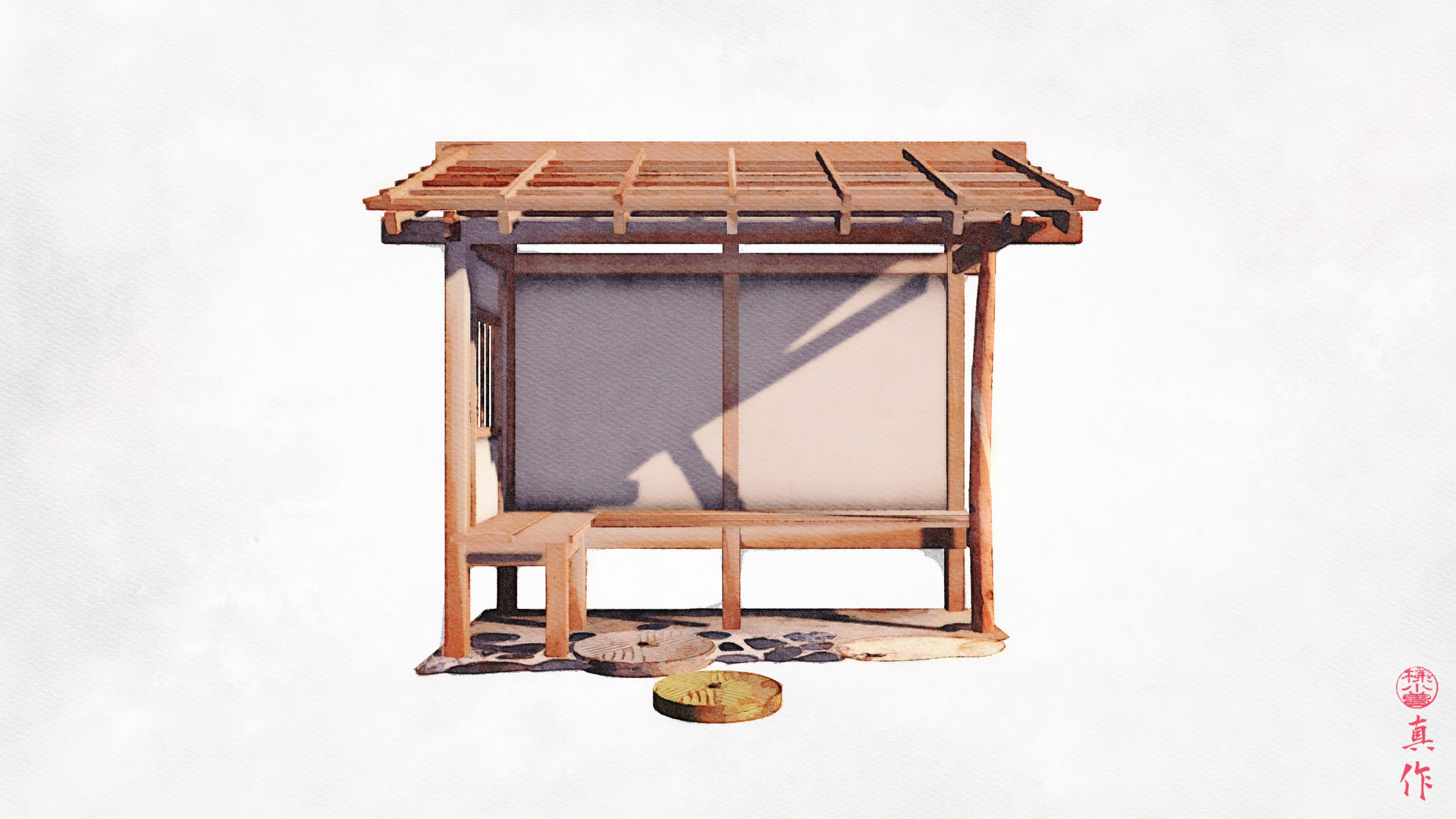
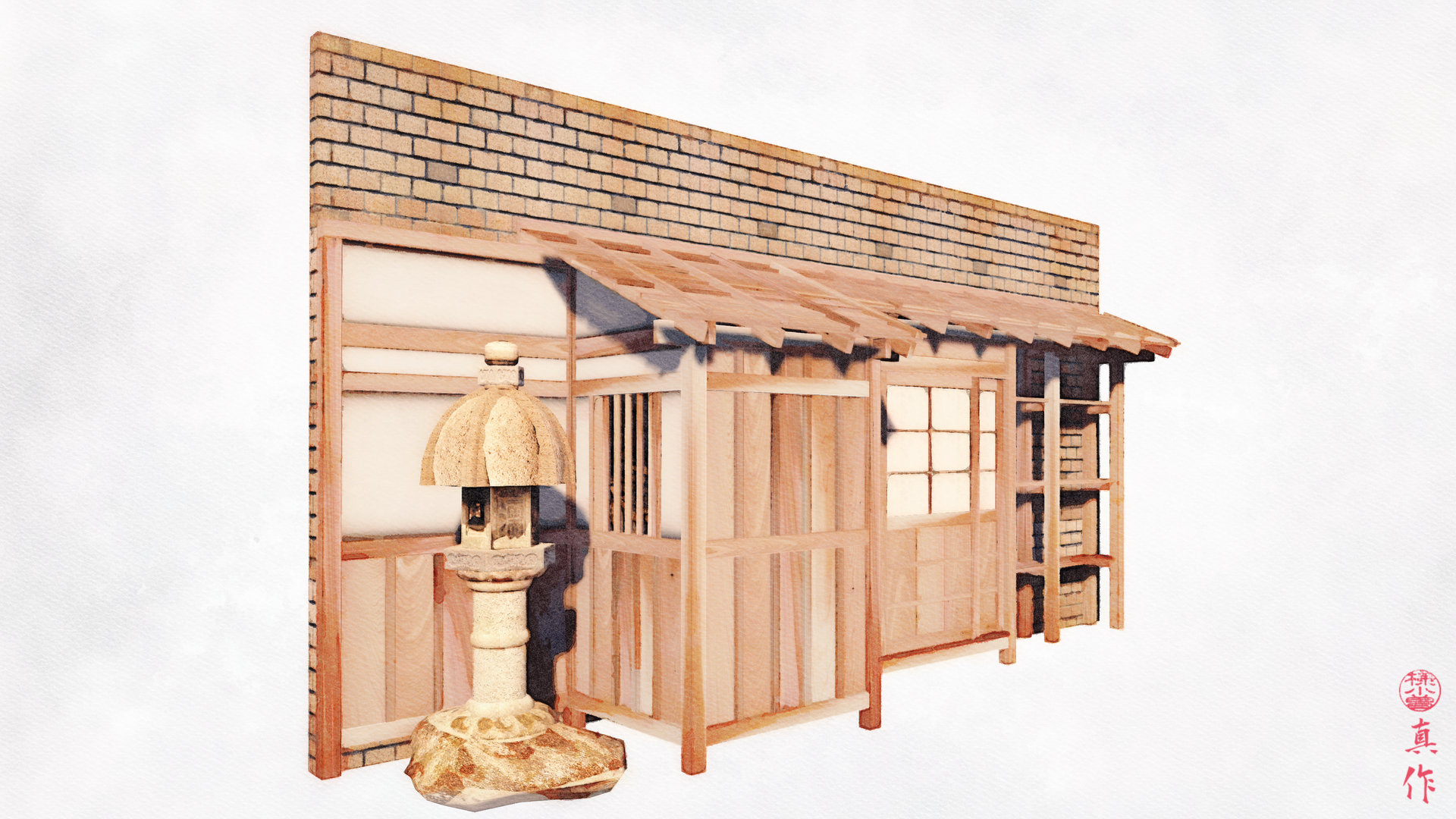
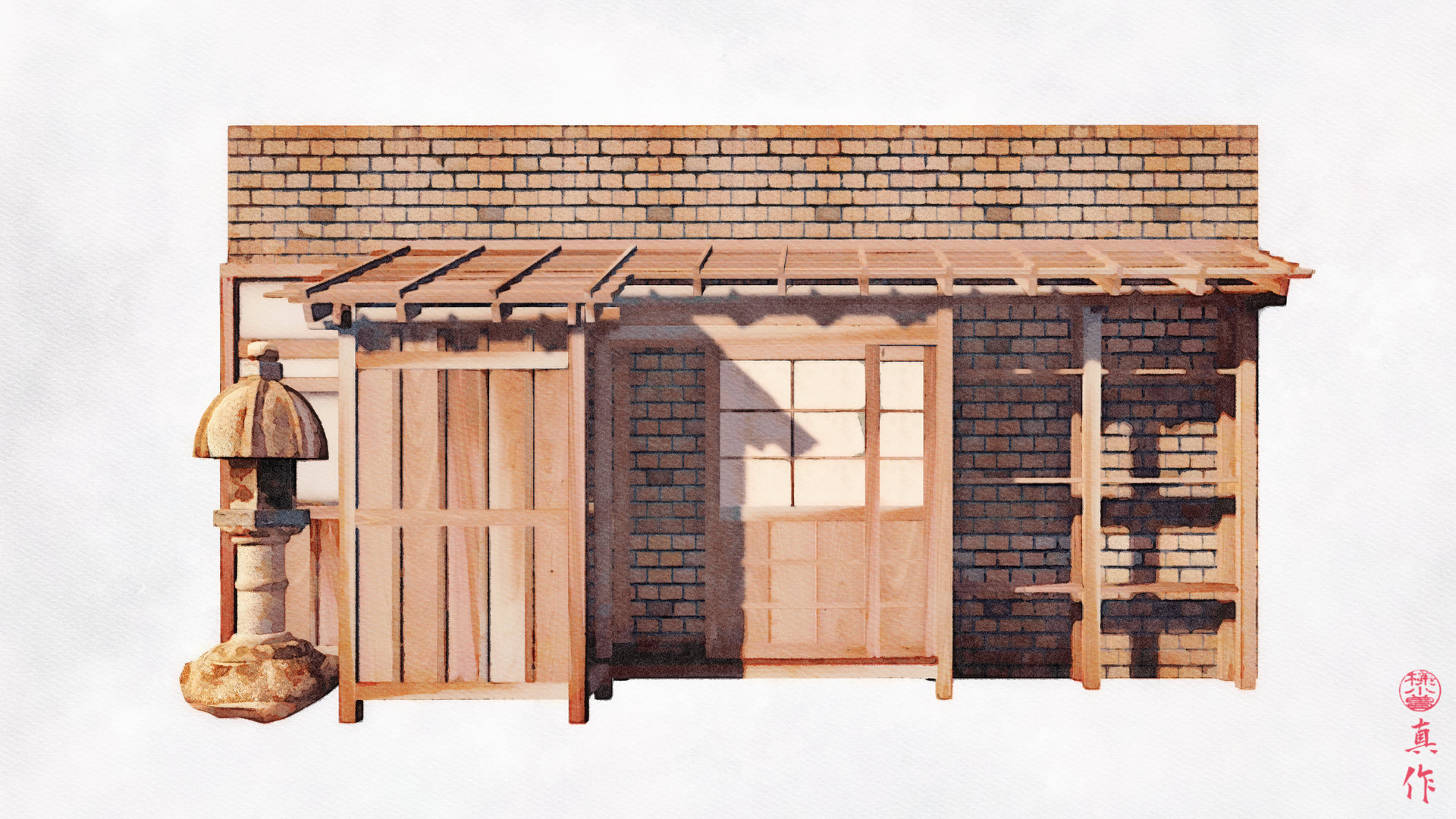
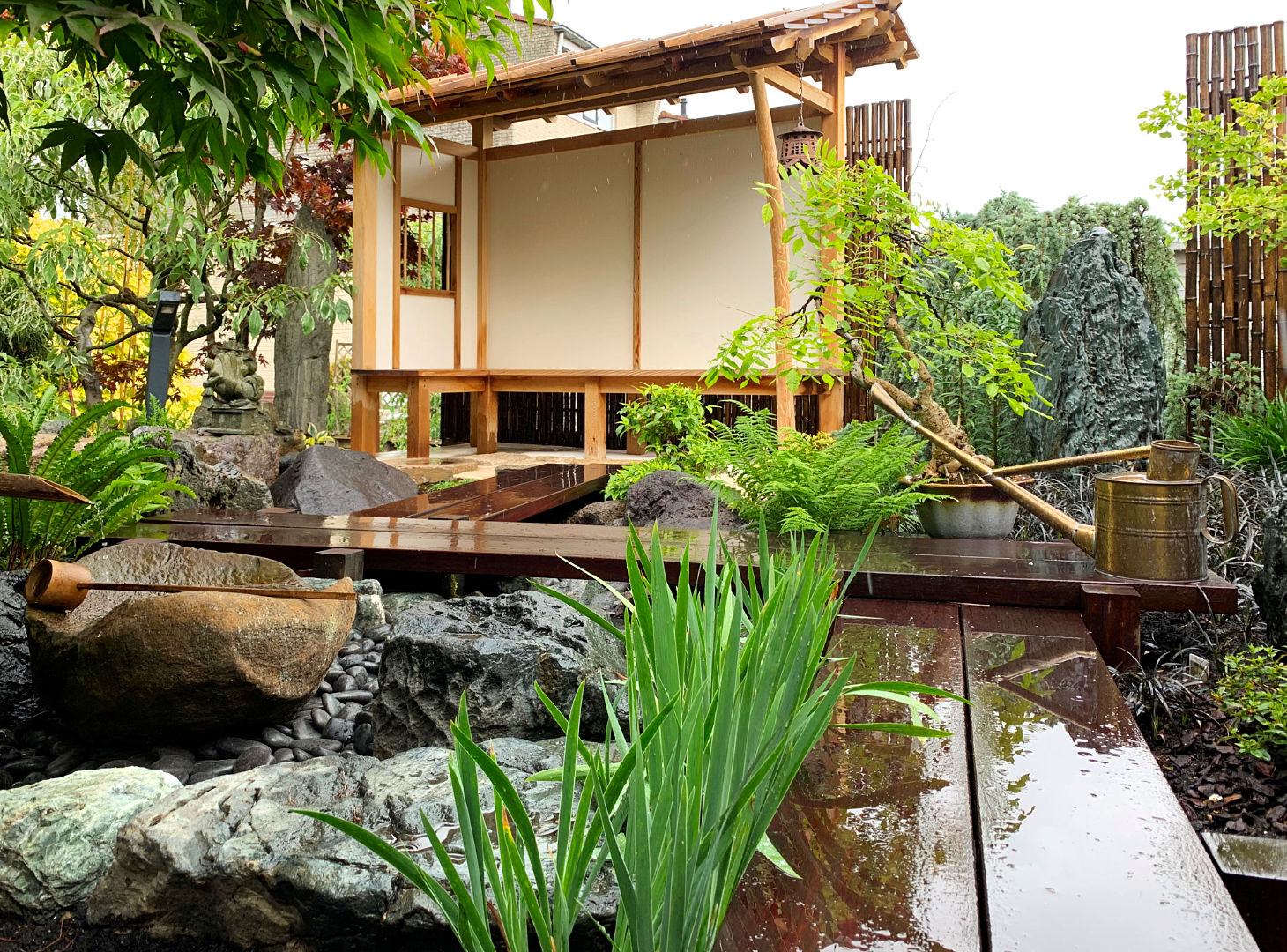
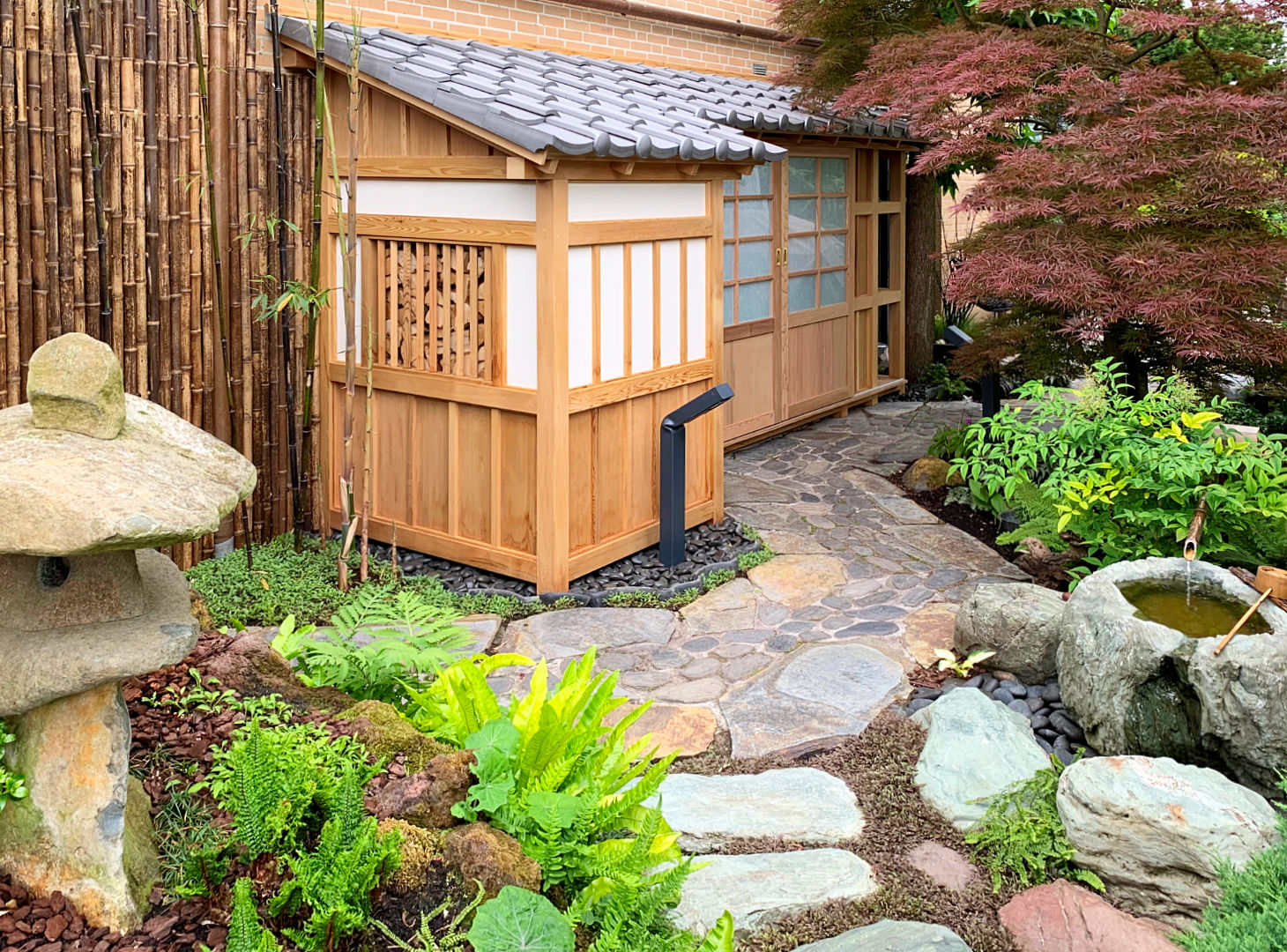
To enrich the garden both architecturally and functionally, we also designed a traditional Japanese garden shed and an elegant Koshikake Machiai, The , an indoor rest and waiting area that is originally used prior to the Japanese tea ceremony. Both structures were designed in Western Red Cedar, featuring refined wooden details and an appearance that aligns with the centuries-old Japanese building traditions.
Details
- Year 2019
- Location South Holland, Netherlands
- Project duration 35 days
Authentic Japanese Roji tea garden with high-quality architecture
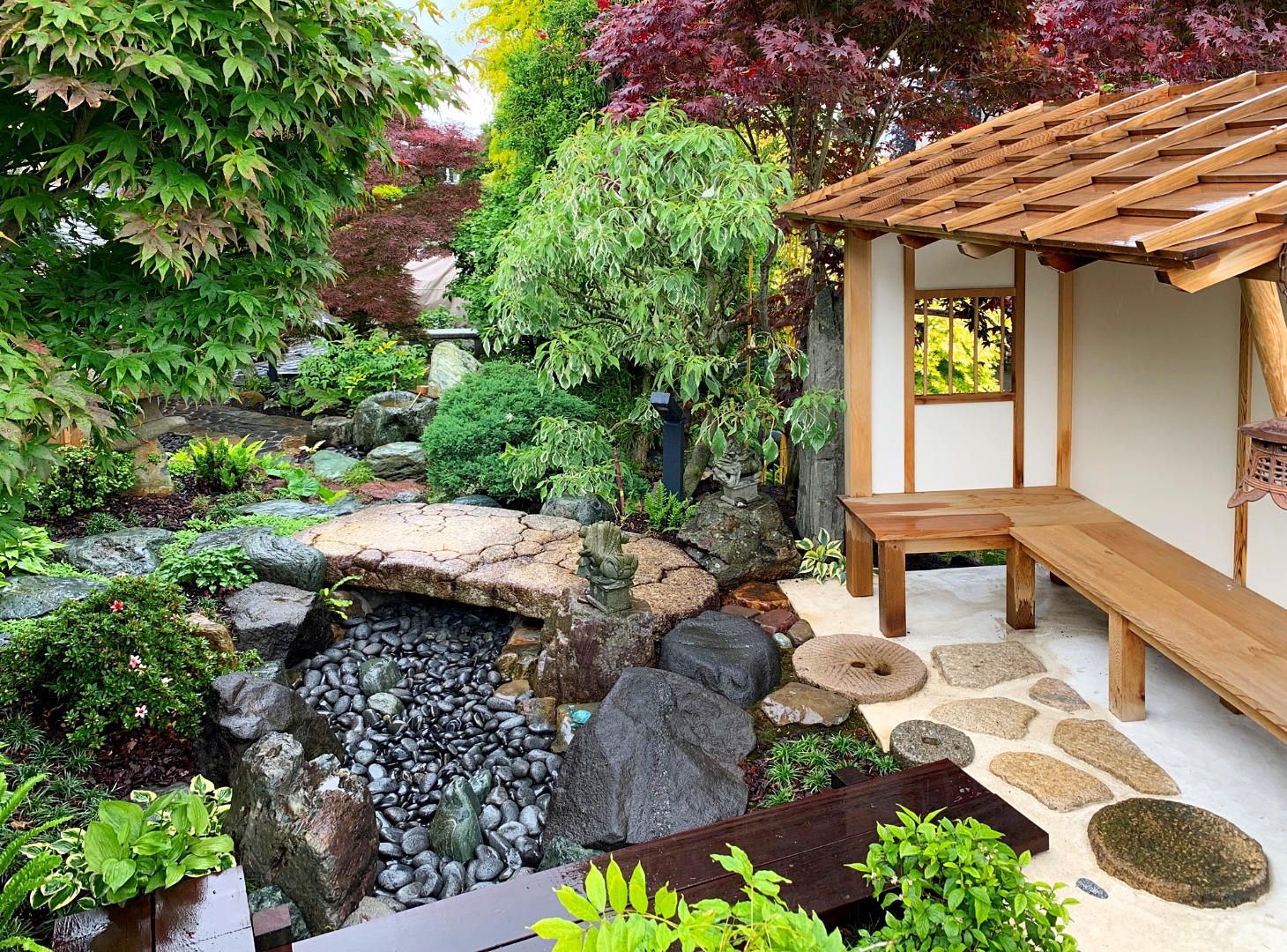
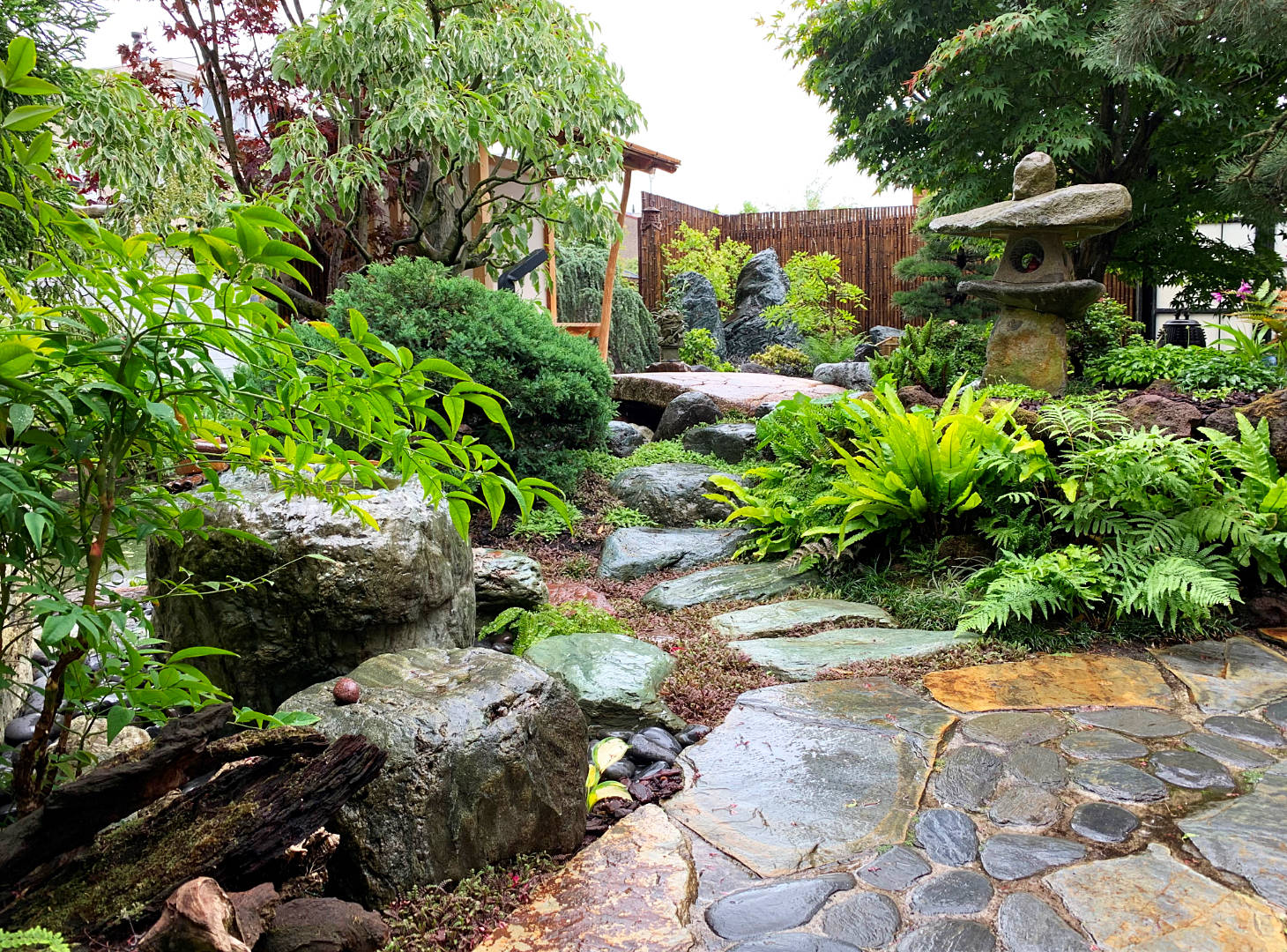
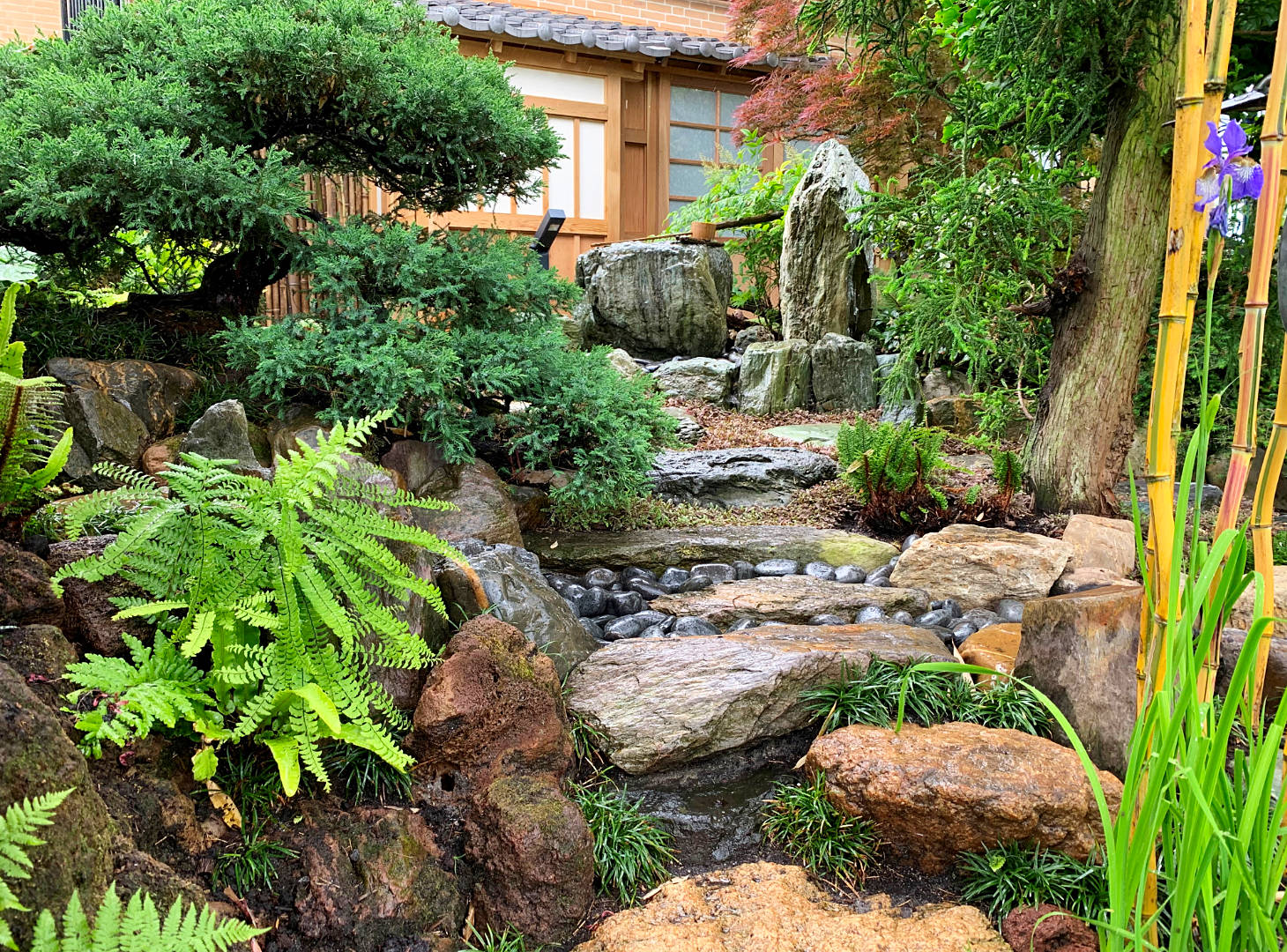
The construction began with the careful restructuring of the existing garden, starting with the dry riverbed. By combining natural rock formations, dark river stones, and carefully positioned stepping stones, we created a landscape that suggests the movement of flowing water, without there actually being any water present. One of the most remarkable elements was the installation of the antique Kikko-seki stone bridge, which connects the banks of the dry river and simultaneously forms an impressive architectural accent.
Subsequently, the large Shikoku stones for the San-zon-seki composition were placed. Particular attention was paid to the mutual relationships, orientation, and natural appearance of the stones. Existing trees were moved where necessary and new Japanese plantings were added, including characteristic niwaki, ornamental ash trees, ferns, and various ground cover plants. The combination of large rock formations and carefully constructed planting layers created a landscape with a lot of depth and a natural, mature appearance.
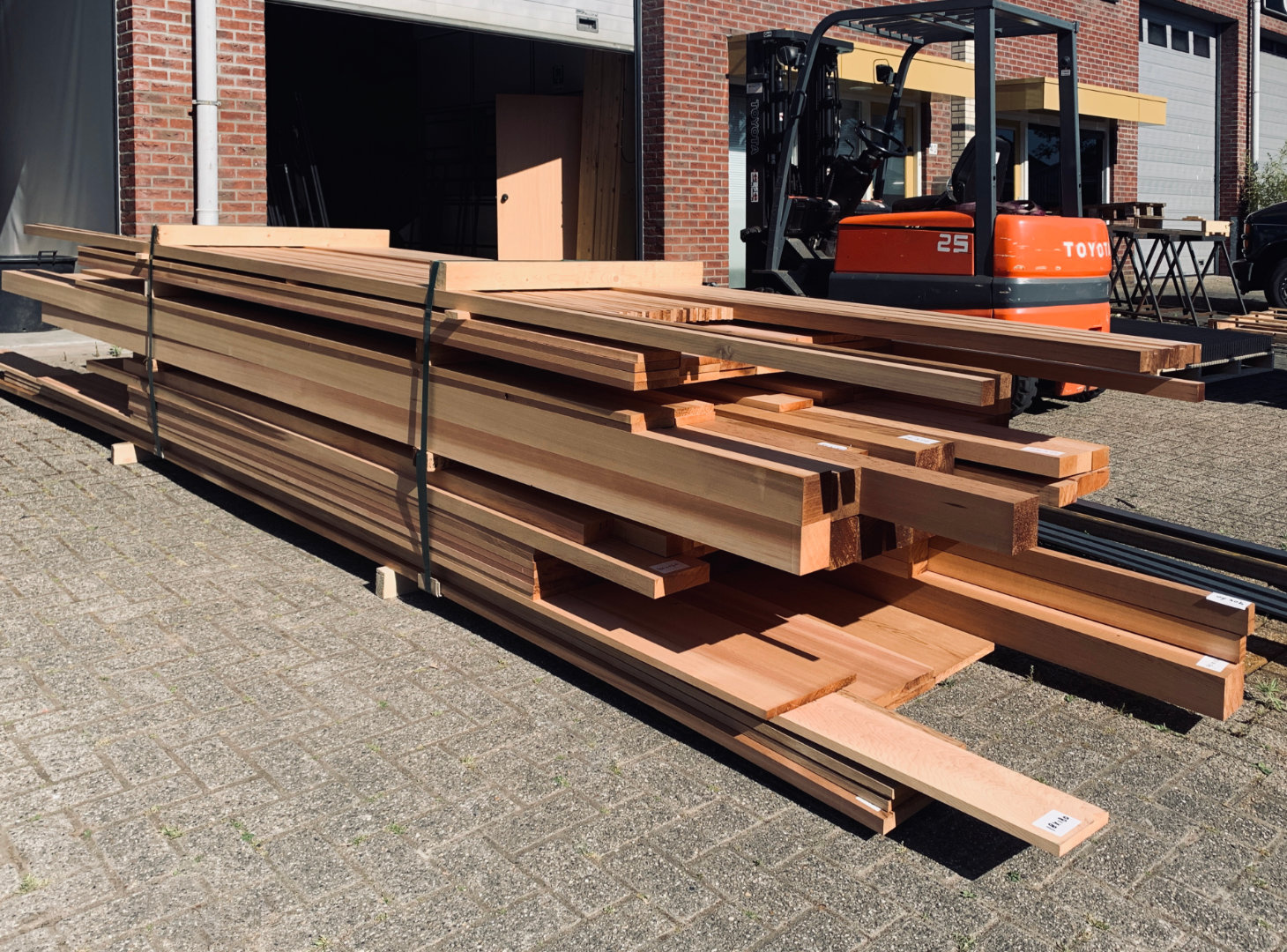
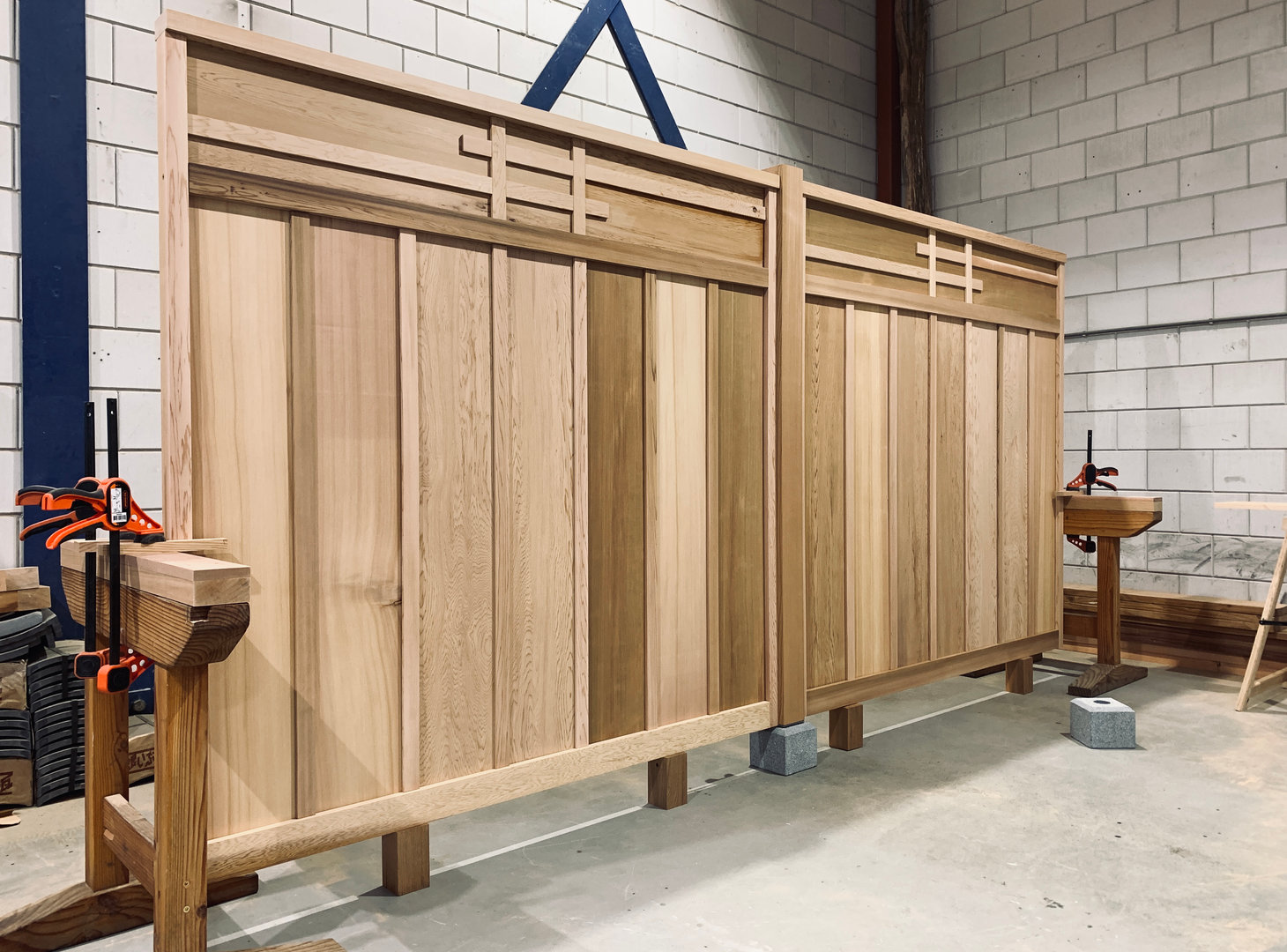
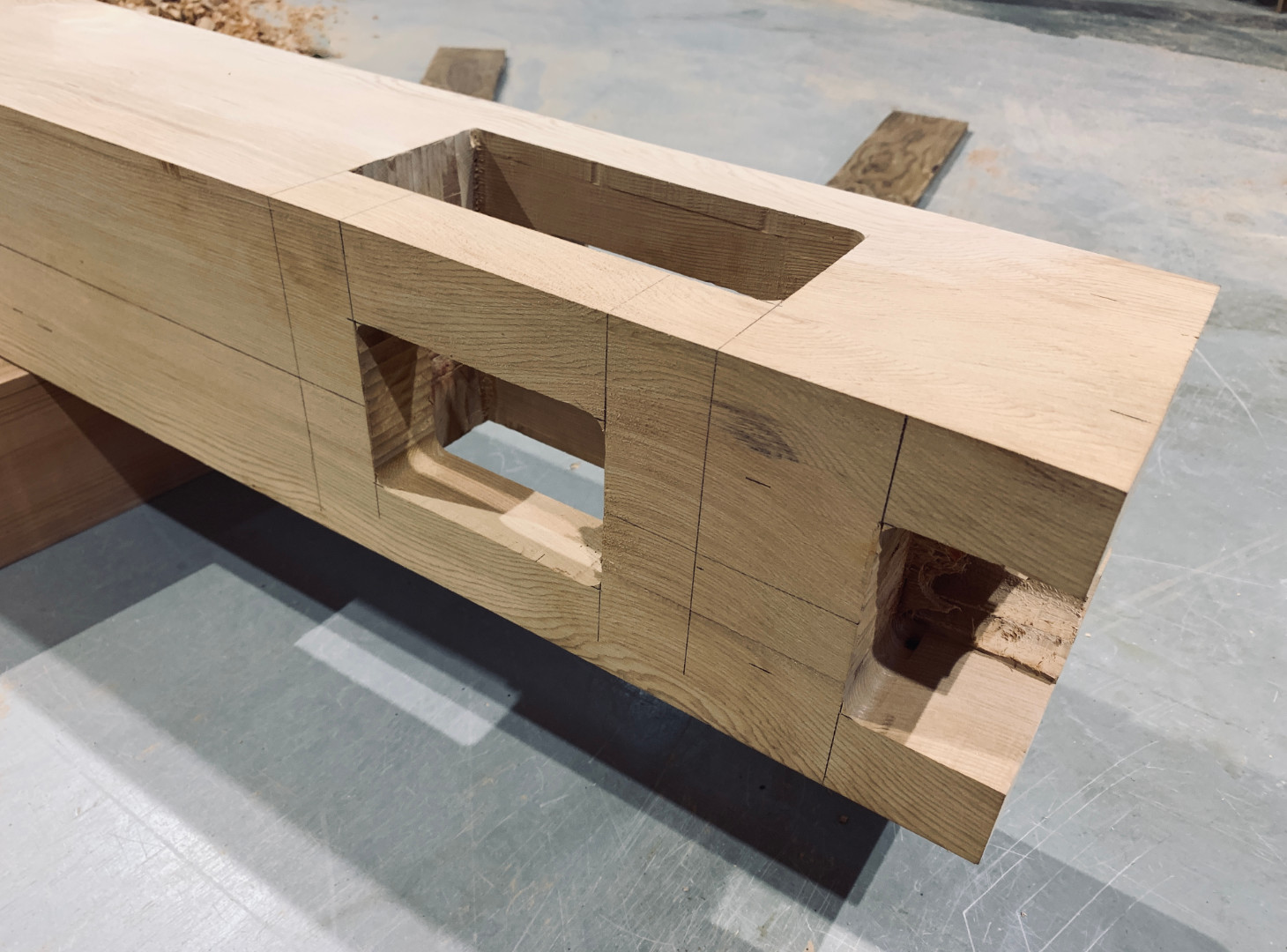
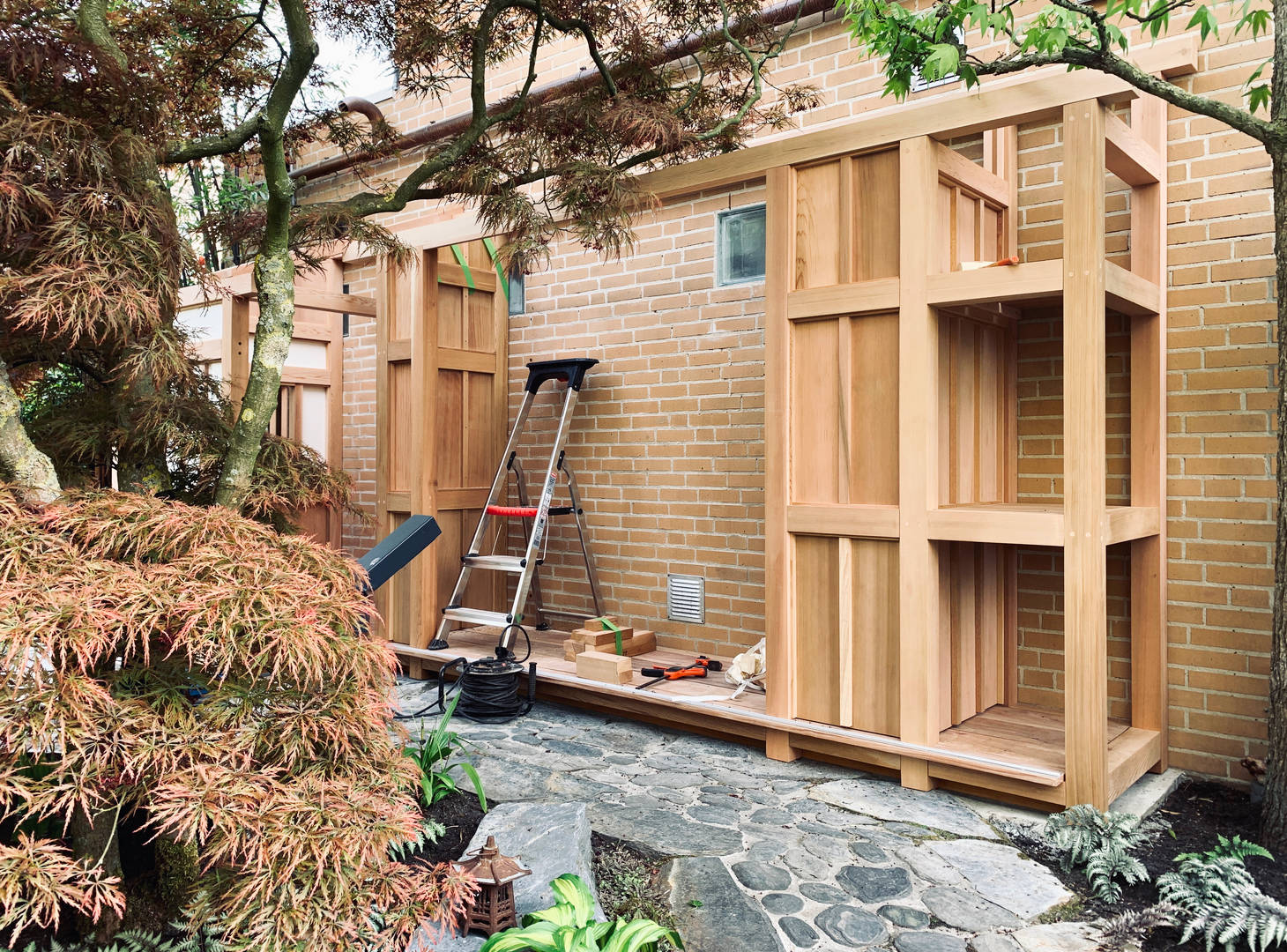
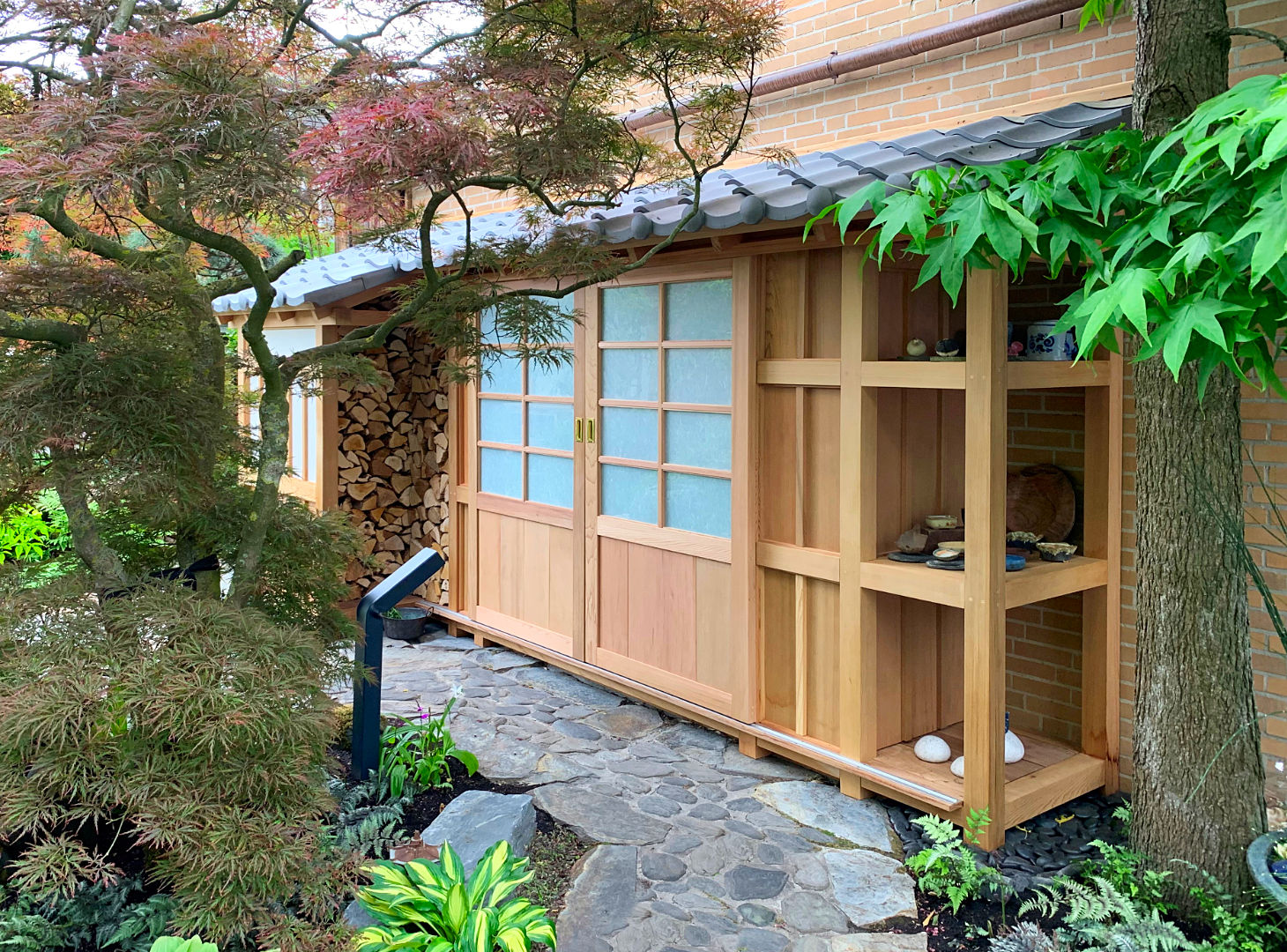
An important part of the project was the artisanal manufacture of the Japanese garden shed and the traditional Koshikake Machiai. Both constructions were made by hand in Western Red Cedar, Wood is a material known for its durability, warm color and natural appearance. The garden shed was equipped with a roof made of authentic Japanese ceramic tiles and traditional wooden sliding doors. The small windows are equipped with double glazing and finished with Washi paper, combining the characteristic appearance of Japanese Shoji panels with contemporary ease of use.
The Koshikake was given a sheltered seating area with views over the garden, carefully integrated between the natural stone and greenery. The practical functions were also not forgotten: the garden shed provides space for garden tools and wood storage, without compromising the refined appearance of the whole. By carefully adapting each construction and stone to the surroundings, the existing garden gradually grew into an authentic Japanese landscape.
Details
- Year 2019
- Location South Holland, Netherlands
- Project duration 35 days
Authentic Japanese Roji tea garden with high-quality architecture
The end result is an impressive Japanese Roji tea garden where traditional architecture, natural beauty, and centuries-old Japanese philosophy come together harmoniously. What originally began as a garden with some Japanese influences has grown into a richly composed landscape that offers a new discovery from every angle. The imposing Shikoku rocks, characteristic niwaki, and lush vegetation give the garden a mature appearance, as if it has been part of the surroundings for generations.
The renewed dry river forms one of the main highlights. The combination of dark river stones, natural stepping stones, and the beautiful antique Kikko-seki bridge creates a particularly harmonious interplay of forms and materials. The symbolic San-zon-seki stone composition adds an extra spiritual dimension, while the natural flow of the garden paths invites you to explore the landscape in complete tranquility.
The handmade Japanese garden shed and the traditional Koshikake Machiai give the whole a particularly authentic look. The warm tones of the Western Red Cedar, the refined wooden structures and the characteristic Japanese roof tiles form a beautiful contrast with the natural rock formations and the fresh greenery of the garden. From the sheltered Koshikake, a charming view of the landscape unfolds, where every stone, tree and plant has been carefully placed.
With this project, Yokoso Japanese Gardens A special outdoor space realized where functionality, traditional craftsmanship, and Japanese garden philosophy reinforce each other. The result is much more than just a beautifully landscaped garden: it is an intimate place of peace and reflection, where the atmosphere of the classic Japanese garden comes to life in an authentic way. A beautiful example of how an existing garden with vision, craftsmanship, and respect for tradition can be transformed into a timeless Japanese paradise.
Details
- Year 2019
- Location South Holland, Netherlands
- Project duration 35 days
 Nederlands
 English
 Deutsch (Sie)
 Français
 Español
 Polski
 Čeština
 Italiano