

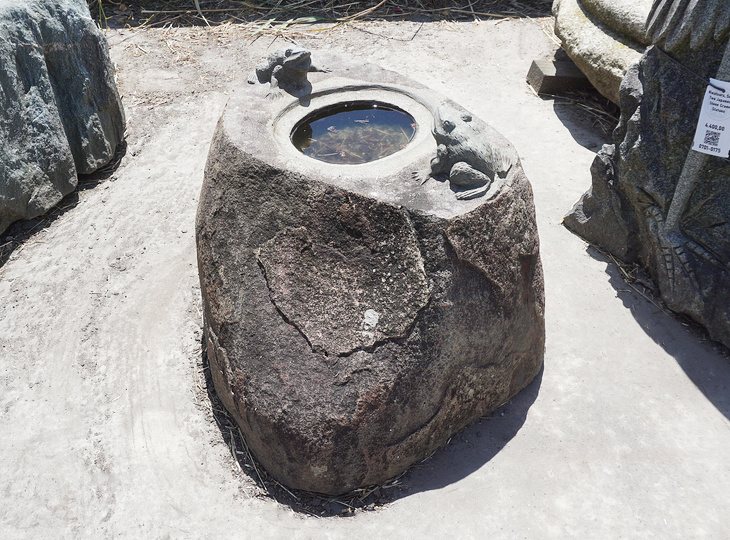
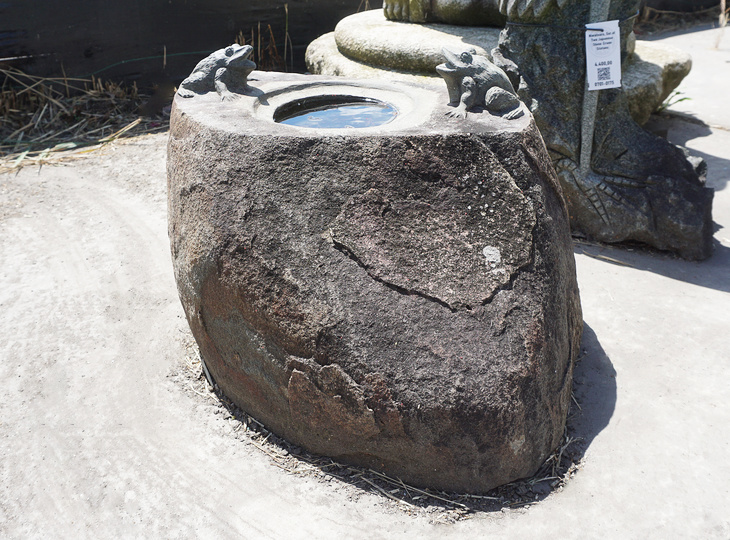
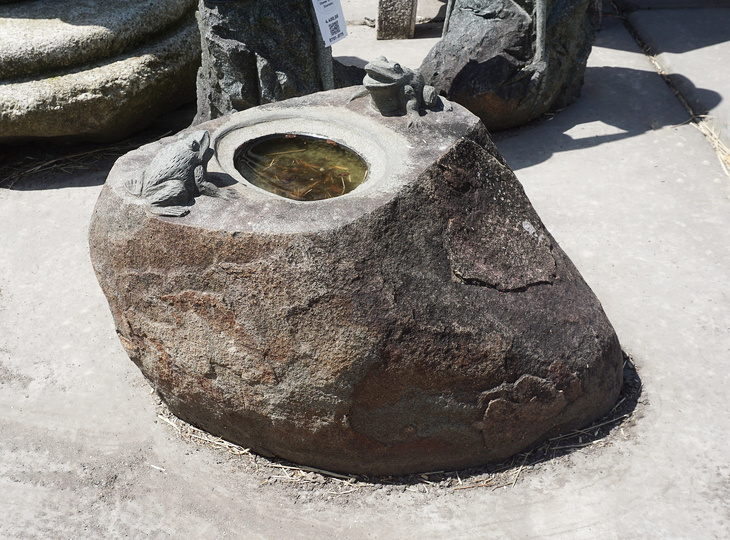
Kaeru Chozubachi, Japanese Tsukubai Water Ornament
Uitverkocht
A Chōzubachi (手水鉢) is a water basin commonly found in traditional Japanese gardens. It is used for the ritual washing of hands and rinsing of the mouth before a person may participate in the tea ceremony or enter sacred ground.
Specifications
- OriginKyoto, Kyoto Prefecture, Japan
- MaterialKurama stone
- AgeShōwa period (1926–1989)
- Dimensions45 x 63 x 37 cm
Product information
A Chōzubachi (手水鉢) is a water basin commonly found in traditional Japanese gardens. It is used for the ritual washing of hands and rinsing of the mouth before a person may participate in the tea ceremony or enter sacred ground. The word Chōzubachi literally means: water basin for the hands.
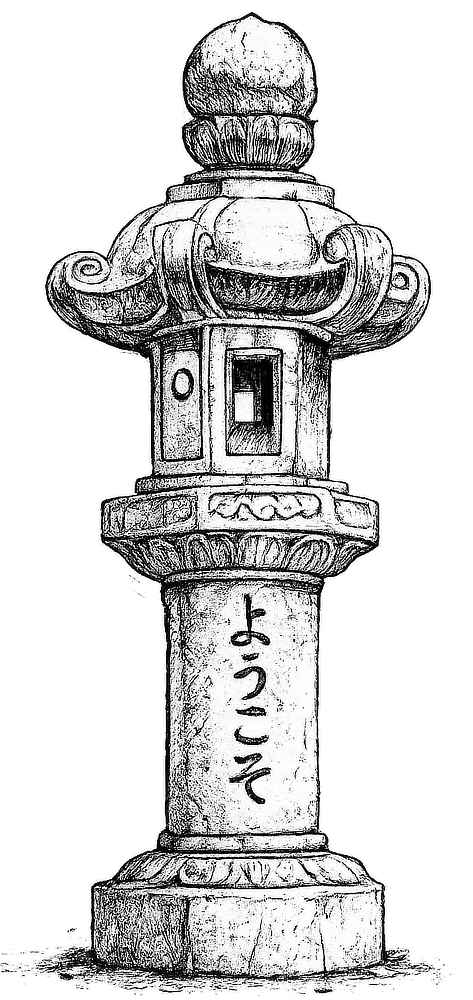
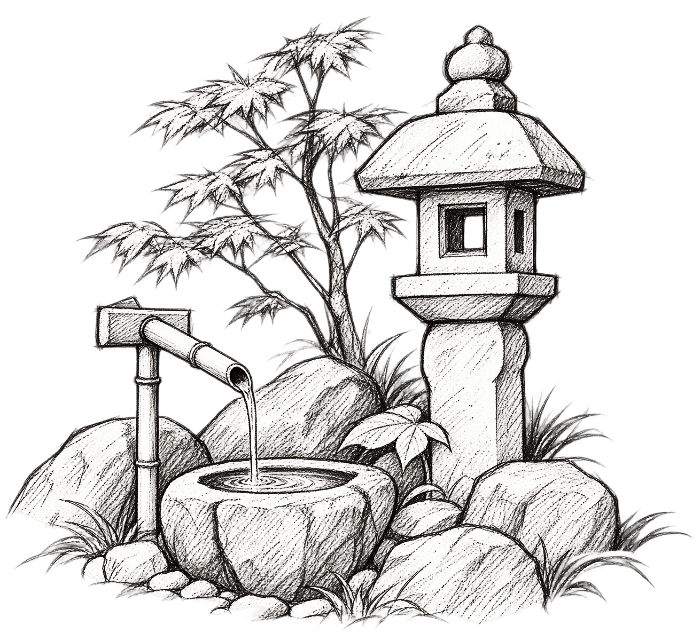
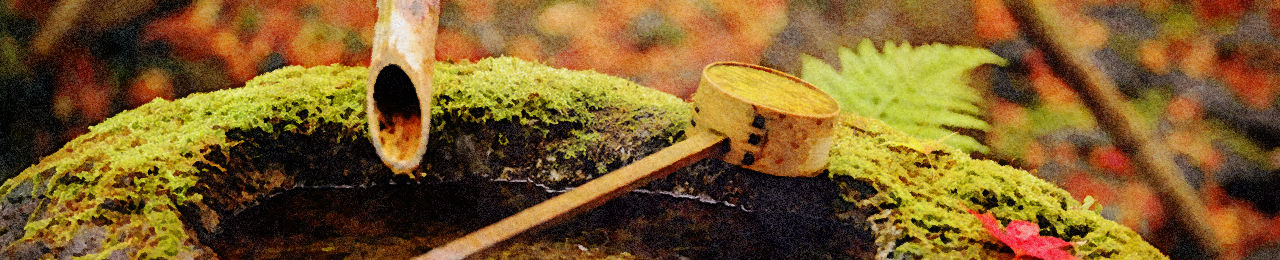
This Chōzubachi can be applied very nicely in the traditional Tsukubai arrangement. In this authentic set-up, specific functional stones called Yaku-ishi (役石) are placed around the Chōzubachi. The stones on the left and right sides are called Teshoku-ishi (手燭石) and Yuoke-ishi (湯桶石), while the stepping stone at the front is called Mae-ishi (前石). A stone Ikekomi lantern can also be placed behind the Chōzubachi along with a tree and various plants. In addition, bamboo elements such as a Shishi Odoshi water supply and a Hishaku ladle are often incorporated into the arrangement.
The term tsukubai is a conjugation of the verb tsukubau (蹲う), which means to bow or crouch. This not only refers to the practical use of the arrangement, but also emphasizes the importance of humility, an aspect that can be seen as the core of Japanese society and culture.
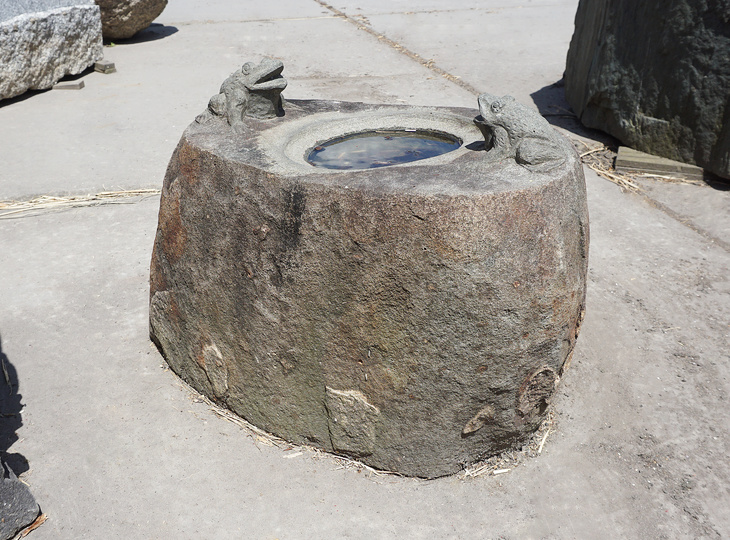
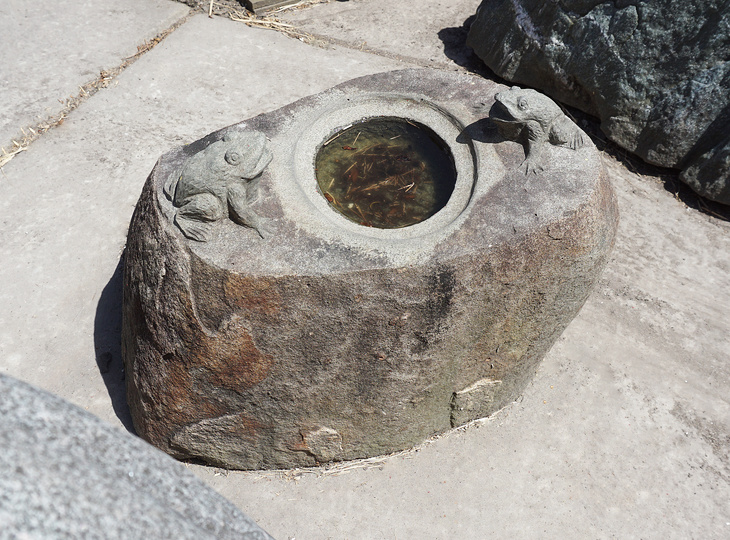
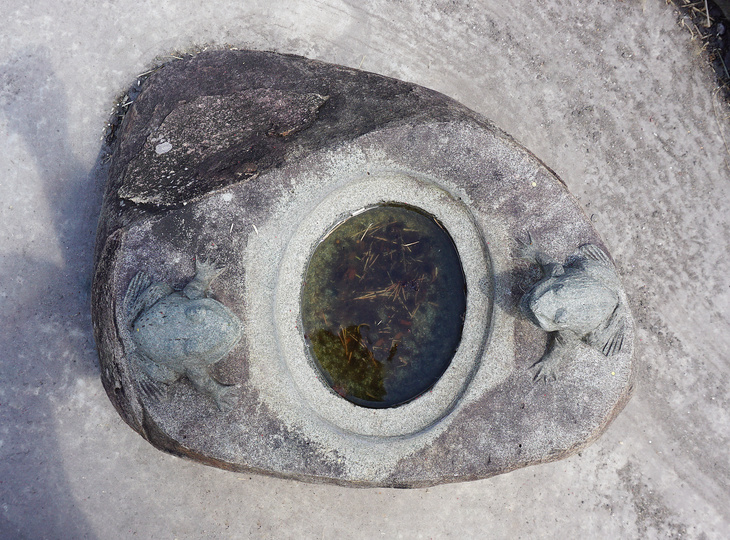
This unique Chōzubachi depicts two frogs along the water. Within Japanese culture, frogs are seen as a symbol of happiness and prosperity. This is because the Japanese word for frog, Kaeru (蛙), has the same pronunciation as the verb for returning, Kaeru (帰る). The return of people and objects is seen here as a sign of good luck. This idea also forms the basis of the idea that an ornament in the shape of a frog in the garden will bring happiness to the owner and even to visitors of the garden.
 Nederlands
 English
 Deutsch (Sie)
 Français
 Español
 Polski
 Čeština
 Italiano