

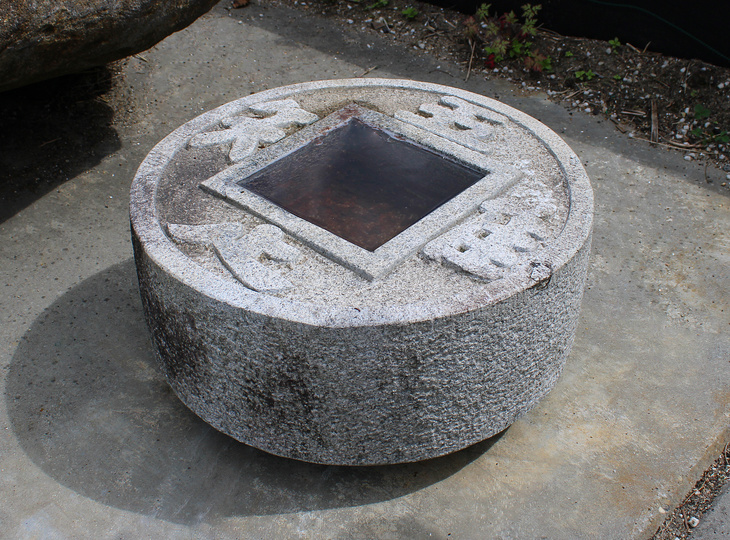
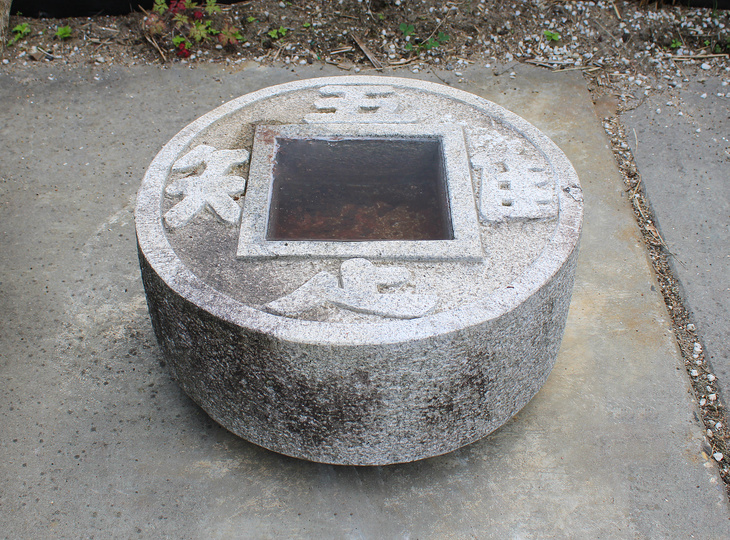
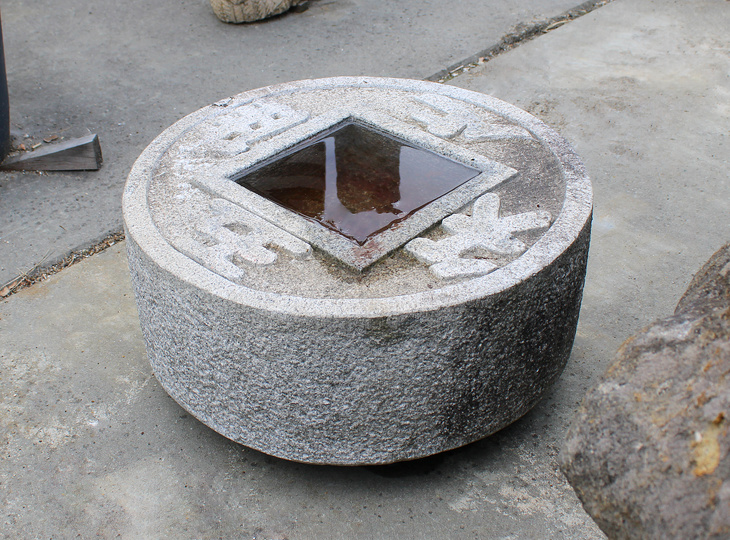
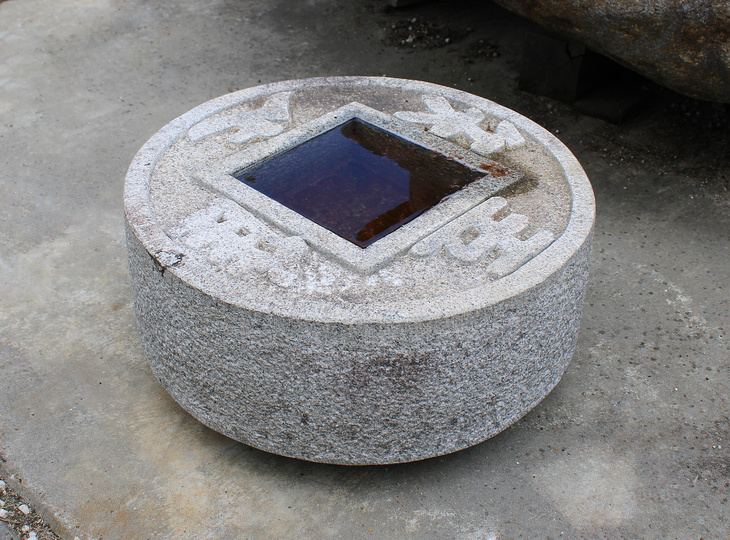
Ryoan-ji Zenigata, Japanese Chozubachi Tsukubai
1 op voorraad
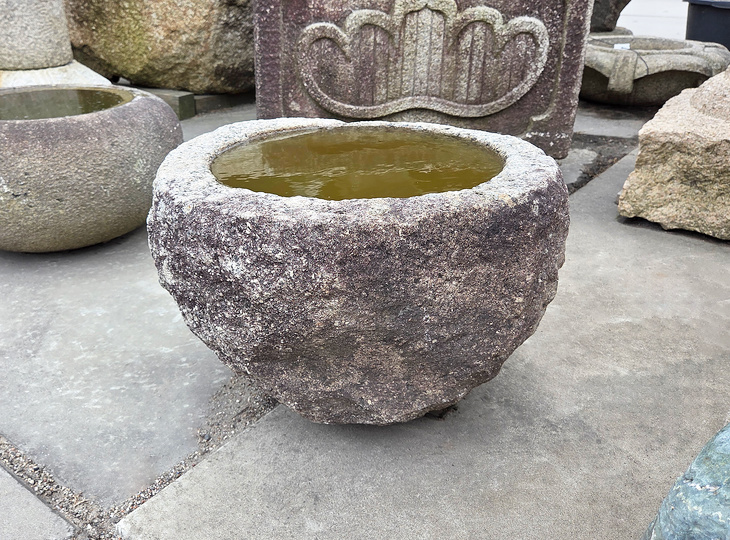
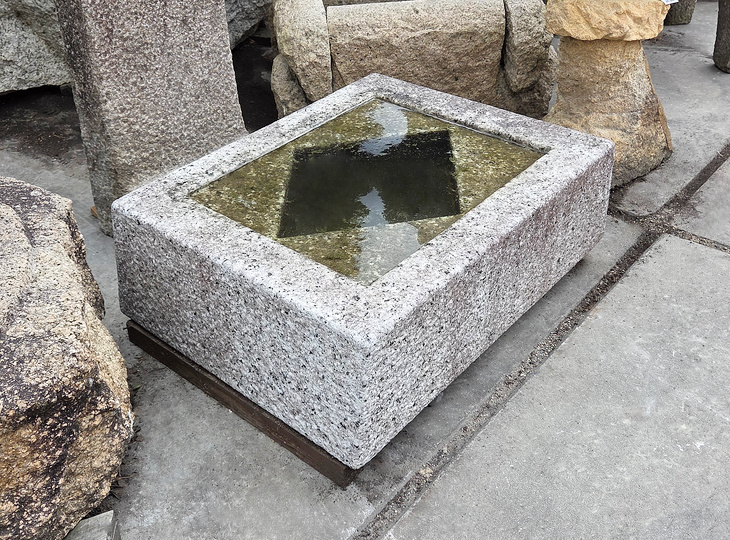
A Chōzubachi (手水鉢) is an ornamental water basin that is common in traditional Japanese gardens. It is used for ritual hand washing and cleaning the mouth for a person to participate in the tea ceremony or to enter sacred grounds such as a Buddhist temple or Shinto shrine.
Specifications
- OriginNagoya, Aichi Prefecture
- AgeShōwa period (1926–1989)
- Condition assessment
- Dimensions46 x 46 x 22 cm
- Weight50-100 kg
Product information
A Chōzubachi (手水鉢) is an ornament with a water reservoir that is common in traditional Japanese gardens. It is used for ritual hand washing and cleaning the mouth for a person to participate in the tea ceremony or to enter sacred grounds such as a Buddhist temple or Shinto shrine. Chōzubachi translates loosely as a water reservoir for the hands.
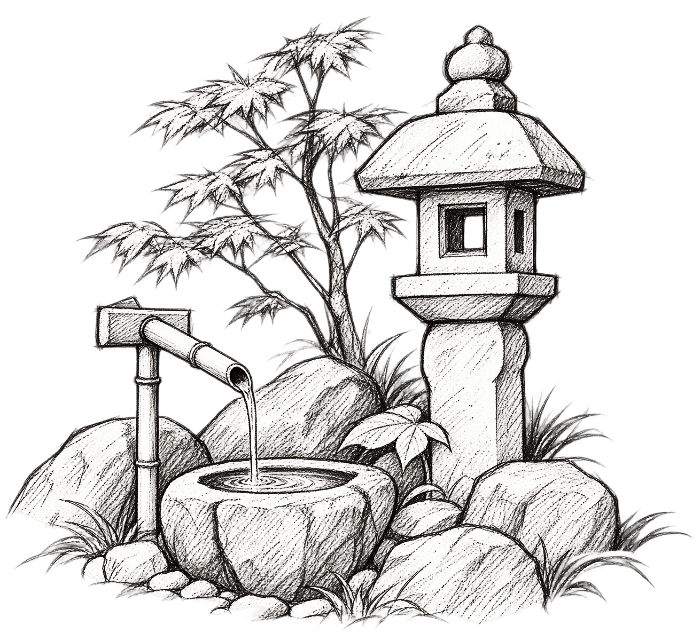
This Chōzubachi can be well used in the traditional Tsukubai arrangement. This means that specific functional stones called Yaku-ishi (役石) are placed around the Chōzubachi. The stones on the left and right sides are called Teshoku-ishi (手燭石) and Yuoke-ishi (湯桶石). Additionally, there is a Mae-ishi (前石) at the front. As an addition to the stones, a wooden Oribe lantern can possibly be placed behind the Chōzubachi. A bamboo spoon is also a common object in the Tsukubai arrangement. The water supply in a Tsukubai can be regulated in a traditional way by hollow bamboo sticks called Takekakehi (竹筧). The term Tsukubai comes from the Japanese verb Tsukubau (蹲う), which means to crouch down. An action associated with humility.
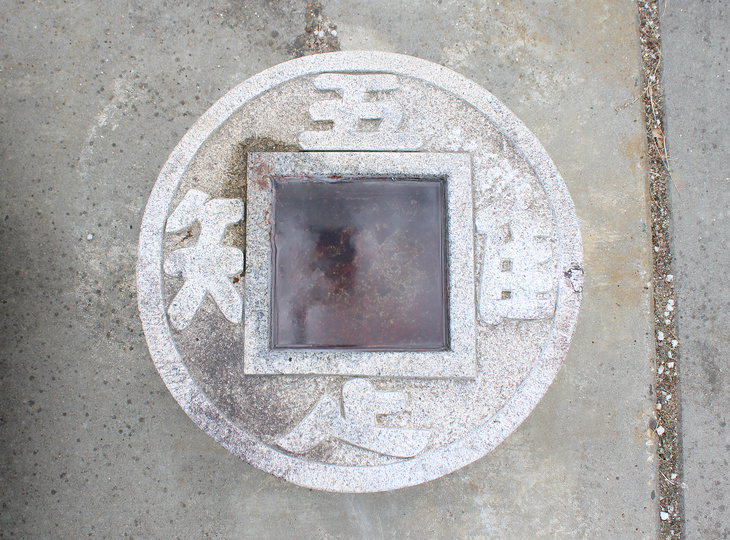
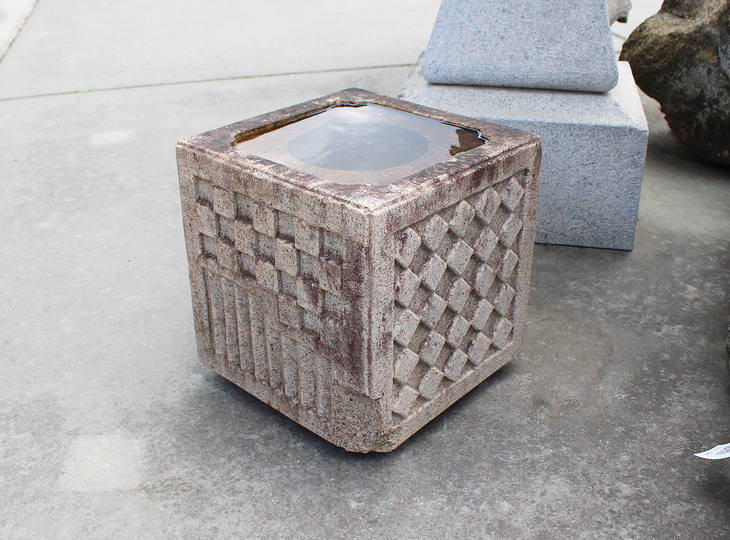
The Ryōan-ji (竜安寺) Chōzubachi is an example of a Zenigata (銭形), or coin-shaped Chōzubachi. The name Ryōan-ji comes from the famous temple in Kyoto with the same name where the type originated. The four characters on each side of the Chōzubachi all form a new character in combination with the square water reservoir in the center, which represents the mouth or opening (口).
All combinations are as follows: – 1.吾 (true) means: I – 2.唯 (only) means: only – 3.足 (enough) means: enough – 4.知 (know) means: know
Together, these characters form a sentence that translates quite literally: If you are satisfied with what you have, then you are spiritually rich.
 Nederlands
 English
 Deutsch (Sie)
 Français
 Español
 Polski
 Čeština
 Italiano