

Intimate Japanese tea garden with a Nijiriguchi leading to the tea room and a small Koshikake Machiai
For a renowned European tea master, we were given the special task of designing an authentic Japanese tea garden, in which the centuries-old traditions of the Japanese tea ceremony are at the center. The garden not only had to have a serene and refined appearance, but above all serve as a meaningful place where the tea master could traditionally welcome and prepare his guests for the tea ceremony.
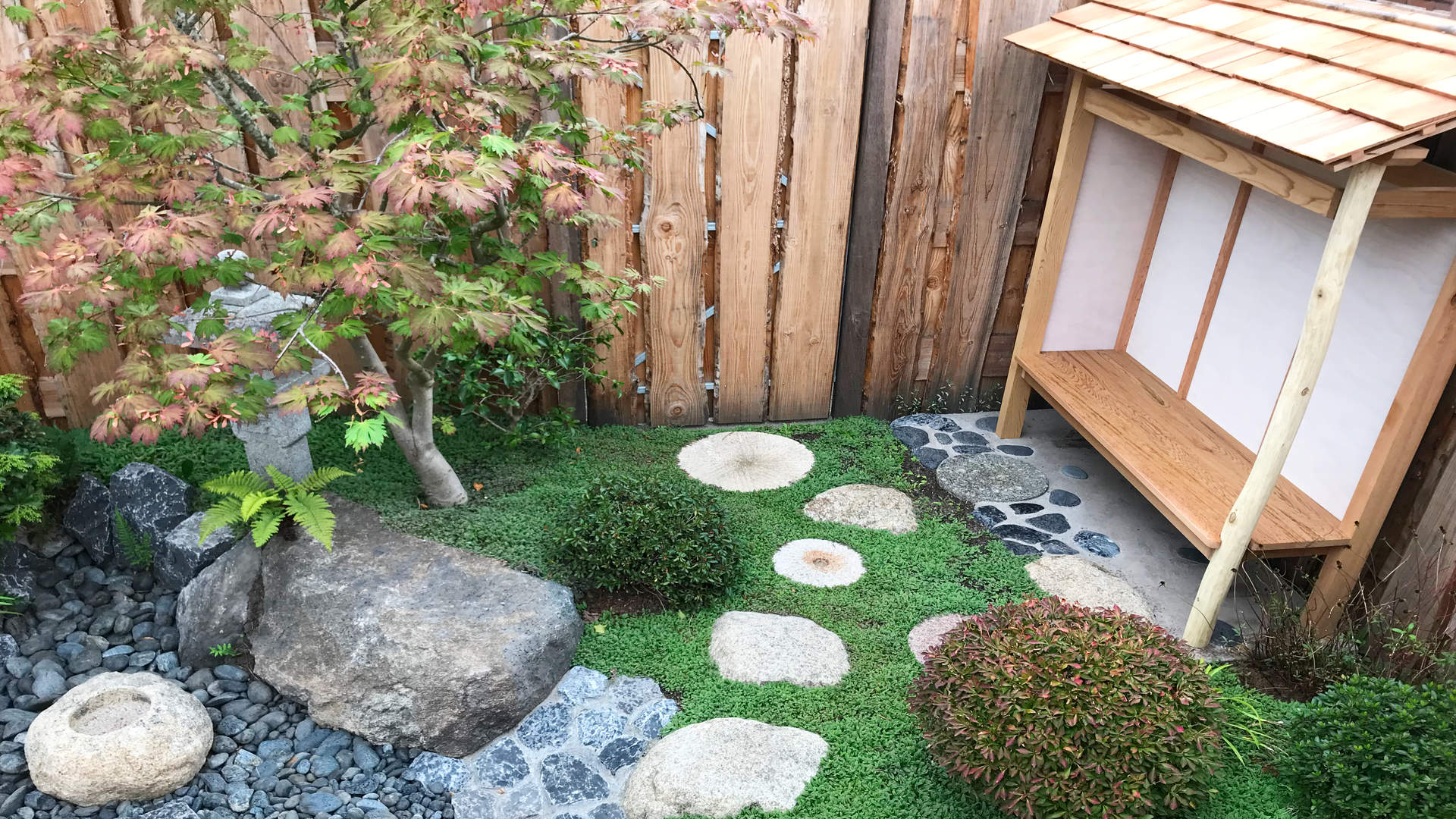
The design is inspired by the classic Japanese Roji, The ‘moss path’, literally the 'path of mosses', symbolizes the transition from the everyday world to the tranquility and concentration of the tea room. A carefully laid path of natural stepping stones leads visitors through an intimate landscape of carefully placed stones, moss-like ground covers and other subtle plantings.
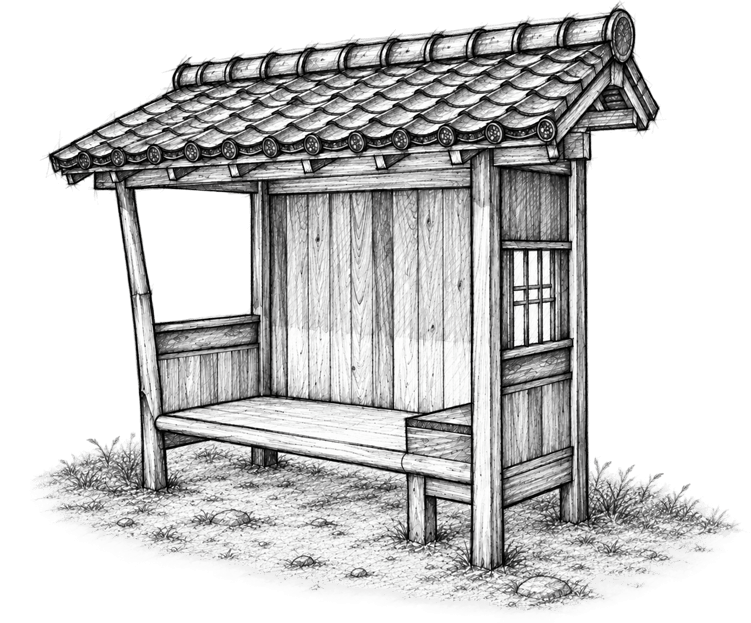
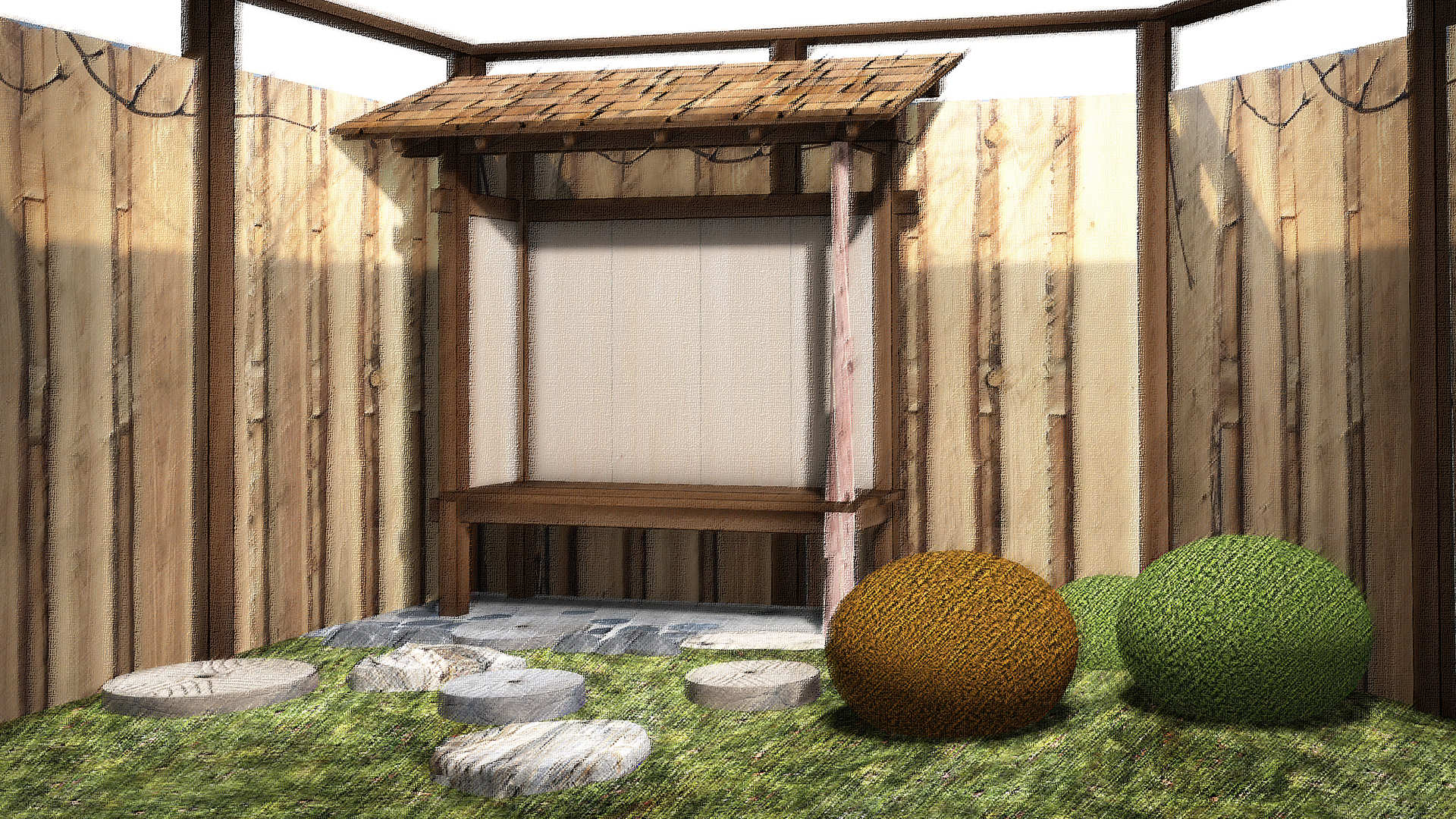
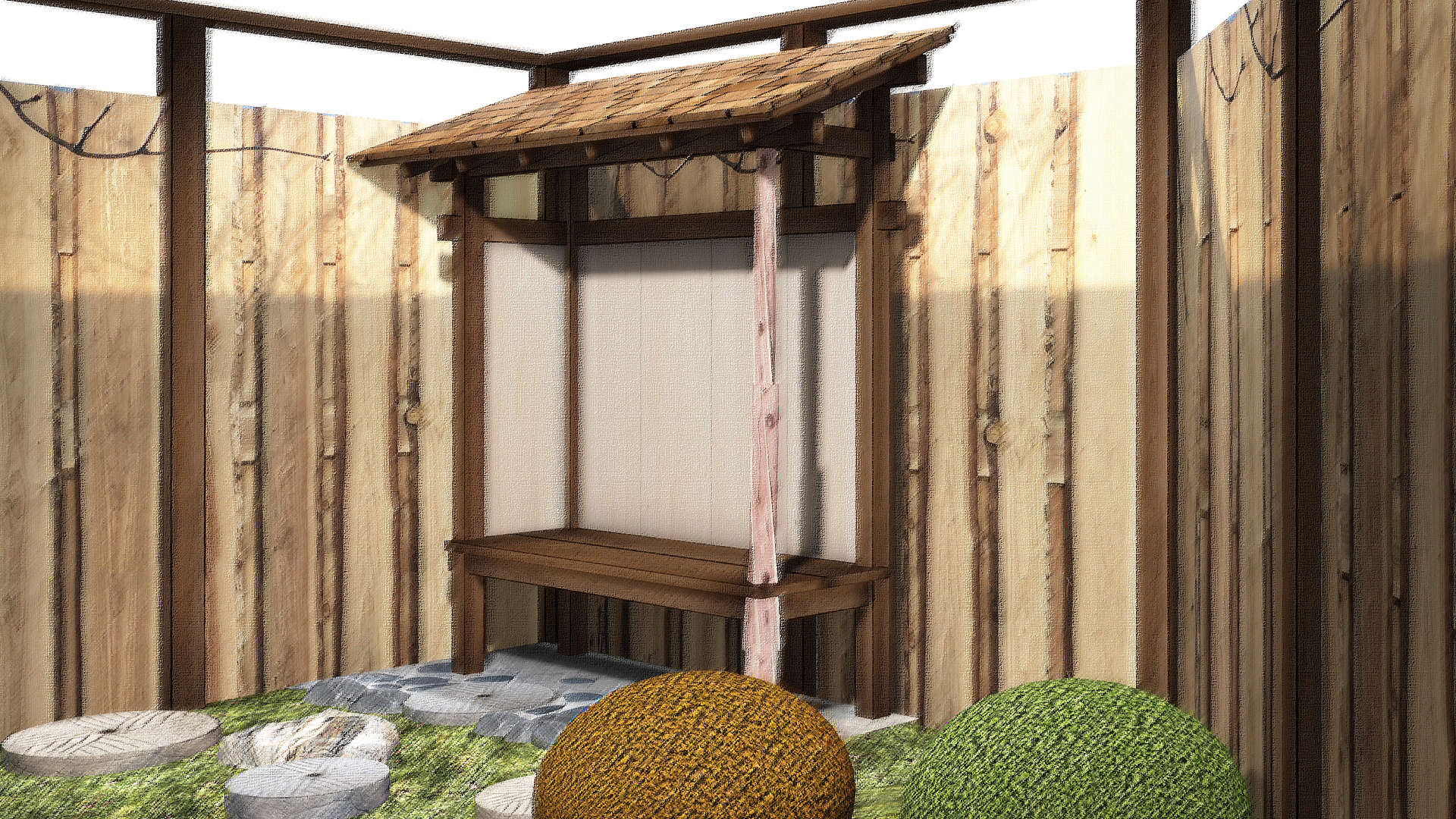
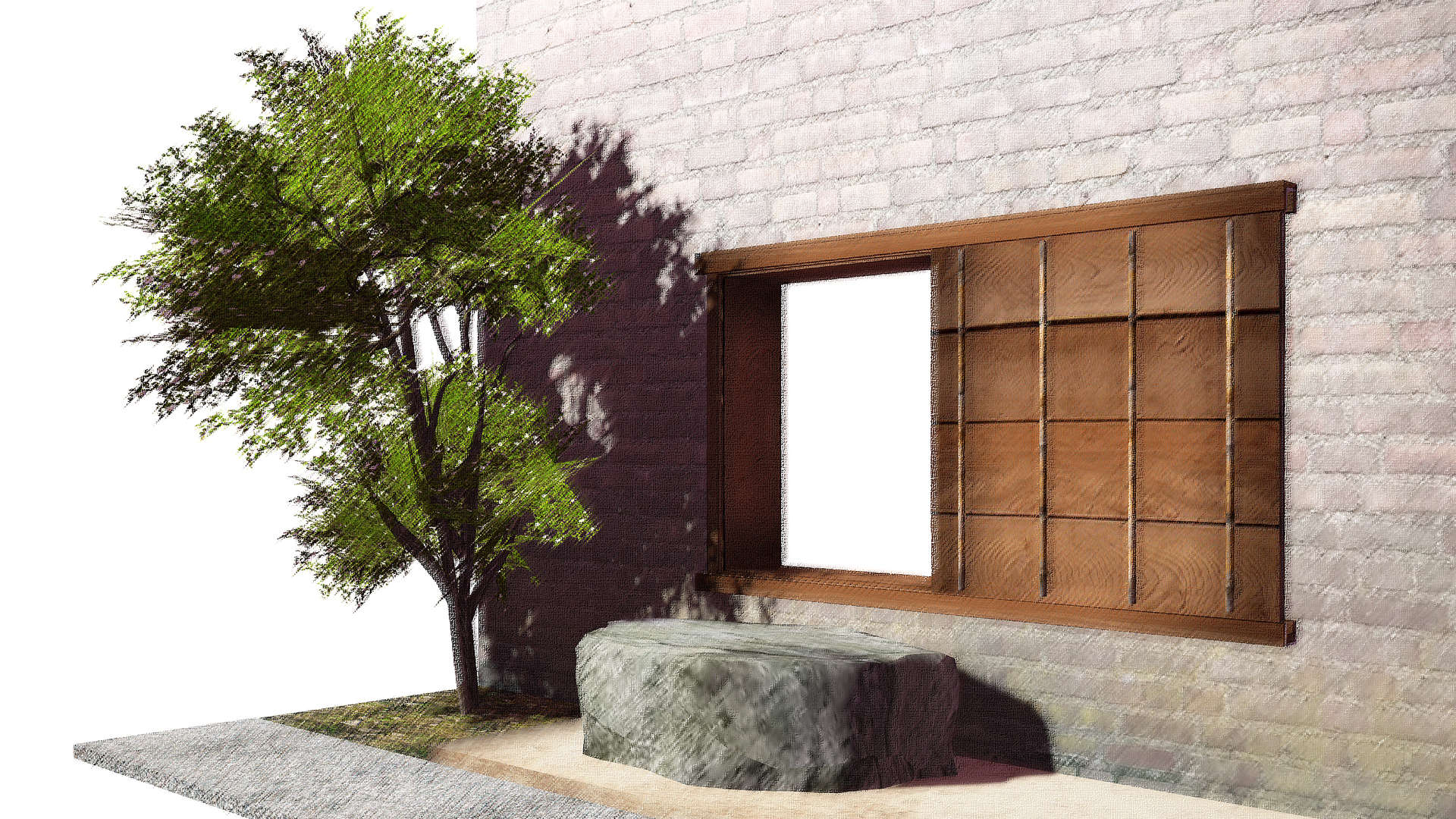
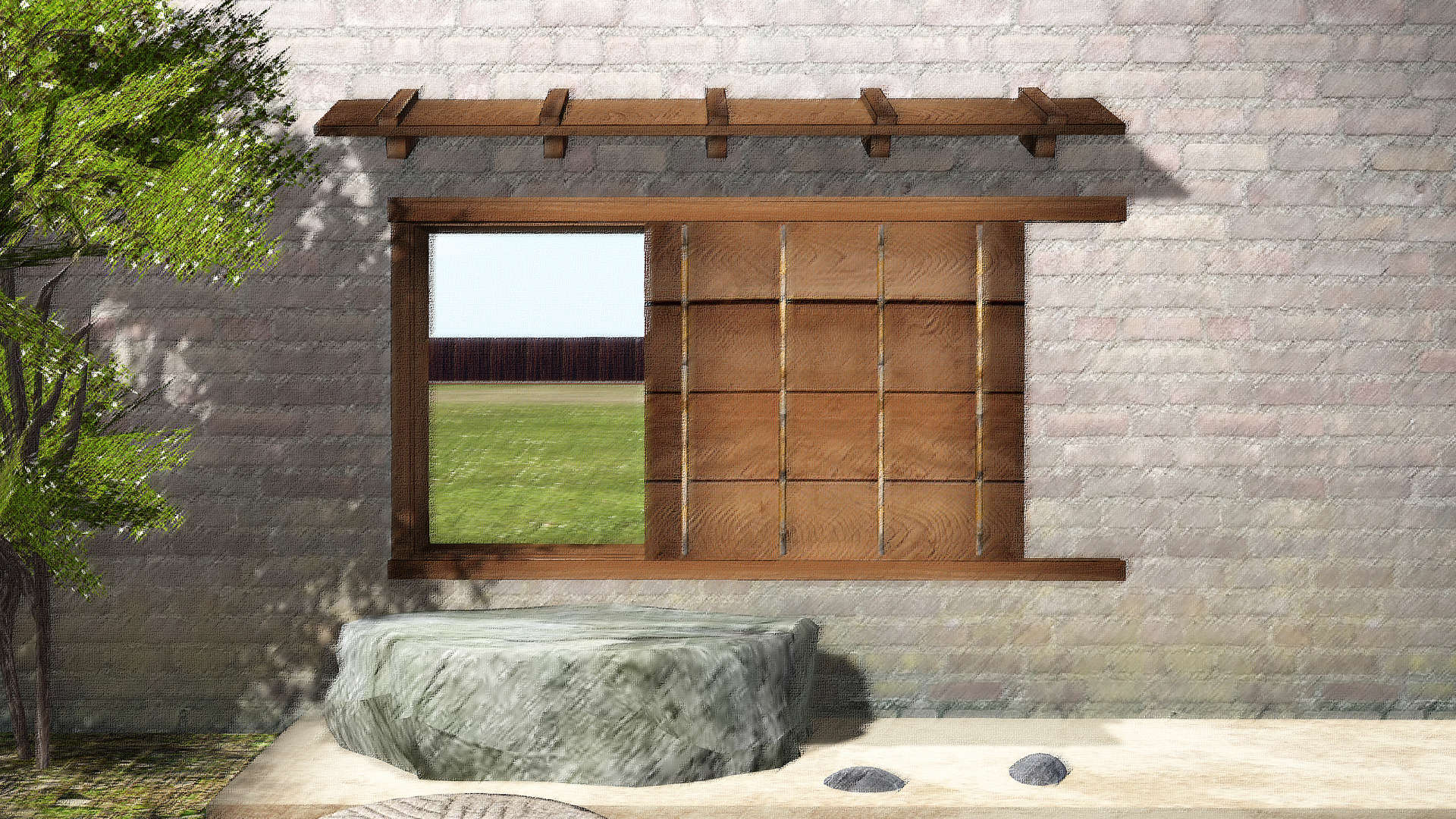
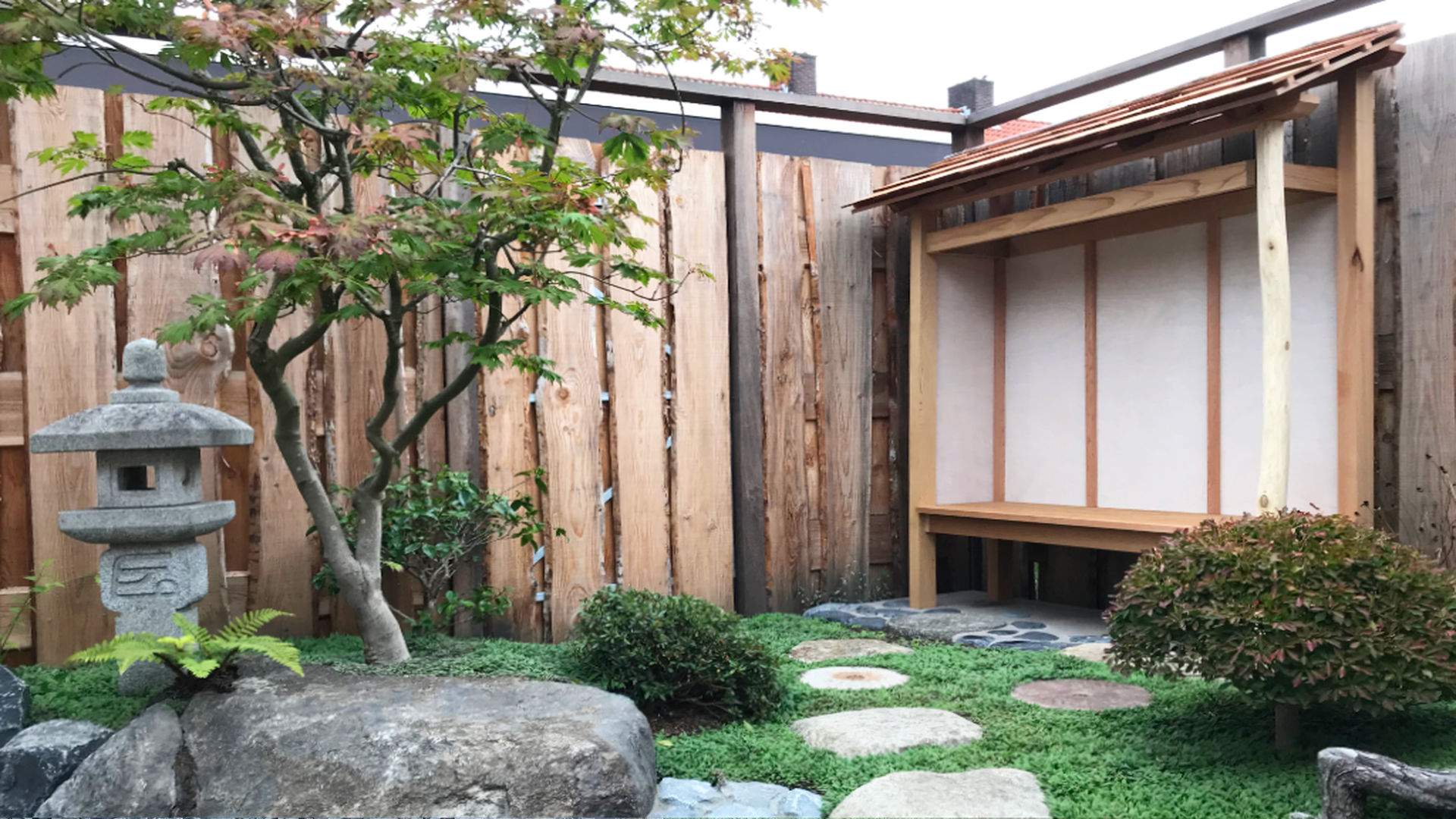
Hidden in a secluded corner of the garden is a small Koshikake Machiai, The Tsukubai, a traditional covered waiting area where guests can take their seats before the ceremony. In the vicinity, a Tsukubai arrangement forms an important ritual element. A special feature of the design is also the wooden Nijiriguchi, The characteristic low entrance to the tea room, which completes the symbolic transition to the world of the Japanese tea ceremony.
Details
- Year 2017
- Location North Brabant, Netherlands
- Project duration 15 days
Intimate Japanese tea garden with a Nijiriguchi leading to the tea room and a small Koshikake Machiai
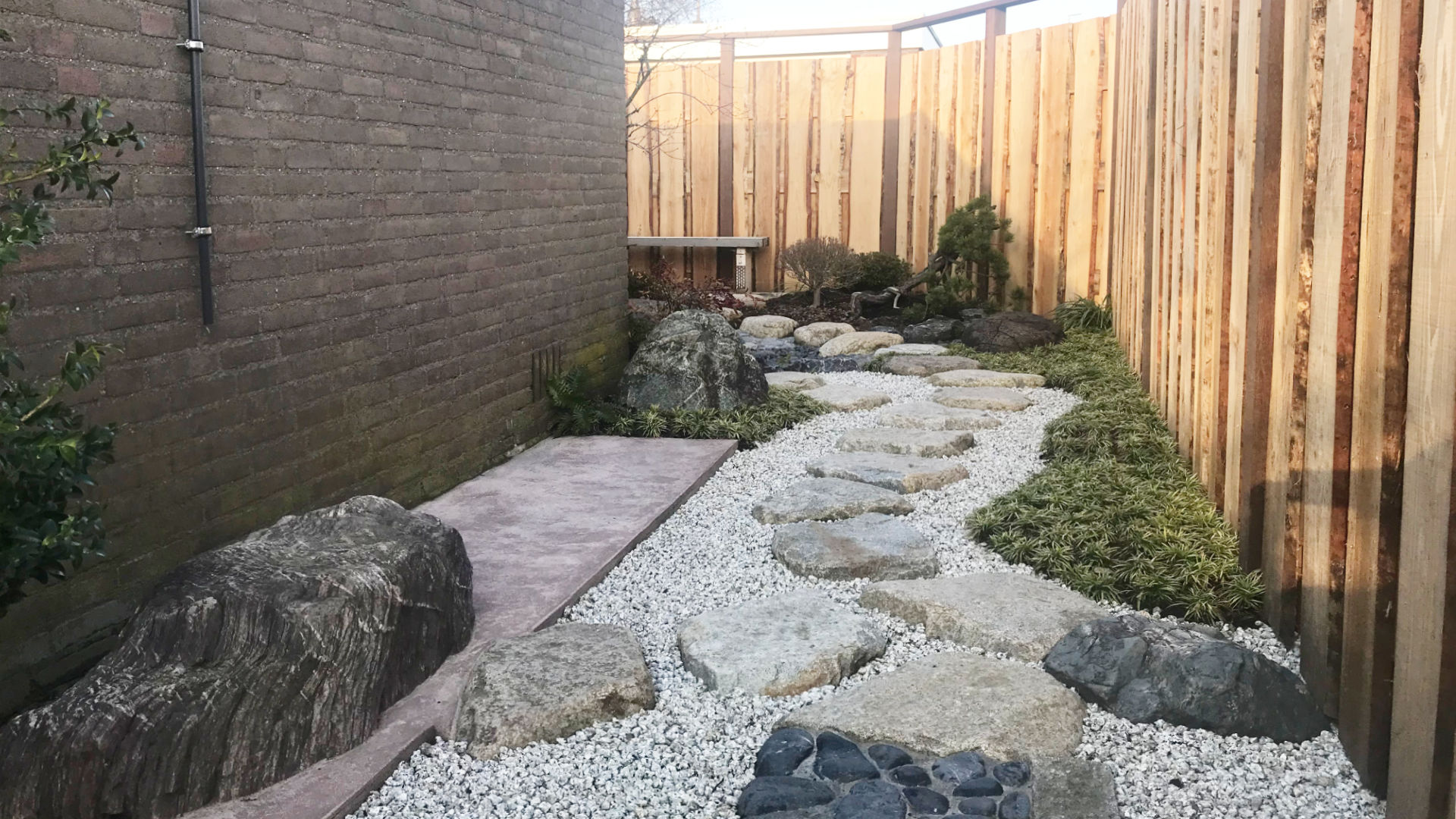
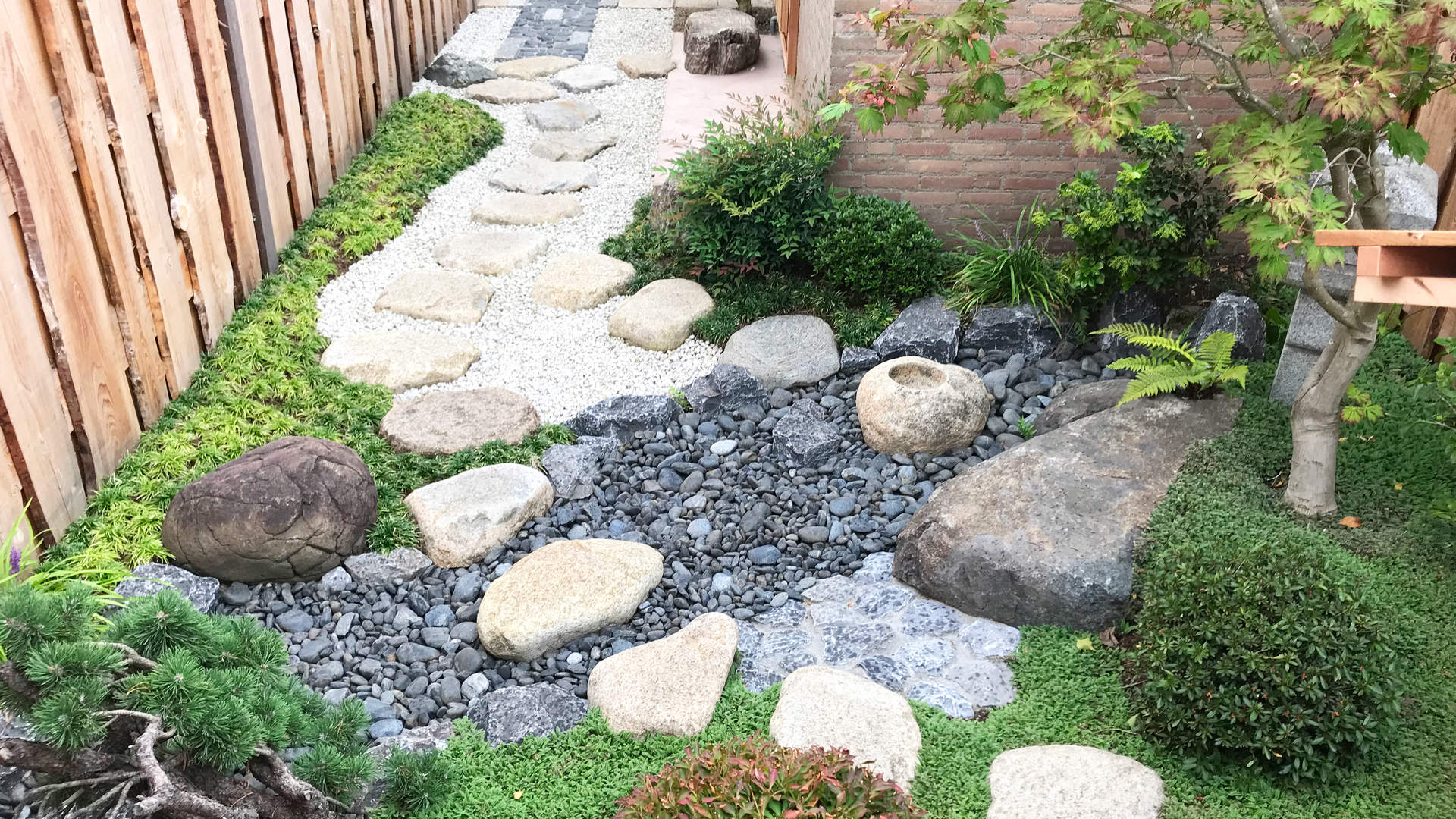
The construction of this special tea garden was guided by respect for traditional Japanese garden architecture. The available space was carefully designed with natural stone steps, rock formations, gravel, and a refined selection of Japanese plants. Each stone was deliberately positioned to create a natural rhythm that guided visitors through the garden in a calm, almost meditative way.
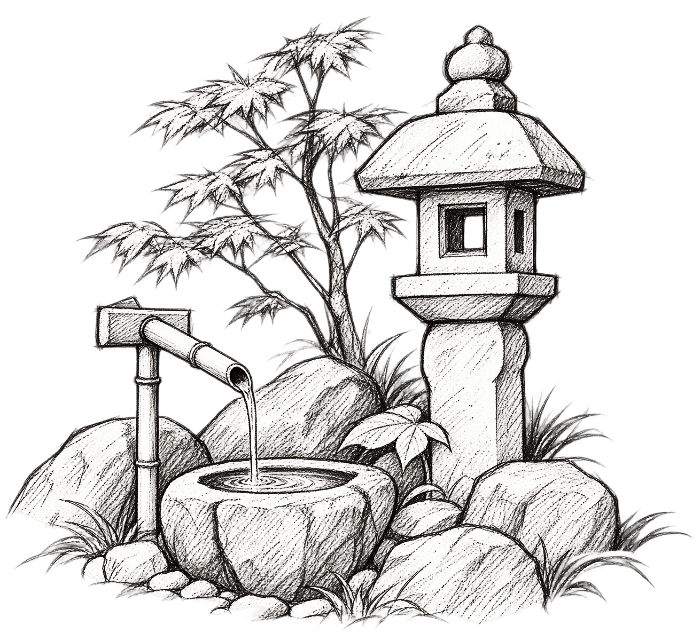
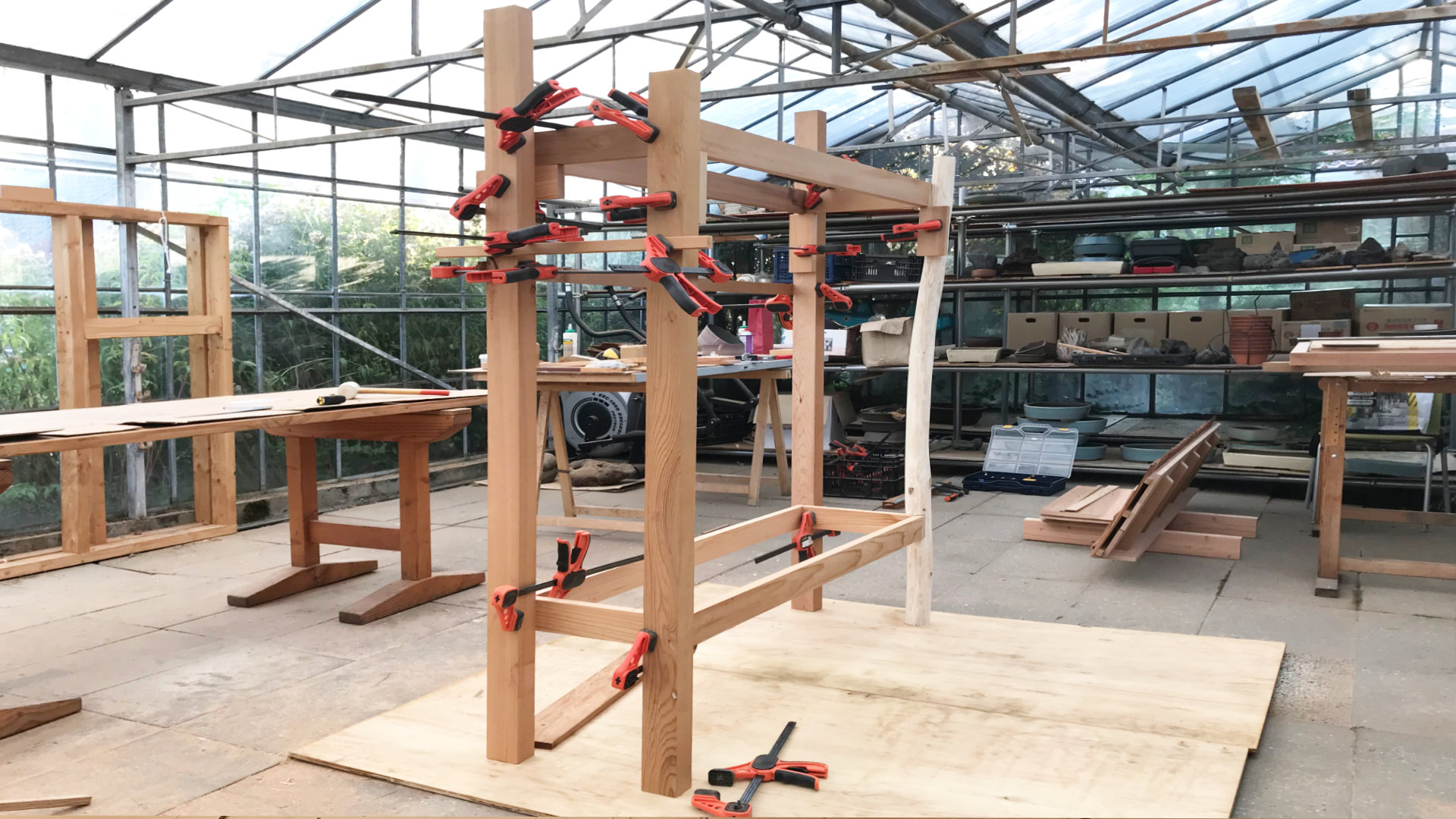
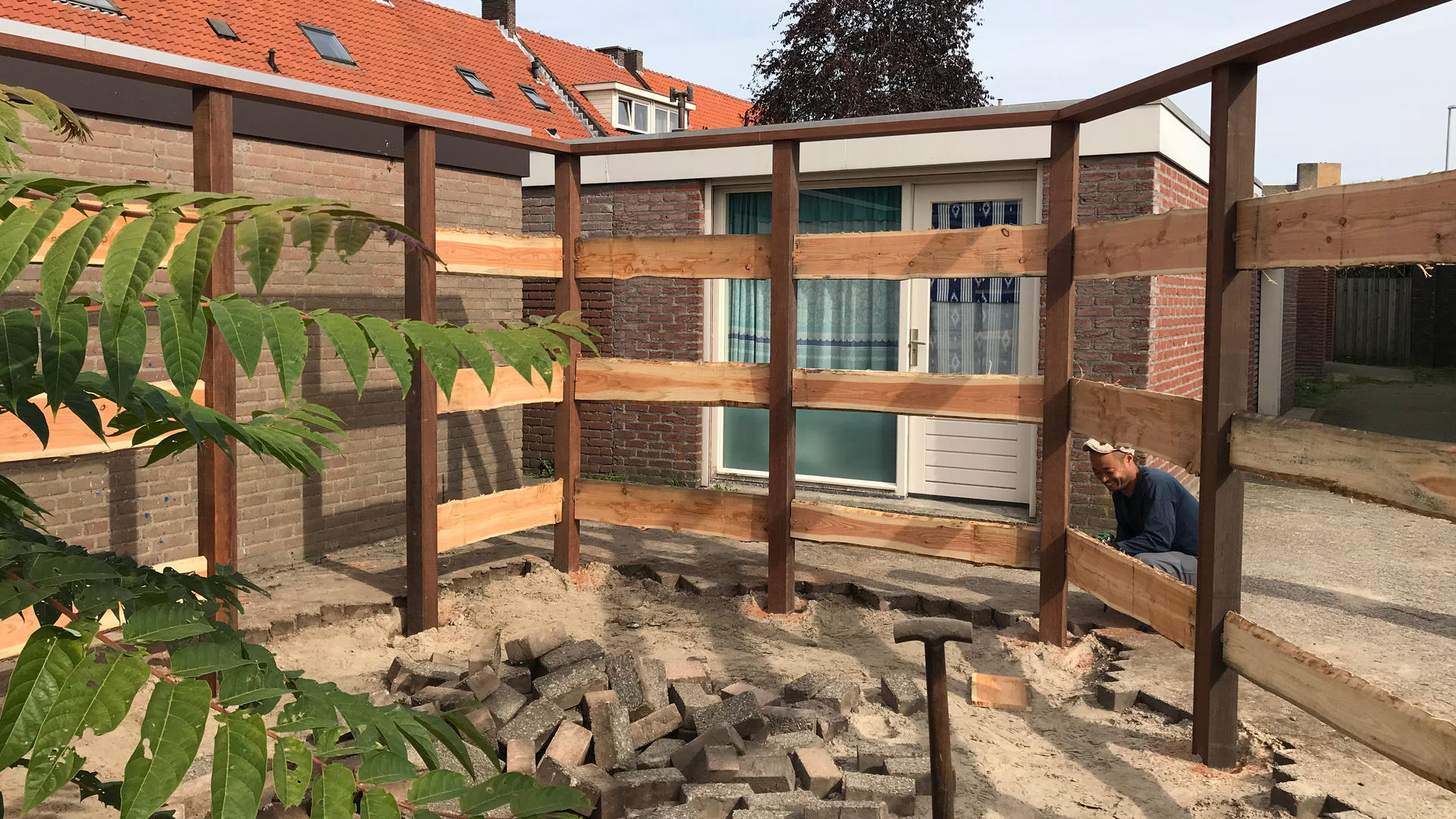
In the back of the garden we built an authentic Koshikake Machiai, executed as an elegant wooden structure with a distinctive sloping roof and a sheltered seating area. The warm wood tones and understated design harmoniously blend with the surrounding vegetation. Alongside this retreat, we created a traditional Tsukubai arrangement featuring a natural stone water basin, carefully arranged stones, and dark river pebbles.
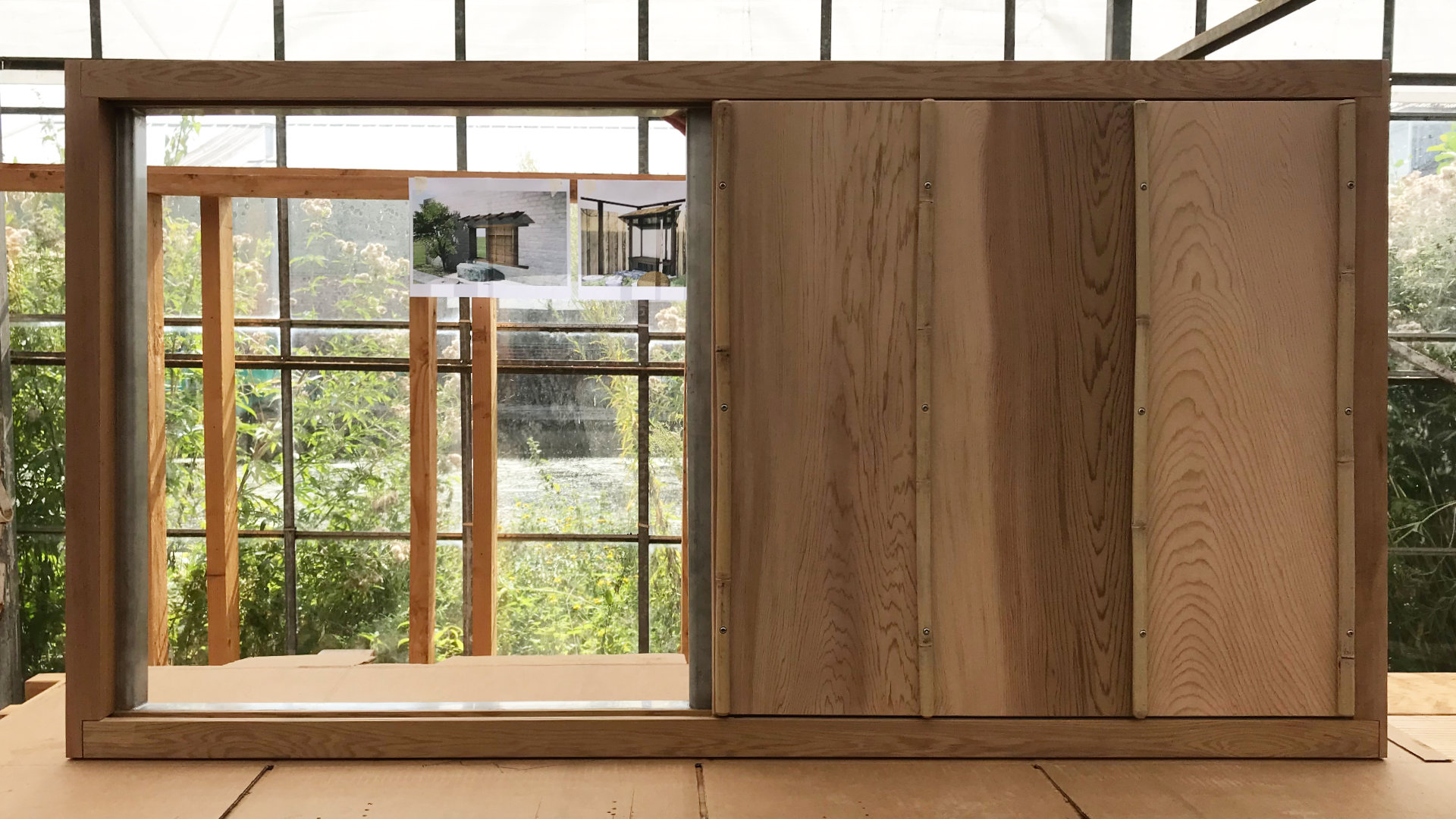
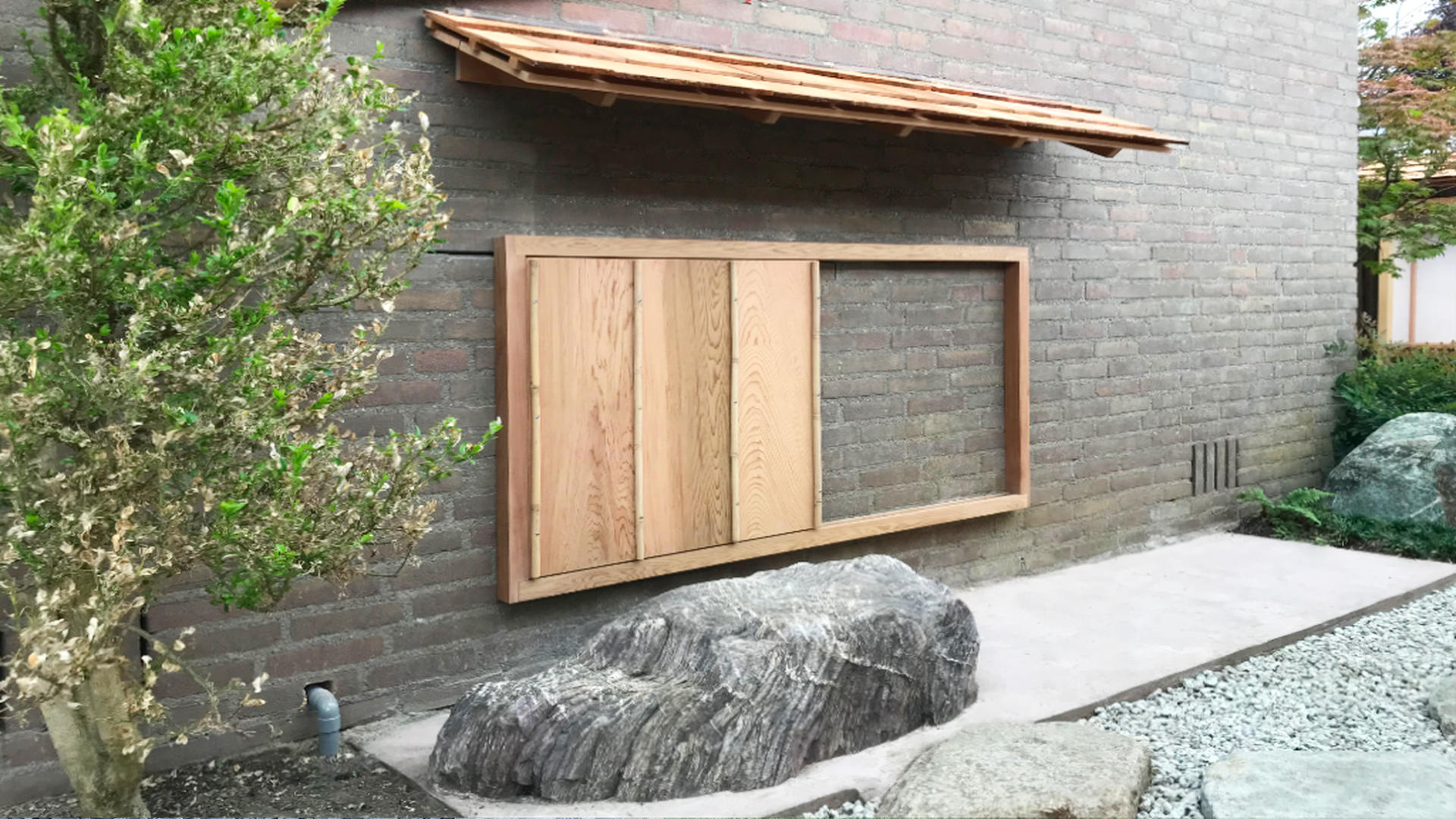
A particularly important part of the work was the manufacture of the wooden Nijiriguchi, the traditional low entrance to the tea room in the adjacent building. With attention to Japanese proportions, wood connections and a sober appearance, we created an architectural element that plays an essential role within the tea ceremony. The low entrance invites guests to literally bow as they enter the tea room, as an expression of humility, respect and equality.
Details
- Year 2017
- Location North Brabant, Netherlands
- Project duration 15 days
Intimate Japanese tea garden with a Nijiriguchi leading to the tea room and a small Koshikake Machiai
The end result is an exceptionally atmospheric Japanese tea garden where centuries-old traditions, natural beauty, and refined craftsmanship come together. Despite its relatively compact dimensions, the garden exudes remarkable tranquility and spaciousness. The carefully chosen natural stones, the soft greenery of the ground cover plants, and the sober woodwork form a harmonious landscape in which every detail has been given a meaningful place.
The intimate Koshikake Machiai offers guests a sheltered place to relax, while the traditional Tsukubai arrangement invites to the symbolic cleansing before the ceremony. The natural progression of the steps leads them along the wooden Nijiriguchi, where the transition from the outside world to the serene atmosphere of the tea room is experienced in an authentic way.
What truly makes this garden special is that it is not intended solely to be admired, but to be experienced consciously. Every step, every line of sight, and every carefully placed element contribute to the preparation for the Japanese tea ceremony. The result is an intimate and timeless tea garden in which the philosophy of Wabi-Sabi, The beauty of simplicity, naturalness and transience comes to life in a subtle way. A special project in which our passion for Japanese garden art and traditional architecture comes fully to its own.
Details
- Year 2017
- Location North Brabant, Netherlands
- Project duration 15 days
 Nederlands
 English
 Deutsch (Sie)
 Français
 Español
 Polski
 Čeština
 Italiano