

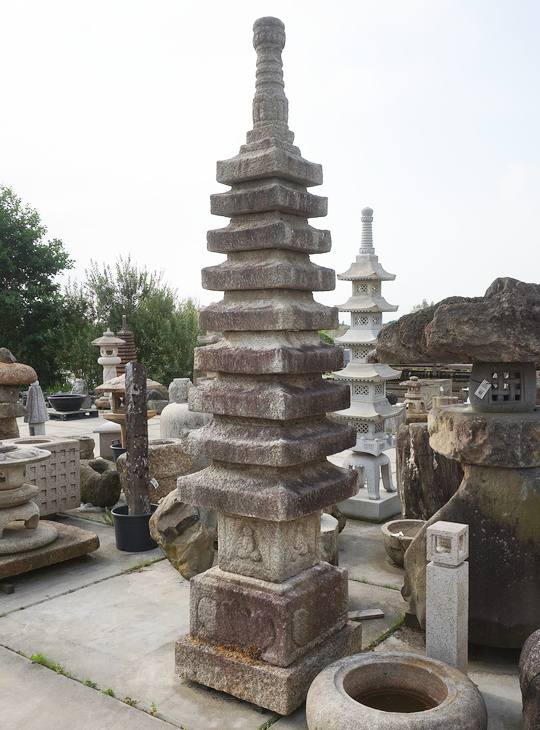
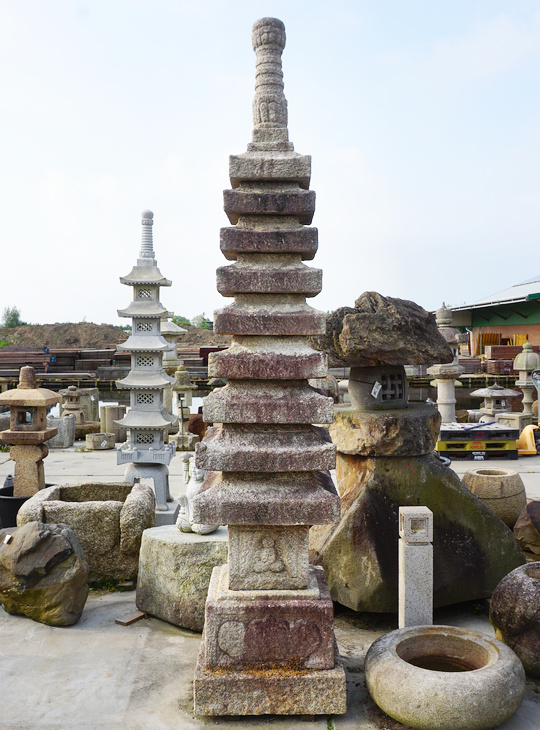
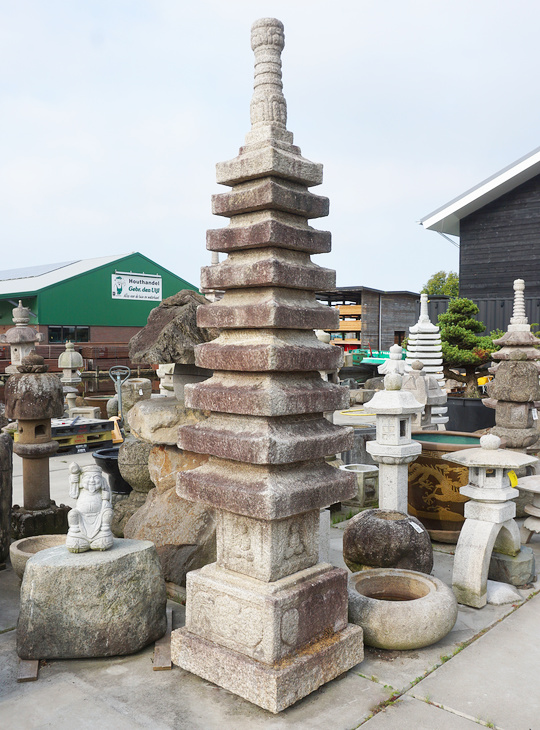
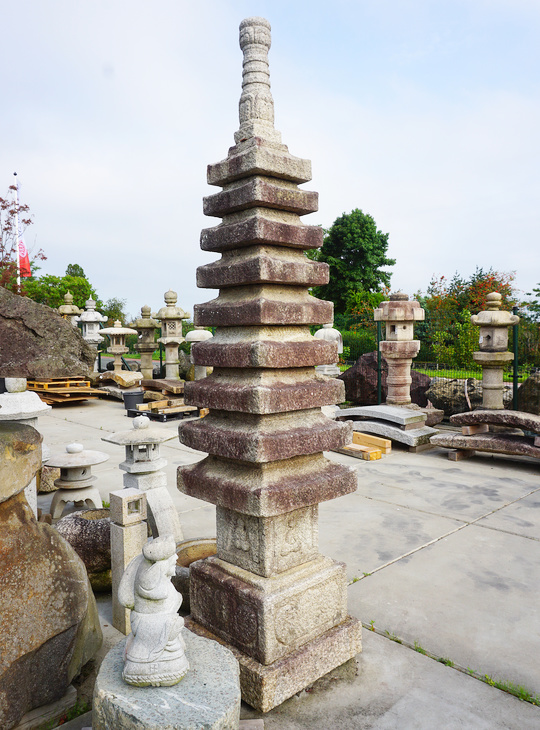
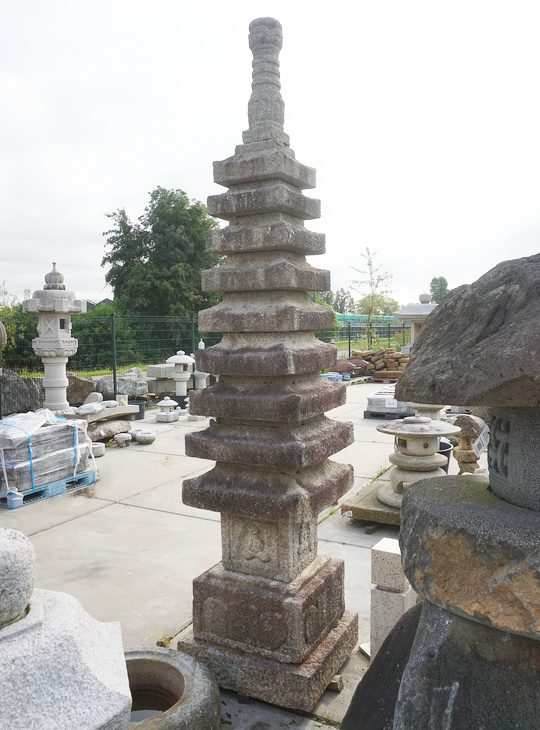
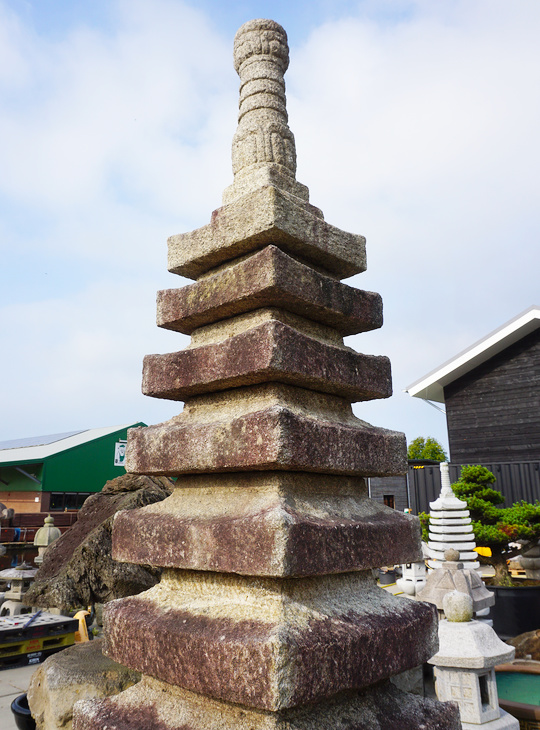
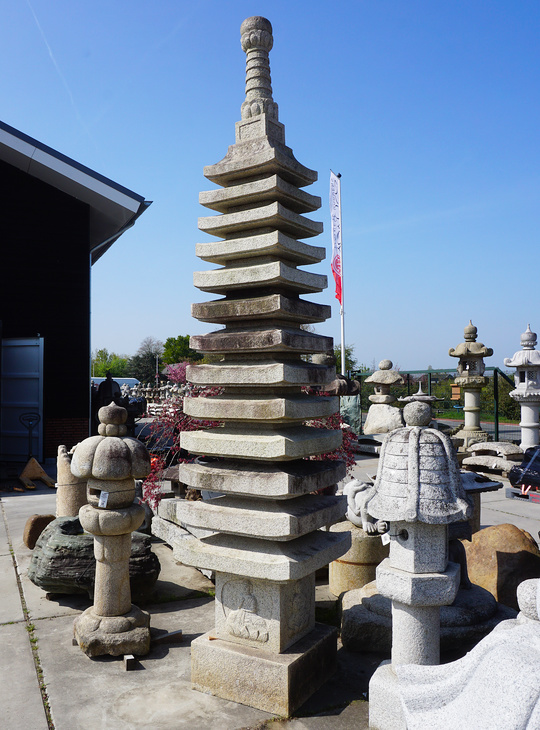
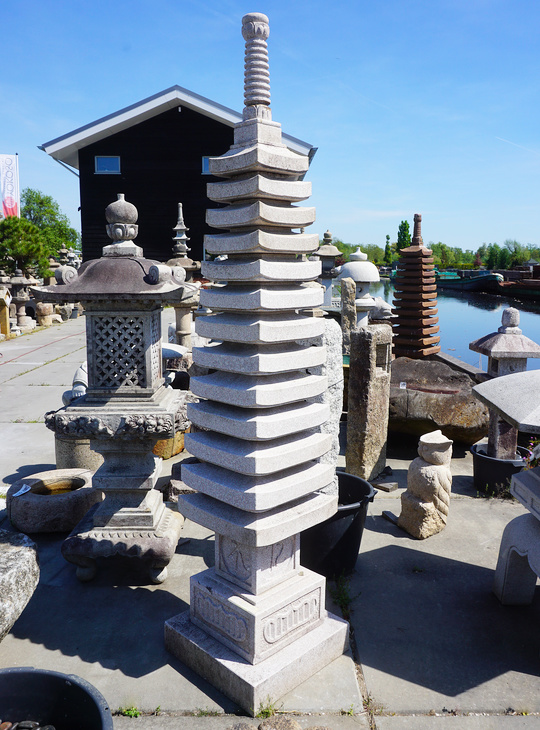
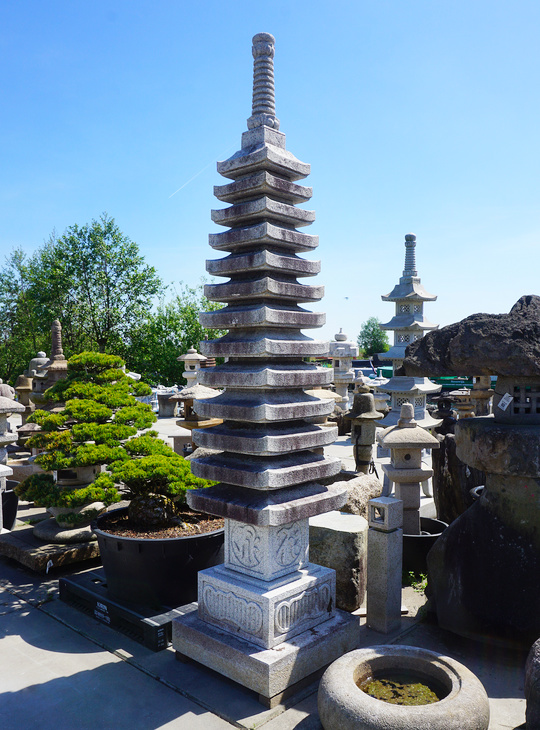
Shihobutsu Kyuju Sekito, Japanese Stone Pagoda
Uitverkocht
Pagodas, Tō (塔) in Japanese, originated in ancient India from where the phenomenon spread to other parts of the Asian world. Today, the pagoda is inextricably linked to traditional Chinese and Japanese architecture.
Specifications
- OriginNagoya, Aichi Prefecture, Japan
- MaterialHirukawa stone
- AgeEdo period (1603–1868)
- Condition assessment
- Dimensions64 x 64 x 310 cm
Product information
Pagodas, Tō (塔) in Japanese, originated in ancient India from where the phenomenon spread to other parts of the Asian world. Today, the pagoda is inextricably linked to traditional Chinese and Japanese architecture. The tall pagodas symbolize the sacred mountains of legend and folk tales. All valuable treasures, jewels, and artifacts were usually kept safe on the upper floors of the pagoda.
Centuries ago, the architecture of the pagoda formed the inspiration for a stone garden ornament in Japan. The stone pagoda, known in Japanese as Sekitō (石塔), is the perfect addition to any traditional Japanese garden due to the symbolism and unique presence that the ornament exudes. A stone pagoda has a certain unique essence that cannot be matched by other types of ornaments.
This specific pagoda has nine floors, a type known as Kyūjū Sekitō (九重石塔) in Japanese.
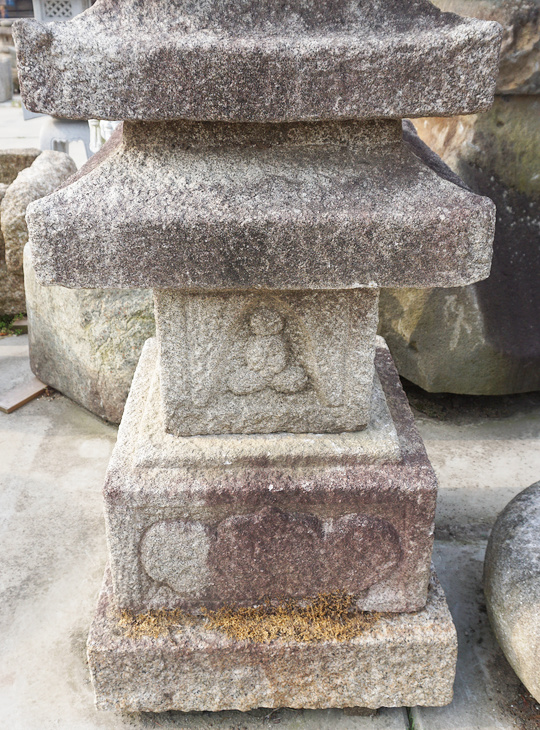
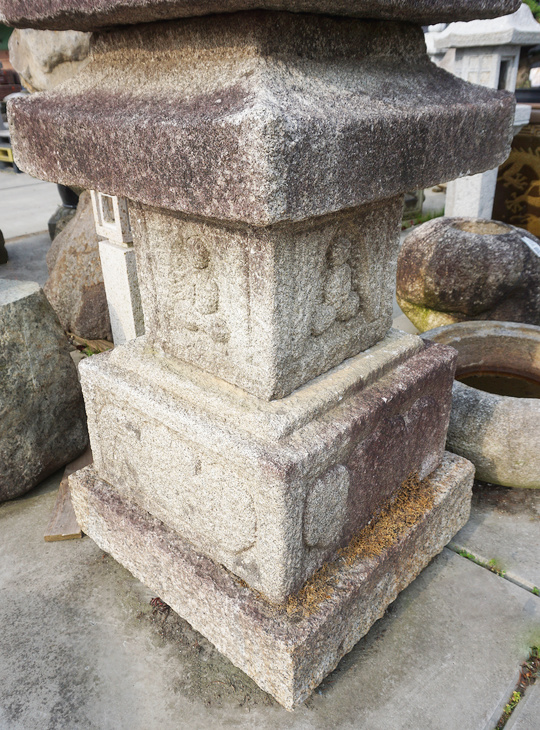
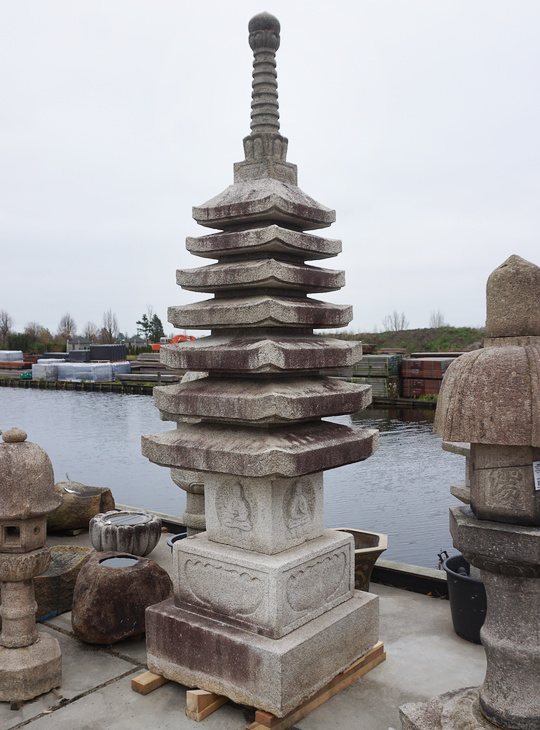
The block beneath the floors of this pagoda is beautifully decorated with carvings of Buddha on each side, in all four directions. This style is known as Shihōbutsu (四方仏), and can also be seen in Chōzubachi water ornaments.
Need more information about this product?
-
Shihobutsu Nanaju Sekito, Japanese Stone Pagoda
Original price was: € 19.500,00.€ 17.500,00Current price is: € 17.500,00.YO02010027YO02010027
 Nederlands
 English
 Deutsch (Sie)
 Français
 Español
 Polski
 Čeština
 Italiano