


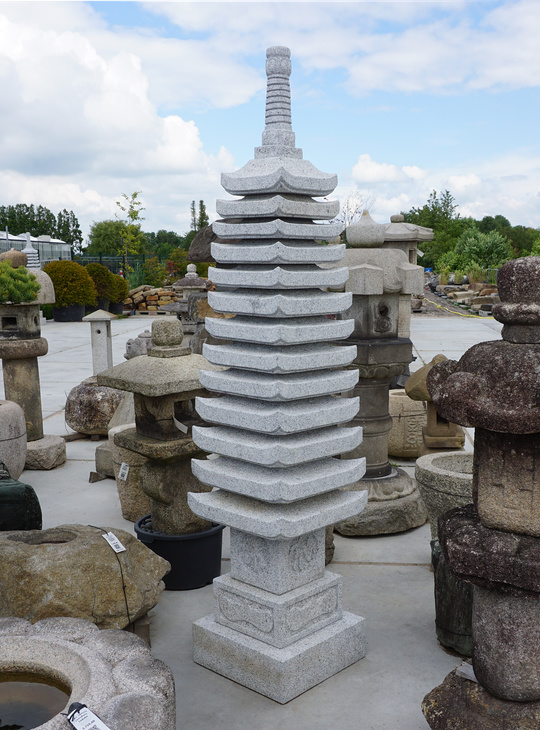
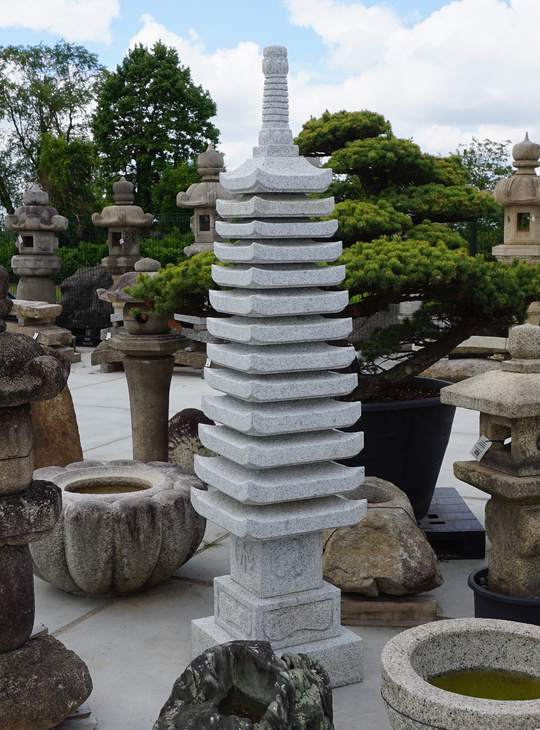
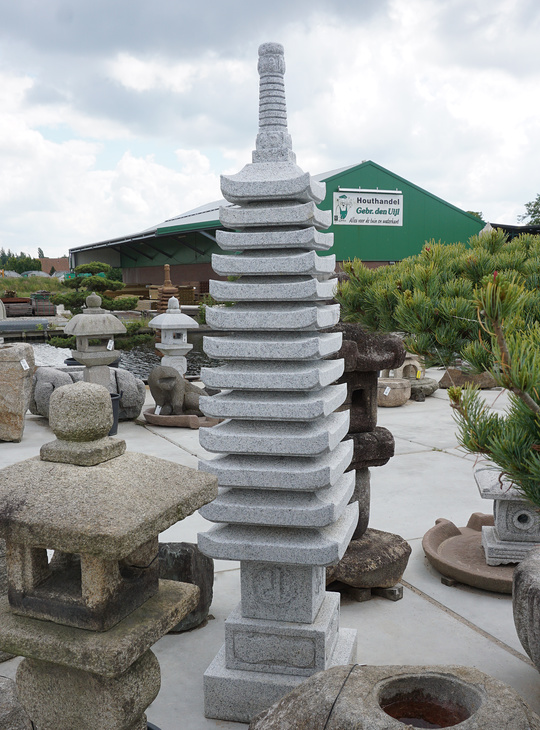
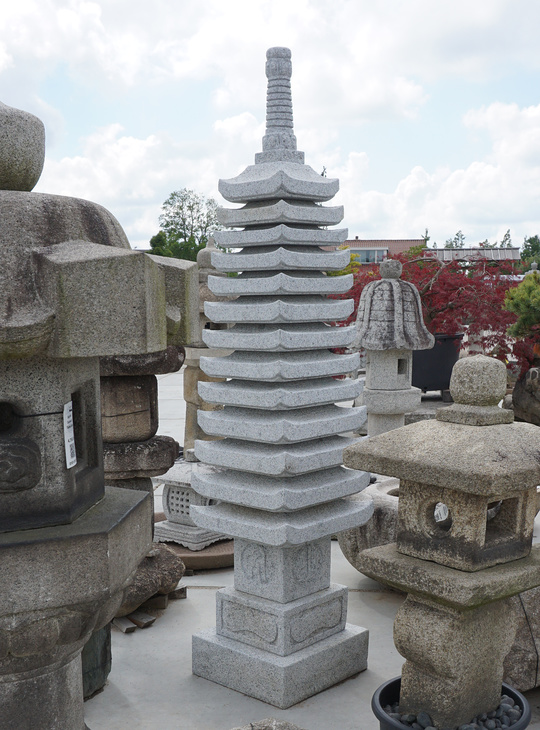
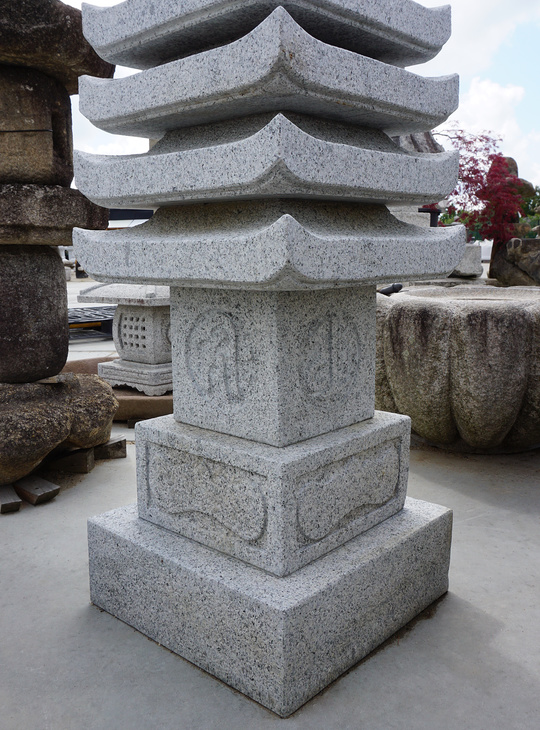
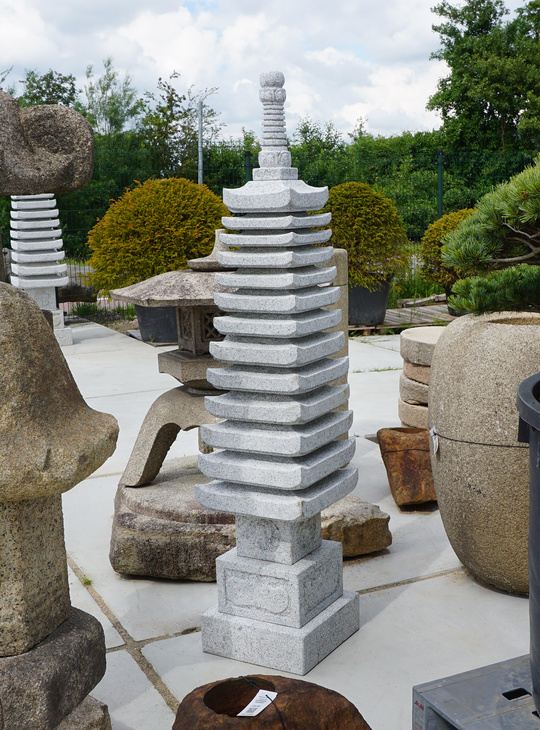
Jusanju no Sekito, Granite Pagoda
2 op voorraad
Pagodas, Tō (塔) in Japanese, originated in ancient India from where the phenomenon spread to other parts of the Asian world. Today, the pagoda is inextricably linked to traditional Chinese and Japanese architecture.
Specifications
- OriginChina
- MaterialSilver-grey granite
- AgeReiwa period (2019–present)
- Condition assessment
- Dimensions47 x 47 x 220 cm
- Weight750-1000 kg
Product information
Pagodas, Tō (塔) in Japanese, originated in ancient India from where the phenomenon spread to other parts of the Asian world. Today, the pagoda is inextricably linked to traditional Chinese and Japanese architecture. The tall pagodas symbolize the sacred mountains from legends and folktales. On the upper floors, valuable treasures, jewels, and artifacts were usually kept safely. This makes the pagoda a symbol of prosperity as well.
Centuries ago, the architecture of the pagoda formed the inspiration for a stone garden ornament in Japan. The stone pagoda, known in Japanese as Sekitō (石塔), is the perfect addition to any Japanese garden due to its symbolism and unique presence.
This specific stone pagoda has thirteen floors, Jūsanju no Sekitō (Thirteen-Storey Stone Pagoda) in Japanese. The ornament is completely based on the famous stone pagoda found in Uji Park, Kyoto.
 Nederlands
 English
 Deutsch (Sie)
 Français
 Español
 Polski
 Čeština
 Italiano