


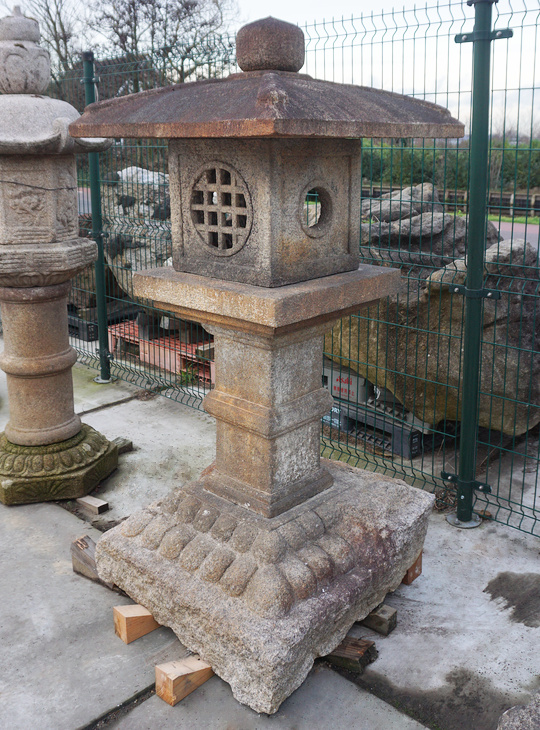
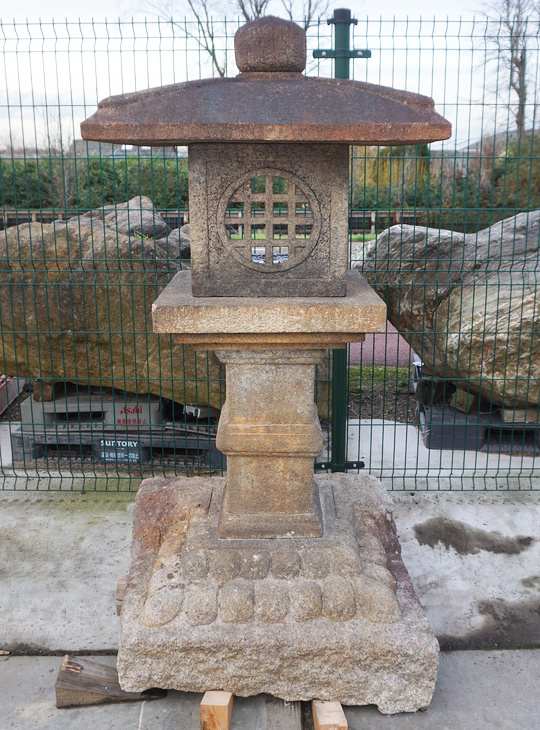
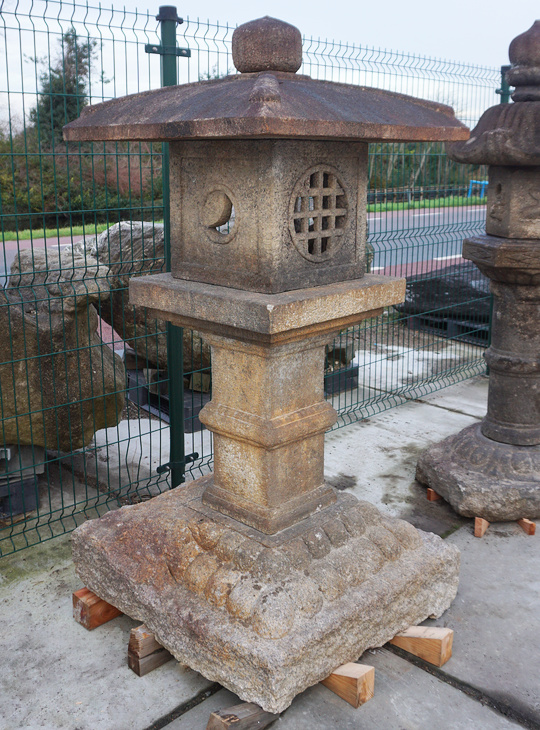
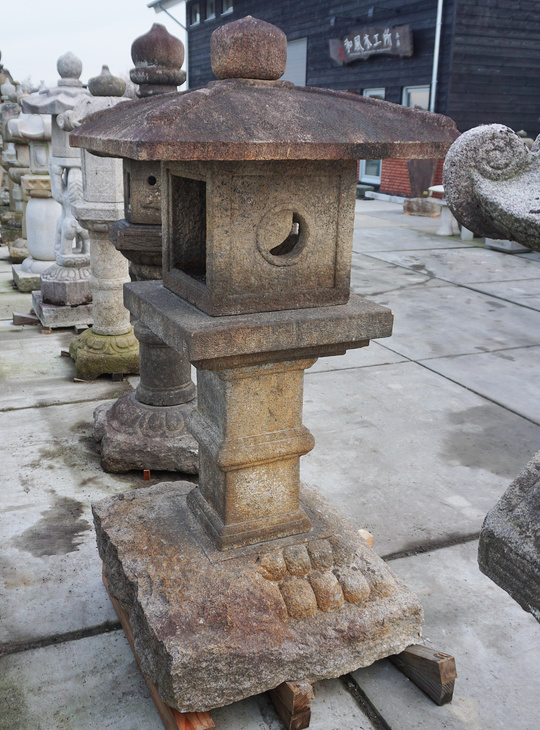
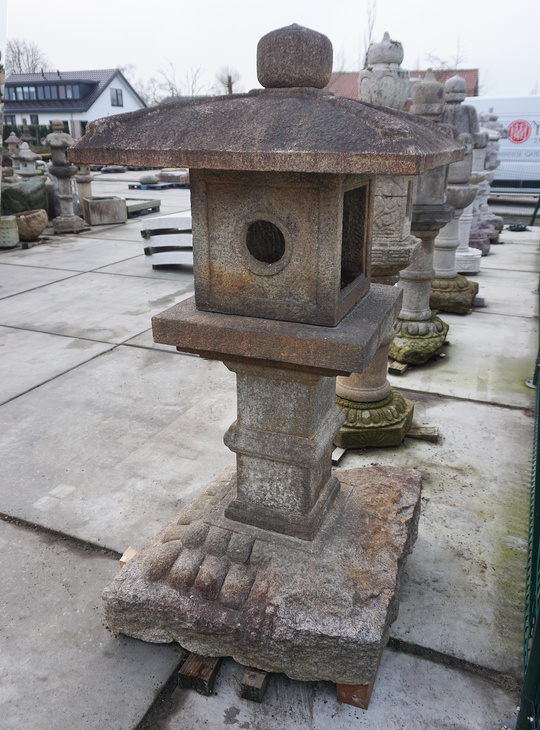
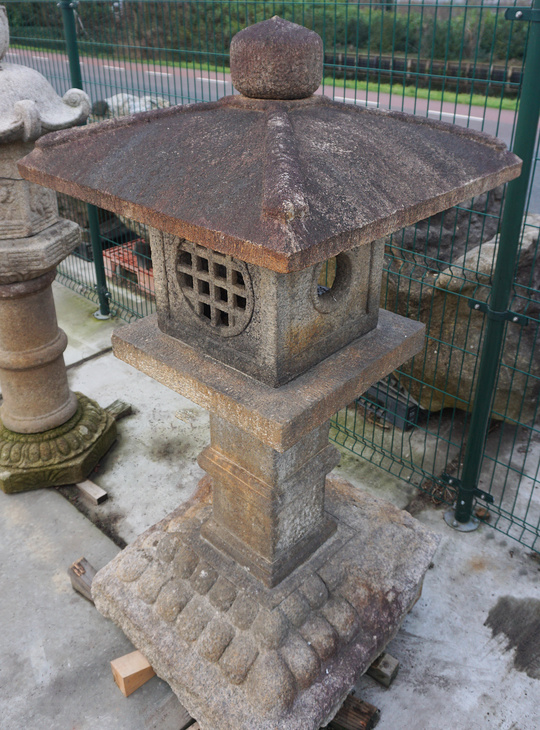
Eitoku-ji Gata Ishidoro, Japanese Stone Lantern
Uitverkocht
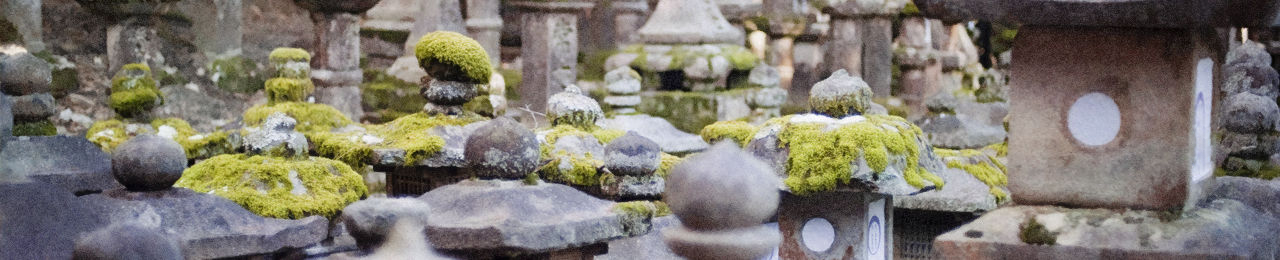
Stone lanterns, Ishidōrō (石灯籠) in Japanese, are without a doubt the most characteristic element of the traditional Japanese garden. The phenomenon originated more than a thousand years ago in China, from where it also became part of traditional Japanese culture via Korea. Every Japanese sanctuary, such as a Buddhist temple or Shinto shrine, uses stone lanterns as a sacred light source.
Specifications
- OriginKyoto, Kyoto Prefecture, Japan
- MaterialKurama stone
- AgeEarly Shōwa period (1926–1989)
- Condition assessment
- Dimensions84 x 84 x 190 cm
Product information
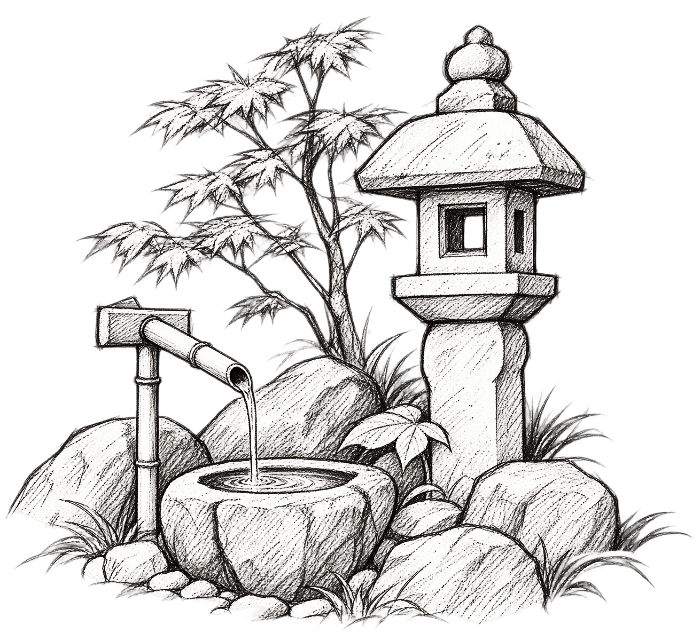
Stone lanterns, Ishidōrō (石灯籠) in Japanese, are undoubtedly the most characteristic element of the traditional Japanese garden. The phenomenon originated more than a thousand years ago in China, from where it also became part of traditional Japanese culture via Korea. Every Japanese sanctuary, such as a Buddhist temple or Shinto shrine, uses stone lanterns as a sacred light source. During the 16th century, stone lanterns became very popular among Japanese tea masters and were used in tea gardens to illuminate the path to the tea house. Since then, one or more stone lanterns can almost always be found in nearly every traditional Japanese garden.
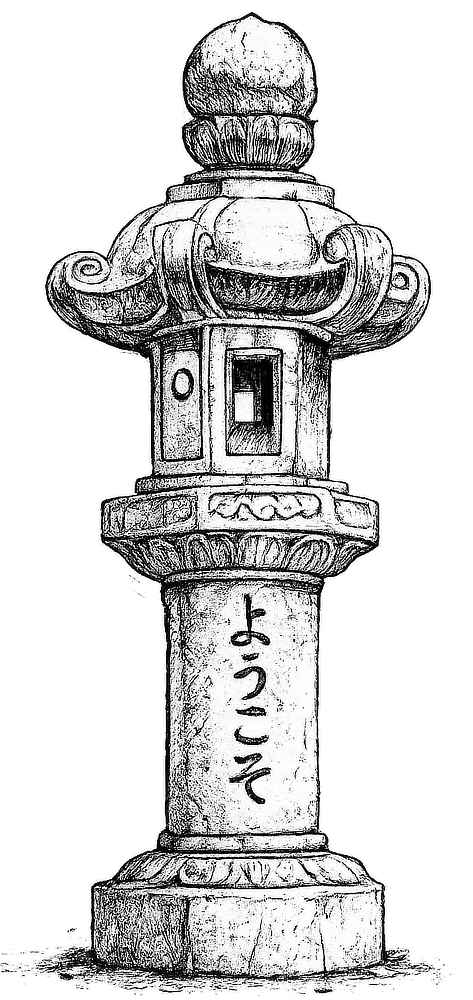
A Japanese stone lantern consists of several separate parts that must be carefully stacked on top of each other. The perfect balance thus created makes the lantern a very sturdy and durable whole. The different parts from top to bottom are:
- Hōju/Hōshu (宝珠) – The jewel on top of the lantern
- Ikebana (請花) – The support of the jewel
- Kasa (笠) – The hat that protects the lantern house from the weather
- Hibukuro (火袋) – The fire box
- Chūdai (中台) – The platform for the light chamber
- Sao (竿) – The pillar
- Kiso (基礎) – The foundation
- Kidan (基壇) – The base platform
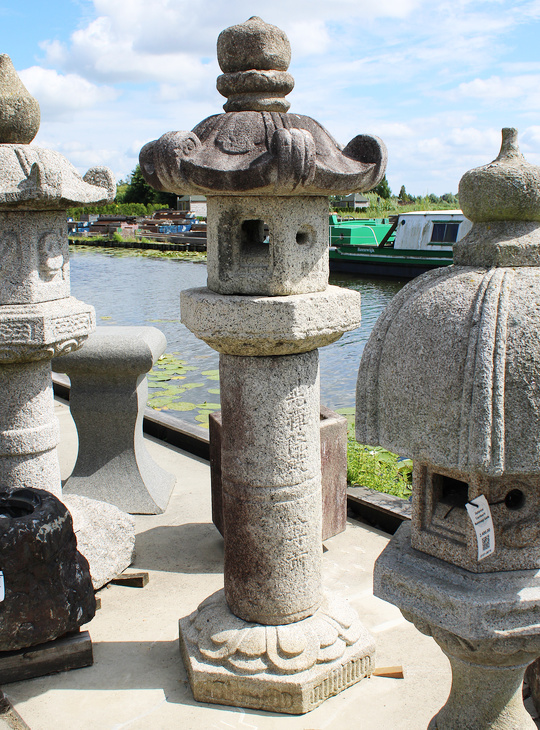
The Eitoku-ji Gata Ishidōrō (永徳寺型石灯籠) is very characteristic for its square appearance. The type originated at the Eitoku-ji temple in Ōzu, Ehime prefecture, where it is also named after.
 Nederlands
 English
 Deutsch (Sie)
 Français
 Español
 Polski
 Čeština
 Italiano