

Kikkou Seki Stone, Japanese Garden Rock
1 op voorraad
The first manual for the Japanese garden, the Sakuteiki, describes the laying out of gardens as: Ishi wo taten koto (石を立てん事). This means the upright placement of stones, which strongly emphasizes the important role of these elements within the Japanese garden.
Specifications
- OriginNagoya, Aichi Prefecture, Japan
- MaterialKikkou Seki stone (亀甲石)
- Dimensions45 x 120 x 33 cm
Product information
The first manual for the Japanese garden, the Sakuteiki, describes the laying out of gardens as: Ishi wo taten koto (石を立てん事). This means the upright placement of stones, which strongly emphasizes the important role of these elements within the Japanese garden.
The correct application of garden stones, Niwaishi (garden stones) in Japanese, forms the basis of practically every Japanese garden. The placement of stones and rocks is almost always determined first, after which the garden is formed together with all the elements surrounding it. Because of this, stones and rocks are also known as the Kikotsu (気骨), or backbone, of the Japanese garden.
An authentic Japanese garden should mimic a certain natural essence. Stones and rocks are a significant part of this principle since they concern pure elements, coming directly from nature.
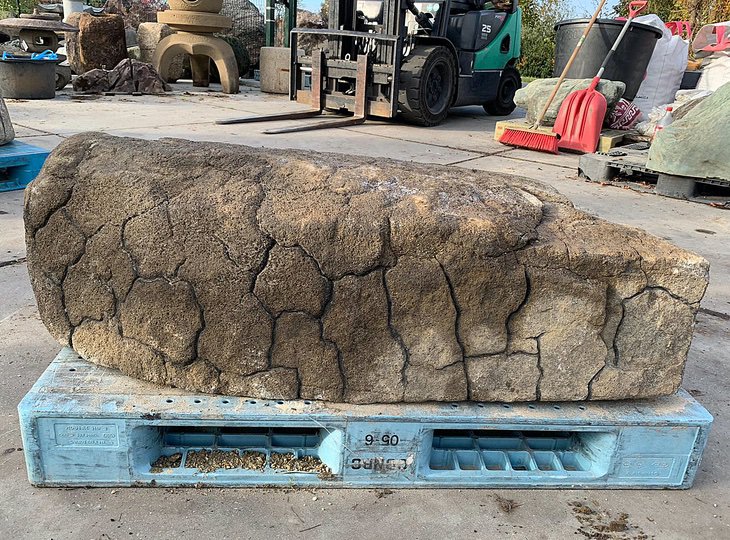
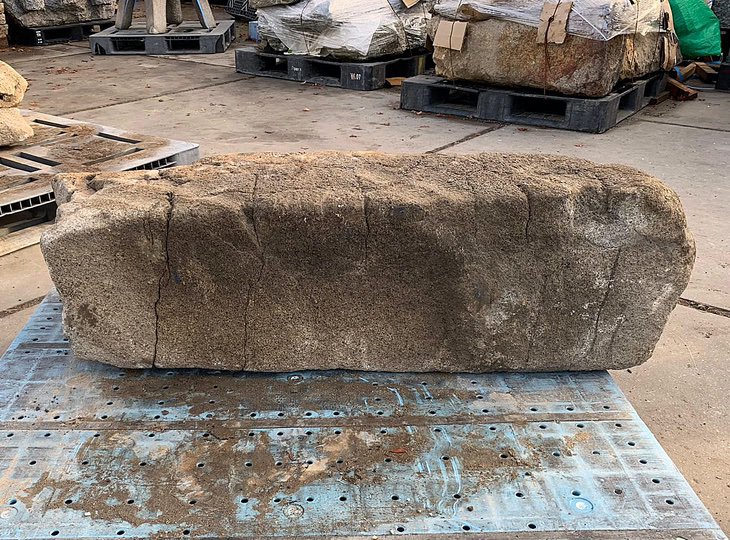
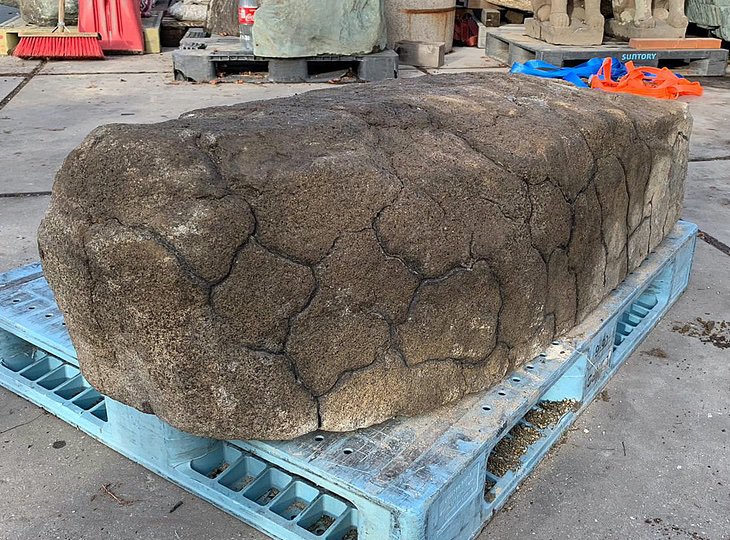
Kikkou Seki stones (亀甲石) are famous for their use in the Japanese garden. They are known for the unique patterns of cracks that can be seen on the stone. Kikkou is the Japanese word for the shell of a tortoise, something the patterns on the stone have great resemblance to.
 Nederlands
 English
 Deutsch (Sie)
 Français
 Español
 Polski
 Čeština
 Italiano