


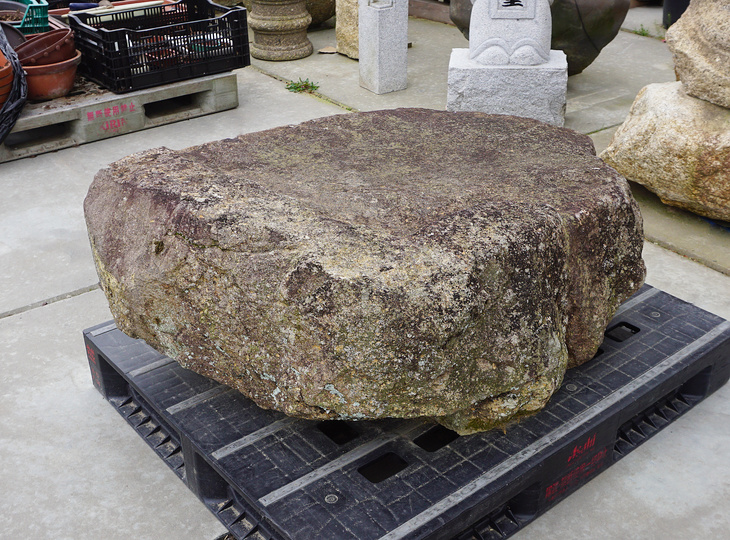
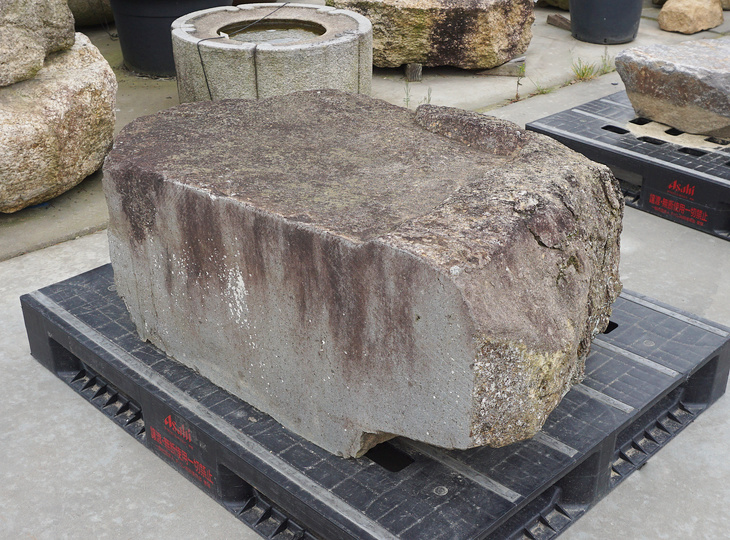
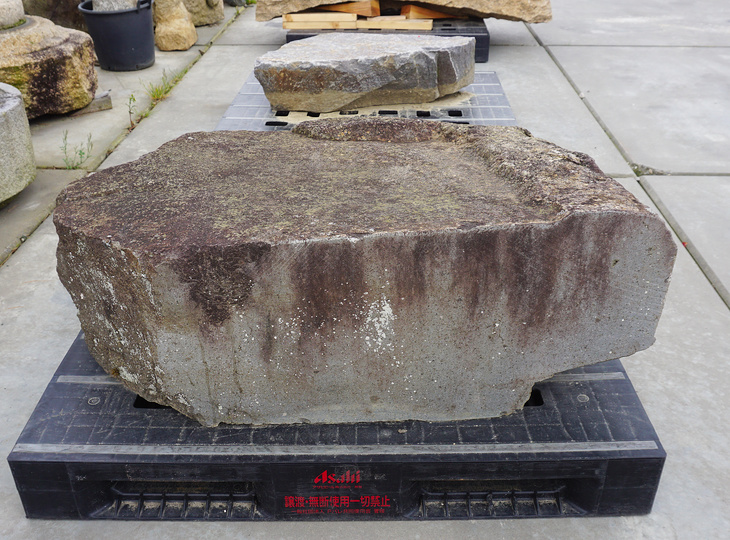
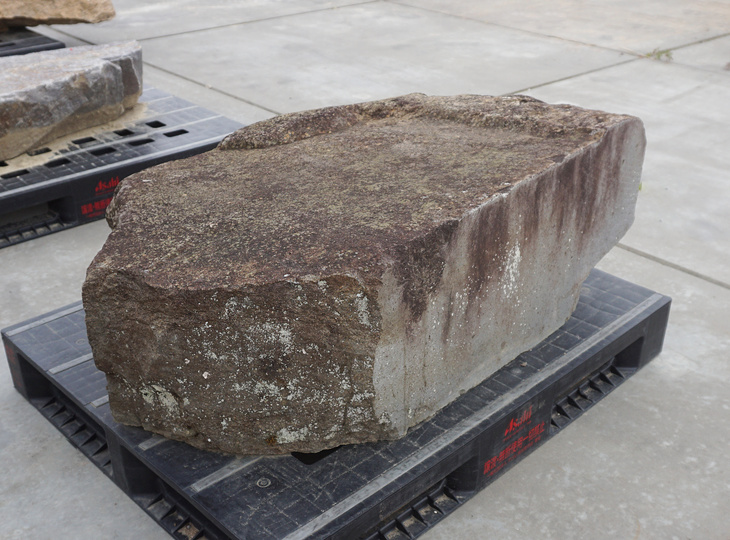
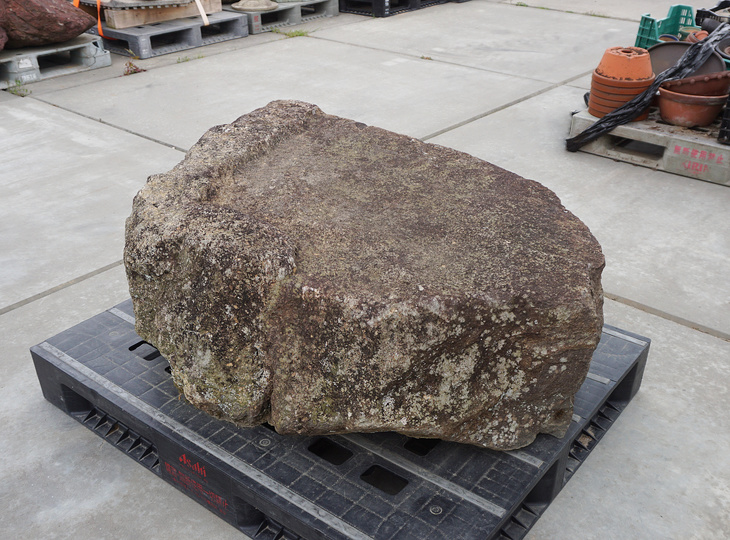
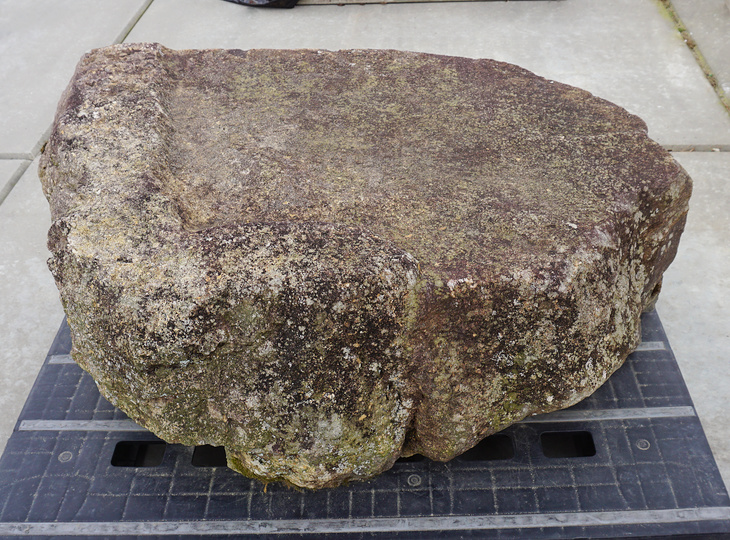
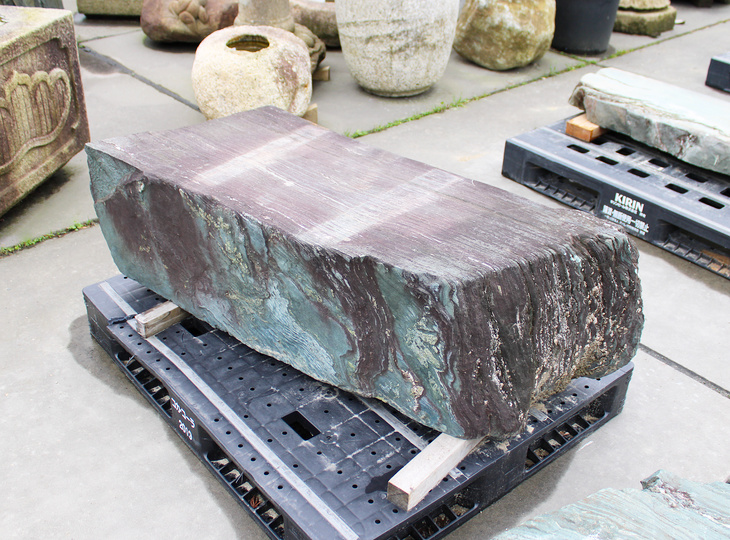
Kuroboku Kutsunugi-ishi, Japanese Stone
1 op voorraad
Stepping stones, Tobi-ishi (飛石) in Japanese, are an indispensable element of the traditional Japanese garden. Unlike a garden path, walking on stepping stones requires more concentration.
Specifications
- OriginNagoya, Aichi Prefecture, Japan
- MaterialKuroboku stone (黒ぼく石)
- Dimensions77 x 115 x 43 cm
Product information
Stepping stones, Tobi-ishi (飛石) in Japanese, are an indispensable element of the traditional Japanese garden. Unlike a garden path, walking on stepping stones requires more concentration. This has a positive influence on how one experiences and absorbs the garden. In addition, stepping stones ensure that people cannot walk side by side, making them less distracted. In a tea garden, this also ensures that not everyone arrives at the teahouse at the same time for the start of the tea ceremony.
The stepping-stone path was introduced by Sen no Rikyū, a very famous historical figure considered to be the founder of the tea ceremony. The original idea behind the use of stepping stones was to keep Zōri, traditional Japanese sandals, clean and dry while walking through the garden.
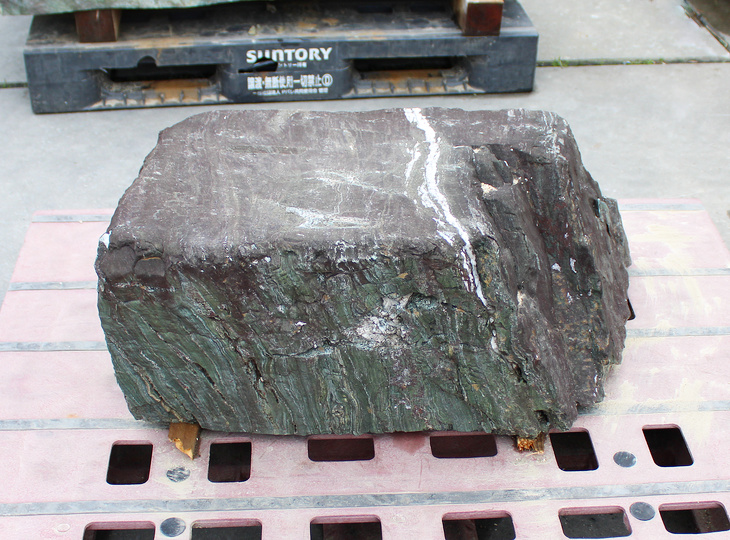
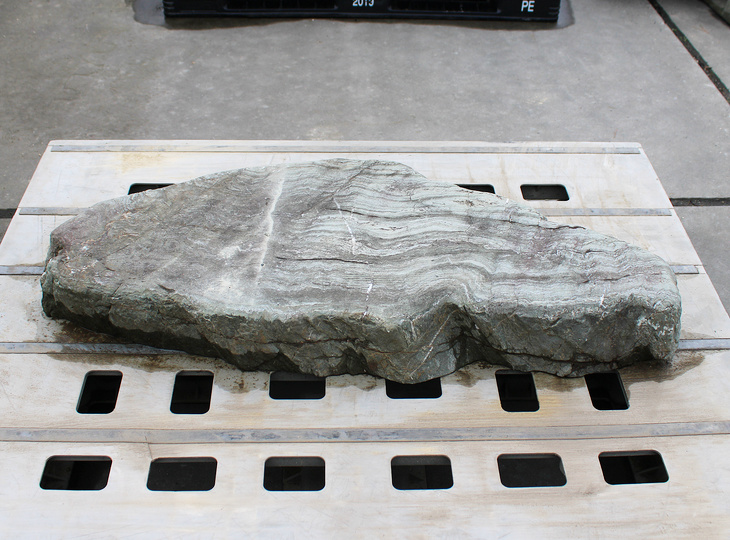
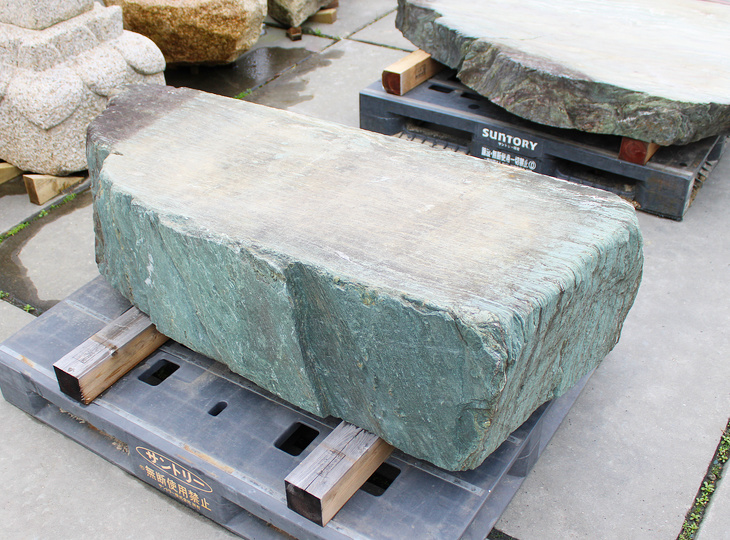
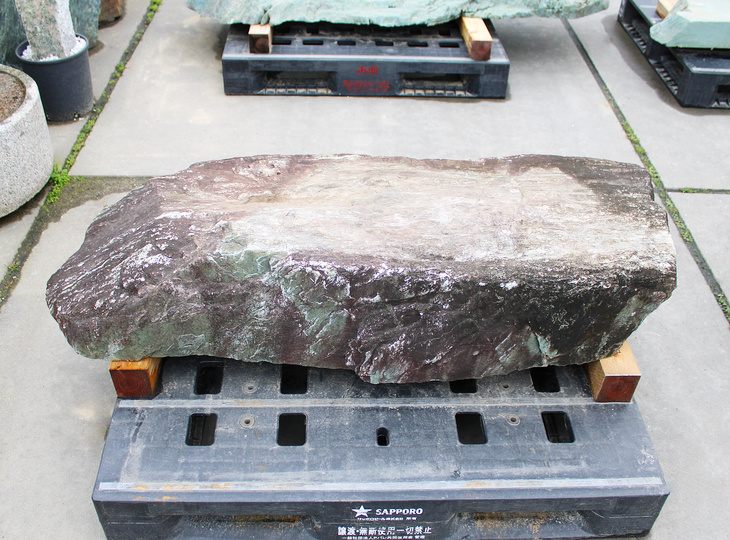
Kutsunugi-ishi are wide Japanese stepping stones that serve as a step from the garden to a veranda. In ancient Japan, Kutsunugi-ishi were often used in tea gardens to enter the teahouse from the garden. In Japanese buildings, traditional houses in particular, it is customary to take off one's shoes before a person may enter the premises. This can be done on the Kutsunugi-ishi, which is Japanese for: The stone on which shoes are taken off.
A Makkuro stone is easy to recognize by its dark color tones. Makkuro is the Japanese word for pure black, referring to the appearance of the stone.
 Nederlands
 English
 Deutsch (Sie)
 Français
 Español
 Polski
 Čeština
 Italiano